
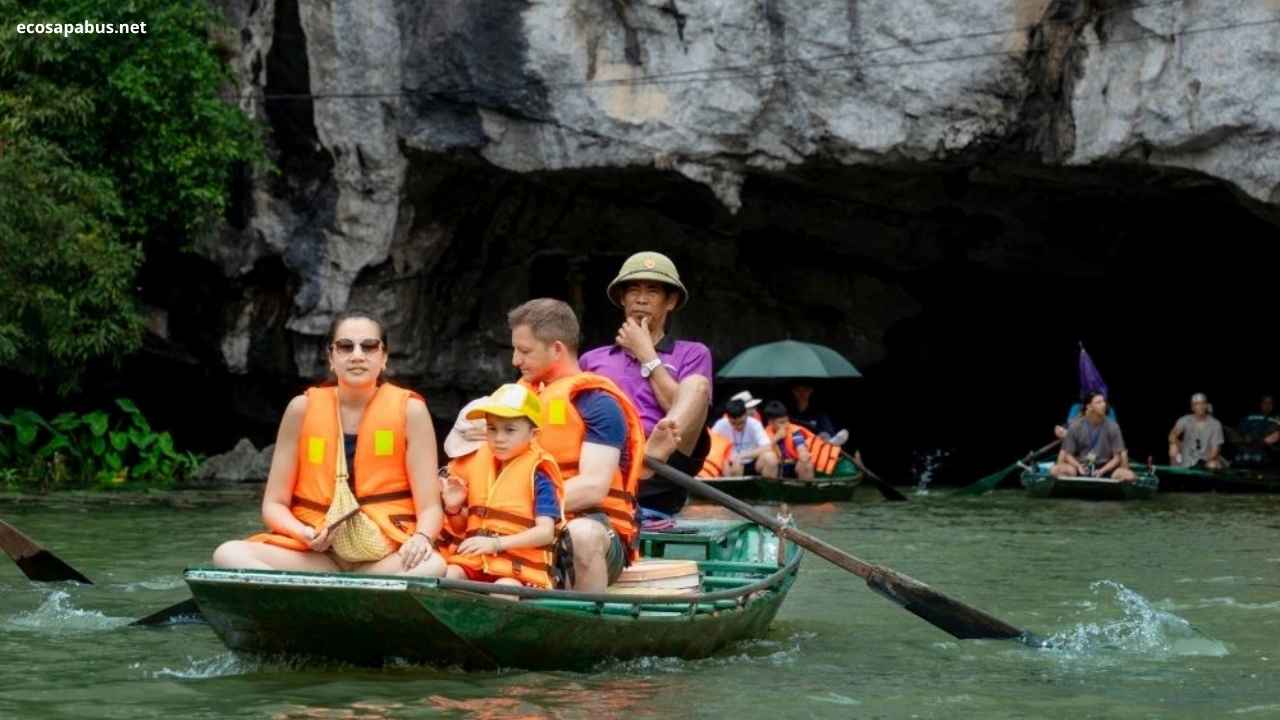



Is Tam Coc Worth Visiting in 2026? — The Honest Answer
- Location: Ninh Binh Province, 100km south of Hanoi — a Ninh Binh sub-region on the Ngo Dong River
- Entrance fee 2026: 120,000 VND per person (~$4.80 USD) — includes the 2-hour rowboat through three caves
- Tip for boatwoman: 50,000–100,000 VND per person expected and fair — budget for it
- Visit duration: Half-day (boat + Bich Dong pagoda) · Full day (+ Mua Cave viewpoint + cycling)
- Best time of day: Open 7 AM — arrive before 9 AM on weekends, any weekday is fine
- Best season: Sep–Nov (golden rice harvest) · Apr–Jun (vivid green planting season)
- Getting there from Hanoi: ~1.5 hrs private car · 2 hrs day tour bus · 2 hrs train to Ninh Binh + taxi
Yes — and it's the kind of place that tends to exceed expectations rather than disappoint them. Photographs of Tam Coc are everywhere, which can make you assume you've already understood it. You haven't. The difference between seeing a photograph of a karst valley and sitting two feet above the waterline in a flat-bottomed boat as limestone cliffs rise fifty metres on either side of you — the cave closing in, the boatwoman's oars entering the water in near silence — is not a small one. It is the kind of beauty that requires physical proximity. Go.
Tam Coc translates literally as "three caves" — the three cave tunnels that the Ngo Dong River passes through as it winds between the limestone karst formations of this section of Ninh Binh Province. The boat tour follows a 9km round-trip route from the main dock through all three caves (Hang Ca, Hang Hai and Hang Ba) and back, taking approximately 2 hours at the unhurried pace that this landscape demands. The surrounding rice paddies — flooded and worked by farming families whose land you're rowing through — change completely by season: vivid green in the planting months of April through June, a deeper saturated green in July and August, and then the extraordinary gold of harvest season in September through November, which is when the photographs that appear on every Vietnam travel blog were taken.

🚣 Tam Coc — At a Glance
- Best for: Scenic photography, boat tours, cycling, a slower day out from Hanoi, nature lovers
- Ideal visit: Half-day boat tour + Bich Dong Pagoda · Full day adds Mua Cave and cycling the paddies
- Nearest city: Ninh Binh city (7km) — accessible from there by taxi or motorbike taxi
- Entrance fee: 120,000 VND per person (boat tour included) · Mua Cave: 100,000 VND separate
- Best season: Sep–Nov harvest gold · Apr–Jun vivid green · avoid weekends in peak season
- What not to miss: The boat ride itself · Bich Dong Pagoda · Mua Cave 500-step viewpoint · dawn cycling through the paddies
How the Tam Coc Boat Tour Actually Works
Most visitors know Tam Coc as "that boat ride through the caves" — which is accurate but undersells the operational reality. Here is what you're actually signing up for, so you can plan it properly:
The Boat, the Boatwoman, and What She Does
The boats at Tam Coc are narrow, flat-bottomed wooden rowboats that seat two or three passengers in a single file. Your boatwoman (the overwhelming majority of rowers are local women, many of them middle-aged or older) rows using conventional oar techniques for much of the route, but switches to foot-rowing — oars mounted on fixed pivots, propelled by leg motion — through the cave sections where the ceiling drops low and hand clearance becomes an issue. This foot-rowing technique is genuinely impressive: efficient, practiced and specific to this landscape. The women who do this make it look effortless. It is not effortless — they row 9km per trip, multiple trips per day, in heat that is consistently 30–35°C from May through September. The tip at the end of the boat ride is not a formality. It is payment for actual labour that your entrance fee does not fully cover.
The Three Caves
Hang Ca (First Cave): The longest cave at approximately 127 metres. The entrance is dramatic — the karst walls narrow, the river narrows with them, and then you're inside. The cave roof varies between two and five metres above the waterline. Stalactites hang in formation. The light at the exit end is green-blue from the vegetation outside reflecting off the water. Hang Hai (Second Cave): 60 metres long and lower — the ceiling at some points is close enough that seated passengers must duck slightly. Hang Ba (Third Cave): The shortest at about 45 metres but the most beautiful — a chamber effect where the light entering from both ends creates extraordinary reflection on the water surface. The turnaround point of the boat tour is just beyond Hang Ba, at a wider section of river where boatwomen rest for five to ten minutes before the return journey.
The Souvenir Sales Problem
This is the part of the boat tour experience that visitors most consistently mention as uncomfortable. Approximately midway along the route, boats from floating vendors approach your boat. The women on these vendor boats sell embroidery, scarves, fans and local handicrafts, and the sales technique involves placing items in your lap while you're in a moving boat — making it physically difficult to refuse without confrontation. The pressure is real and effective. How to handle it: decline firmly but politely from the beginning, before any item is placed on you. "No, thank you" in any language, accompanied by a firm hand gesture, is universally understood. Do not handle the products unless you intend to buy. The vendors are not dangerous and their approach is a livelihood strategy in a landscape where they have limited other options — but knowing it's coming makes it much less destabilising than encountering it as a surprise.
Tam Coc vs Trang An — The Honest Comparison
This is the question we get most often from travelers planning a Ninh Binh day. Both are boat-through-caves experiences in the same region. They feel similar from the outside. They are meaningfully different in practice:
| Factor | Tam Coc | Trang An |
|---|---|---|
| UNESCO Status | Not UNESCO | UNESCO World Heritage (2014) |
| Boat ride duration | ~2 hours, 9km round trip | 2.5–3 hours, 12+ km |
| Number of caves | 3 caves | Up to 9 caves (route dependent) |
| Landscape variety | Rice paddies + karst caves | Caves + lagoons + jungle + historical sites |
| Entrance fee | 120,000 VND | 250,000 VND |
| Crowd level | Busier internationally | Busier domestically |
| Souvenir pressure | Floating vendor boats mid-route | Less mid-route pressure |
| Nearby attractions | Bich Dong Pagoda, Mua Cave | Hoa Lu ancient capital, on-route temples |
| Best for | Half-day, photography, first-timers | Full day, UNESCO, deeper immersion |
| Our recommendation | If you have half a day only | If you have a full day |
If you have time for only one: choose Trang An. It covers more ground, passes more caves, includes historically significant sites en route (restored ancient temples and a preserved ecology zone) and the UNESCO designation reflects a genuinely more diverse and protected landscape. If you have a full day: do both — the 8km distance between them means a morning at Tam Coc and afternoon at Trang An is entirely manageable. If you only have a half-day: Tam Coc is the correct choice. It is easier to do quickly, the boat is shorter, and the combination with Bich Dong Pagoda (walkable from the dock) and a bicycle circuit of the paddies makes for an excellent 3–4 hour visit.
Practical Warnings for Tam Coc — How Not to Overpay or Have a Bad Time
- Always buy tickets from the official ticket office — not from touts: The main Tam Coc ticket office is a clear building at the entrance to the dock area. The official price is 120,000 VND per person. Individuals who approach you before you reach the ticket office — offering "guide service," "private boat," or tickets "without the queue" — are not official representatives. Their prices are higher and the quality of their service is unregulated. Walk past them to the official window.
- Budget for the tip — or the boat ride will feel uncomfortable: The 120,000 VND entrance fee does not adequately compensate the boatwomen for what is genuinely physical work. Tips of 50,000–100,000 VND per person (for the boat, not per individual passenger) are standard and earned. If you go in knowing this, it's a straightforward transaction. If you don't know it and encounter the request at the end of the journey, it can feel like pressure. It's not a scam — it's a structural underpayment that visitors are expected to supplement.
- Floating souvenir vendors mid-boat — decide your strategy before you get in: Midway along the Tam Coc boat route, floating vendor boats approach and sellers attempt to place products in your lap. The physical situation — you're in a moving boat with nowhere to go — makes this difficult to navigate if you're unprepared. Decide before boarding: if you want to buy something, this is a reasonable place to do it at fair local prices. If you don't, the word "không" (no in Vietnamese) delivered firmly and early, before any item reaches your lap, is the most effective approach.
- Overpriced day tour transport from Hanoi: Day tours from Hanoi's Old Quarter to Tam Coc range from $15 to $60 USD for very similar products — an A/C bus, entrance fees, a guide, and sometimes lunch. The $15–20 range covers the basics. The $45–60 range typically adds private transportation, a better guide and more flexibility. The middle ground ($25–35) from reputable operators is usually the right balance. Be skeptical of packages below $15 — they typically recover costs through upsells at the destination (restaurant kickbacks, souvenir shop stops). Book directly with licensed operators like EcoSapa Bus or established platforms — and confirm exactly what is included before paying.
- Arriving too late on weekends: The Tam Coc boat dock on weekend mornings in peak season (September–November) has queues that begin before 9 AM and peak between 10 AM and 12 PM. If you arrive at 11 AM on a Saturday in October, you may wait 60–90 minutes for a boat. This is not a disaster — the area is beautiful — but knowing it allows you to plan. Depart Hanoi at 6:00–6:30 AM to arrive before the main wave. Alternatively, visit on a weekday — the difference is substantial.
- Mua Cave is a separate ticket — not included in the boat tour: The Mua Cave (Hang Mua) viewpoint — the 500-step climb to the best panoramic view over Tam Coc — has its own entrance at a separate facility 3km from the main boat dock. The entrance fee is 100,000 VND per person and is paid directly there. It is not part of the 120,000 VND boat tour ticket. This confuses many visitors who expect to be able to walk to Mua Cave from the boat dock. You need to either cycle (20–25 minutes) or arrange transport separately.
- Restaurant kickbacks near the dock: Some tour operators receive commissions from specific restaurants near the Tam Coc dock. These restaurants are not necessarily bad — but they are priced for international tourists rather than for local value. The local food stalls 5–10 minutes by bicycle from the dock serve the same Vietnamese dishes (bún chả, cơm rang, fresh spring rolls) at a fraction of the price. If your tour guide insists on a specific restaurant, it's worth asking how far it is and whether alternatives exist.
What to Eat at Tam Coc — Local Food Guide
The area around the Tam Coc dock has a mix of tourist-focused restaurants (often affiliated with tour operators) and genuinely local food stalls. The local food is better and significantly cheaper. Here is what to look for:
Real Tam Coc Prices 2026 — What Things Actually Cost
| Item | Price (VND) | USD | Notes |
|---|---|---|---|
| Tam Coc entrance + boat tour | 120,000 | ~$4.80 | Per person. Includes 2-hr rowboat through 3 caves. |
| Tip for boatwoman (per boat) | 50,000–100,000 | $2–4 | Expected and fair — budget for this before you go. |
| Mua Cave (Hang Mua) entrance | 100,000 | ~$4 | Separate site, 3km from dock. 500-step climb. |
| Bich Dong Pagoda entrance | Free | $0 | Walkable from dock. Donation box inside. |
| Bicycle rental (full day) | 60,000–80,000 | $2.40–3.20 | Available at the dock and at most guesthouses. |
| Motorbike rental (full day) | 120,000–180,000 | $4.80–7.20 | Requires license. Faster for Mua Cave–Trang An circuit. |
| Local taxi Ninh Binh city → Tam Coc | 80,000–120,000 | $3.20–4.80 | 7km. Book via Grab app for fixed price. |
| Organized day tour from Hanoi | 500,000–1,000,000 | $20–40 | Includes transport, entrance, sometimes lunch + guide. |
| Private car Hanoi → Tam Coc (1 way) | 600,000–900,000 | $24–36 | 4-seat car. EcoSapa Bus: arrange via WhatsApp. |
| Private car Hanoi ↔ Tam Coc (round trip) | 1,000,000–1,500,000 | $40–60 | Driver waits or returns. Most flexible option. |
| Train Hanoi → Ninh Binh (seat) | 70,000–120,000 | $2.80–4.80 | ~2 hrs. Departs Hanoi station several times daily. |
| Guesthouse in Tam Coc village | 250,000–500,000 | $10–20 | Basic but comfortable. Some with rice paddy views. |
| Mid-range hotel (Ninh Binh area) | 600,000–1,200,000 | $24–48 | Includes breakfast. Better facilities than village guesthouses. |
| Cơm Niêu (clay pot rice) meal | 80,000–150,000 | $3.20–6 | The local specialty. Worth the extra 3km from dock. |
| Mountain goat dish (dê núi) | 120,000–200,000 | $4.80–8 | Ninh Binh specialty — order at a local restaurant. |
| Bowl of pho or bún chả (local) | 30,000–50,000 | $1.20–2 | From local stalls. Tourist restaurants charge 80k–120k. |
| Lotus tea (genuine, village producer) | 80,000–200,000 | $3.20–8 | Quality varies significantly. Buy from local producers. |
Understanding VND — A Practical Currency Guide for Foreign Visitors
Vietnamese Dong (VND) uses large denomination numbers that can be confusing for first-time visitors. Here is a practical reference to help you understand what prices actually mean — and what good and bad value looks like at Tam Coc:
💱 VND to USD — Quick Reference (April 2026)
A bowl of phở from a local stall near the dock costs 30,000–40,000 VND ($1.20–1.60). The same dish at a tourist restaurant adjacent to the car park costs 80,000–120,000 VND. Both are "cheap" by international standards — but the difference is a 3× markup for identical food. A bicycle rental for the day is 60,000–80,000 VND ($2.40–3.20). Some guesthouses charge 100,000–120,000 VND ($4–4.80) for the same rental when they know you don't have other options. The absolute prices are low — the relative markups are where Tam Coc catches uninformed visitors. Know the local prices before you need them.
Best Time to Visit Tam Coc in 2026
Tam Coc is open year-round. The season determines what the landscape looks like; the day of the week and time of day determine whether you enjoy it or endure it. Both matter.
Best Season for Scenery: September – November (Rice Harvest)
The rice paddies around the Tam Coc boat route are planted twice annually. The autumn harvest — September through mid-November — produces the golden rice terraces that appear in virtually every professional photograph of this landscape. The rice heads turn from pale green to yellow to deep amber as they ripen, and when the boat passes through this landscape on a clear October morning with the limestone mountains rising in every direction, it is genuinely one of the most beautiful scenes in northern Vietnam. Book accommodation further in advance for this period — September to November is peak international tourism season in the north.
Second Best: April – June (Vivid Green Planting Season)
After the winter harvest in February–March, the paddies are replanted. By April the new rice is a vivid, almost luminous green — a different kind of beautiful from the harvest gold, and in some ways more dramatic because the colour is so intense. The crowds in April–June are noticeably smaller than September–November, and the weather is warm and mostly clear. Late June brings the beginning of the rainy season — afternoon thunderstorms rather than all-day rain, which can actually improve the dramatic quality of the landscape at the cost of some comfort.
Avoid: Vietnamese National Holidays and Peak Weekends
Tam Coc is a heavily popular domestic tourism destination. Vietnamese national holidays — Tet (usually January–February), Reunification Day (April 30), Labor Day (May 1), National Day (September 2) — bring enormous numbers of domestic visitors. The boat queue on April 30 weekend at 10 AM can exceed 2 hours. For international visitors whose itinerary isn't flexible around these dates, the practical solution is to arrive before 8:30 AM, which dramatically reduces wait times regardless of the crowd level.
Best Time of Day: Before 9 AM — Always
The most impactful timing decision you make. The boat dock at 7:30–8:30 AM on any day, in any season, is an entirely different experience from the same dock at 11 AM. Early morning: mist in the paddy channels, side-lit karst mountains, the boatwomen just starting their day, the caves quiet and dark. 11 AM in peak season: queues, engines from tour buses in the car park, competing boats on the river. The landscapes are identical. The experience of them is not. If you're coming from Hanoi: depart at 6:00–6:30 AM and arrive at the dock before 9 AM. Set the alarm.
How to Get to Tam Coc from Hanoi
Tam Coc is 100km from Hanoi — accessible on a day trip by several transport modes with meaningfully different trade-offs:
🚗 Transport Options — Honest Comparison
- Private car from Hanoi ($24–60 USD one way): The most comfortable and flexible option. No fixed departure time, door-to-door from your hotel, driver waits while you visit. Cost varies by car size (sedan/minivan) and whether you want a round trip. EcoSapa Bus arranges private Hanoi–Tam Coc transfers at fair local prices — ask via WhatsApp for your group's quote.
- Organized day tour ($20–40 USD): Includes A/C bus transport, entrance fees, and usually a guide and lunch. Quality varies significantly by operator. Best for solo travelers who prefer not to deal with transport logistics. Departs Hanoi Old Quarter most mornings at 7–8 AM.
- Train to Ninh Binh city then local transport (~$3–5 USD + 80–120k VND taxi): Several trains connect Hanoi to Ninh Binh station daily (~2 hours, 70,000–120,000 VND). From Ninh Binh station, take a Grab car or motorbike taxi 7km to Tam Coc. The train is scenic and comfortable. The connection logistics require a bit of flexibility.
- Local bus (~40,000 VND one way, 3+ hrs): The cheapest option — Hanoi's Giap Bat station to Ninh Binh, then local transport to Tam Coc. Takes 3+ hours each way due to connections and stops. Manageable for budget travelers with time but not ideal for a day trip with limited hours at the destination.
Tam Coc Itineraries — Half-Day, Full Day & Overnight
Itinerary A: Tam Coc Half-Day (4–5 hours total) — Tight Schedules
| Time | Activity | Notes |
|---|---|---|
| 06:30 | Depart Hanoi (private car) | Early departure is the single most important thing you can do. |
| 08:15 | Arrive Tam Coc dock — buy tickets | Official ticket office. 120,000 VND/person. Minimal queue this early. |
| 08:30 | Rowboat through three caves (2 hrs) | Budget 50,000–100,000 VND tip per boat. Non-negotiable. |
| 10:30 | Bich Dong Pagoda (walkable from dock) | Free entry. 15th-century temple built into the limestone cliff. 30 min. |
| 11:00 | Bicycle around the paddy roads | 60,000–80,000 VND. Flat, easy. Best views of the valley from the road. |
| 12:00 | Local lunch near Tam Coc village | Cơm niêu or cơm rang at a stall away from the tourist car park. |
| 13:00 | Return to Hanoi | Back in Old Quarter by 14:30–15:00. Afternoon free. |
Itinerary B: Tam Coc + Mua Cave Full Day (7–8 hours) — Our Recommendation
| Time | Activity | Notes |
|---|---|---|
| 06:00 | Depart Hanoi | Earlier start for a full-day Ninh Binh visit. |
| 07:45 | Arrive Tam Coc — buy tickets, join first boats | First boats of the day. The dock is quiet, the light is extraordinary. |
| 08:00 | Rowboat through three caves (2 hrs) | Tip budget: 50,000–100,000 VND per boat. Plan for it. |
| 10:00 | Bich Dong Pagoda + bicycle circuit | 1.5 hrs cycling the paddy roads. Flat, peaceful, excellent for photography. |
| 11:30 | Local lunch — cơm niêu or mountain goat | Ask driver for a local recommendation. Avoid the tourist car park restaurants. |
| 13:00 | Mua Cave (Hang Mua) — 500-step climb | 100,000 VND separate entrance. 3km from dock. 40 min up, 20 min down. |
| 14:30 | Panoramic viewpoint at Mua Cave summit | Best view in Ninh Binh. Photograph facing west in afternoon light. |
| 15:30 | Return to Hanoi | Back in Old Quarter by 17:00–17:30 depending on traffic. |
Itinerary C: Full Ninh Binh Circuit — Tam Coc + Trang An + Hoa Lu (Full Day)
The most complete way to experience the Ninh Binh region in a single day — four major sites, diverse experiences and the full historical-natural context. 07:00: Depart Hanoi. 08:30: Hoa Lu ancient capital (Vietnam's first capital, 10th century — 30,000 VND entrance, 1 hour). 10:00: Tam Coc boat tour (120,000 VND, 2 hours). 12:30: Local lunch in Ninh Binh town. 14:00: Trang An boat tour (250,000 VND, 2.5 hours — UNESCO World Heritage). 16:30: Return to Hanoi, back by 18:30. A private car and driver is the only practical way to link these sites comfortably — ask us to arrange a day quote for your group size.
Where to Stay at Tam Coc — Honest Accommodation Guide
The choice for accommodation divides between staying at Tam Coc itself (in the village guesthouses within cycling distance of the dock) versus staying in Ninh Binh city (7km away, more facilities, better transport connections). Overnight in Tam Coc village gives you access to the area at dawn — before any day-trippers arrive — which is genuinely extraordinary. Ninh Binh city gives you more options and easier access to the wider region.
A cluster of standalone bungalows in rice paddy gardens 10 minutes' walk from the Tam Coc dock — waking up to views of karst mountains directly from your room window, surrounded by working rice fields. Breakfast included, bicycle rental available, helpful staff who know the area well. The rooms are comfortable rather than luxurious. Book well ahead for September–November peak season — this fills completely months out.
Several family-run guesthouses in Tam Coc village itself offer clean rooms with air conditioning at local prices. Facilities are basic — what you'd expect from a rural Vietnamese guesthouse — but the location is excellent, bicycle rentals are cheap, and the owners are almost always helpful with directions and local knowledge. Prices double on weekends in peak season: book midweek if price matters.
The best mid-range hotel in Ninh Binh city — pool, good breakfast buffet, professional staff who speak English, and easy access to the Tam Coc, Trang An and Hoa Lu circuit by hired motorbike or taxi. If you want reliable hot water, WiFi and a proper restaurant without paying boutique resort prices, this is the go-to choice in the area. From here, Tam Coc is 15 minutes by Grab car.
The benchmark luxury property for the Ninh Binh region — a resort-village set in rice paddy landscape with private bungalows, a good pool and spa, and organised boat trips and cycling tours directly from the property. Not walking distance from Tam Coc dock but the resort operates transfers and has its own boat access. If your budget allows a luxury night in northern Vietnam and you're planning a Ninh Binh stop, this is the choice.
Nearby Places Worth Combining With Tam Coc
Tam Coc sits at the heart of a rich cluster of sites. The Ninh Binh region is compact enough that combining several in a single day is straightforward with transport:
Hoa Lu — Vietnam's First Capital (8km from Tam Coc)
Before Hanoi, before Hue — Vietnam's first dynastic capital was here, in the limestone valleys of what is now Ninh Binh Province. The Dinh and Early Le dynasties established Hoa Lu as the nation's capital in the 10th century. Two restored temple complexes survive in good condition — Đinh Tiên Hoàng Temple and Lê Đại Hành Temple — set against the same dramatic karst backdrop as Tam Coc. Entrance: 30,000 VND. Allow 1 hour. A natural morning combination with Tam Coc boat tour.
Trang An — UNESCO World Heritage (8km from Tam Coc)
The more complete boat-through-caves experience — 2.5–3 hours, multiple cave routes, a UNESCO designation since 2014 and an archaeology that goes back 30,000 years (Paleolithic tools found in the cave systems). The landscape is more varied than Tam Coc: caves, lagoons, jungle corridors, restored temple complexes on rocky islands mid-river. Entrance: 250,000 VND. Highly recommended as an afternoon complement to a Tam Coc morning.
Mua Cave (Hang Mua) — Best Viewpoint in Ninh Binh (3km from Tam Coc)
A 500-step stone staircase climbs the flank of a limestone karst to a summit viewpoint — a dragon statue at the top and a panoramic view over the entire Tam Coc river system, the paddy landscape and the surrounding mountains. The climb takes 25–40 minutes depending on fitness. Entrance: 100,000 VND. Best visited in late afternoon when the light comes from the west and the shadows fall across the karst peaks. The view from the top is the best photograph available in the entire Ninh Binh region. This is not optional.
Bich Dong Pagoda — Free, Walkable, Worth It (1.5km from Tam Coc dock)
A 15th-century Buddhist pagoda complex built into and inside a limestone cliff — three separate levels of shrines at different heights within the cave system, each reached by carved stone stairways. Free entry (donation box inside). Easy walk from the Tam Coc dock — 20 minutes on a flat path through paddy fields. The combination of natural cave formations and centuries-old shrine architecture is genuinely impressive and almost always quieter than the boat dock.
Cuc Phuong National Park — For Nature Travelers (40km from Tam Coc)
Vietnam's oldest national park — established 1962 — sits 40km northwest of Ninh Binh city. Old-growth jungle, the Endangered Primate Rescue Center (langurs, lorises, gibbons in large forest enclosures) and the Turtle Conservation Center make this the right addition to a Ninh Binh visit if wildlife or conservation is important to you. Accessible only by private car — a Tam Coc morning followed by Cuc Phuong afternoon is a feasible but full day. Ask EcoSapa Bus to arrange the combined transport.
Insider Tips — What Our Team Actually Tells Clients Before They Go
Visiting Tam Coc Respectfully
Tam Coc is a working landscape — the rice paddies around the boat route are farmed by local families who have worked this land for generations. The tourism infrastructure (ticket office, boat dock, bicycle rentals) sits on top of an active agricultural community rather than replacing it. A few things matter:
- Don't stand in the rice paddies for photographs. This sounds obvious but it happens regularly. The paddy walls (bờ ruộng) require significant labour to maintain. Walking on them or stepping off the path into the rice can damage both the walls and the crop. Stay on the designated paths and roads.
- Buy from local producers, not tourist intermediaries. Lotus tea, embroidered handicrafts, nem chua — all available from village producers at fair prices. Buying from village stalls rather than tourist shops near the car park means a greater proportion of your money reaches the community that lives here.
- The boatwomen's work is physical and substantial — tip fairly. This is said twice in this guide because it matters twice. 50,000–100,000 VND per boat is not a large sum for a visitor from overseas. For a woman who rows 9km multiple times per day in 32°C heat, it is a meaningful supplement to an entrance fee that doesn't adequately compensate her labour.
- Don't handle vendor products mid-boat unless you intend to buy. The floating vendor approach creates awkward situations partly because tourists pick up and examine products without intending to purchase. Once you've handled something at length, the pressure to buy escalates. Maintain a clear "no, thank you" from the start — this makes the interaction less uncomfortable for everyone involved.
Frequently Asked Questions — Tam Coc Ninh Binh 2026
Yes — Tam Coc is one of the most genuinely beautiful landscapes accessible on a day trip from Hanoi, and it consistently exceeds visitor expectations. The rowboat through three limestone caves, through flooded rice paddies flanked by karst mountains, is a physically beautiful experience that photographs simply don't communicate fully. It is busier than it used to be — particularly on weekends and in September–November peak season — but a weekday morning visit or an early departure on any day resolves most of the crowd issues. The combination with Mua Cave viewpoint and a cycle through the paddy roads makes for an exceptional full day in northern Vietnam.
The official entrance fee is 120,000 VND per person (~$4.80 USD). This includes the 2-hour rowboat through all three caves. You should also budget 50,000–100,000 VND per boat (not per person — per boat) for the tip at the end, which is expected and genuinely fair given the physical work involved. The boatwomen row 9km per trip in tropical heat, often multiple trips per day. The entrance fee does not adequately compensate this. Tip generously. Mua Cave has a separate entrance fee of 100,000 VND per person.
They're different rather than one being "better." Trang An (UNESCO World Heritage, 8km from Tam Coc, 250,000 VND entrance) offers a longer boat route, more caves, more landscape variety and historically significant on-route stops. Tam Coc offers a more compact, quicker visit that works well as a half-day. If you can only do one: Trang An is the more complete experience. If you have time for both: do Tam Coc in the morning, Trang An in the afternoon — they're close enough to combine in one day. The floating vendor pressure on Tam Coc boats is a genuine negative that Trang An has less of.
Tam Coc is 100km from Hanoi — four main options: (1) Private car from your hotel ($24–60 USD one way depending on car size and whether round trip) — most comfortable and flexible; (2) Organized day tour ($20–40 USD, includes transport and entrance fees, departs Hanoi Old Quarter most mornings); (3) Train to Ninh Binh station (70,000–120,000 VND, ~2 hours, then 80,000–120,000 VND Grab car to Tam Coc); (4) Local bus from Giap Bat station to Ninh Binh, then connections (cheapest, 3+ hrs). For groups of 2–4, private car is often the most cost-effective and is always the most flexible. EcoSapa Bus arranges private transfers — message us via WhatsApp for your group's quote.
Two answers — one for season, one for time of day. Best season: September–November for the golden rice harvest (the most photographed and most spectacular period); April–June for vivid green planting season with smaller crowds. Best time of day: Arrive before 9 AM, every time, every season. The experience before 9 AM is substantially better than after 10 AM — better light, fewer boats on the river, no queue at the ticket office. Weekdays throughout the year are noticeably less crowded than weekends. Avoid Vietnamese national holidays entirely if possible.
Yes — the viewpoint at Mua Cave summit is the best panoramic view available in the entire Ninh Binh region. The 500-step stone staircase takes 25–40 minutes to climb depending on fitness. The steps are uneven and steep in sections — appropriate footwear matters. The summit view (dragon statue, 360° karst panorama including the full Tam Coc river system) justifies every step. Afternoon is the best time for photography — the light comes from the west and the shadow play on the karst peaks is dramatic. Entrance: 100,000 VND, paid separately from Tam Coc (the sites are 3km apart).
Staying overnight is worth it if your schedule allows. The advantages: (1) you can do the boat tour at dawn — before any day-trippers arrive from Hanoi — which is an entirely different atmosphere; (2) the paddy road cycling at sunset has a quality that no day-trip schedule permits; (3) you can cover Tam Coc, Trang An, Hoa Lu and Mua Cave across two relaxed days rather than rushing through them in one. Village guesthouses in Tam Coc cost $10–25/night. For travelers doing Ha Long Bay before or after Ninh Binh — an overnight in Tam Coc between the two is a natural and very rewarding addition to a northern Vietnam circuit.
Light, comfortable clothes appropriate for tropical heat (27–34°C from April through October). Sun hat and sunscreen — the boat ride is fully exposed, and the 2-hour paddies section in full sun adds up. Water (at least 1 litre per person — available to buy on site at 20,000–30,000 VND, local price). Comfortable walking shoes or sandals with closed toes if you're climbing Mua Cave (the steps are uneven). A small bag for documents and camera. Cash in small denominations: 120,000 VND entrance, 50,000–100,000 VND tip (in a separate pocket so it's accessible without fumbling), bicycle rental money. Most cafés and ticket offices at Tam Coc are cash only — there's an ATM in Ninh Binh city but not immediately at the dock.
Plan Your North Vietnam Itinerary
Tam Coc fits naturally into several northern Vietnam itineraries. Here's how it works as part of the wider journey:
Tam Coc is one of three major sites in Ninh Binh — the full guide covers Trang An, Hoa Lu, Cuc Phuong and how to combine them into a complete visit.
Sapa's Black Hmong villages, terraced rice fields and Fansipan summit offer the highland counterpoint to Ninh Binh's lowland river landscape — a natural northern Vietnam combination.
Ha Long Bay's limestone karsts and the Tam Coc karsts share geological DNA. A Ninh Binh day stop en route between Hanoi and Ha Long is one of the best-value additions to a standard north Vietnam itinerary.
Related North Vietnam Travel Guides
Explore the destinations that pair best with a Tam Coc visit — all part of our North Vietnam guide series.
Ready to Book Your Tam Coc Visit?
Private car from Hanoi, flexible departure time, fair local prices. No group bus, no forced restaurant stops. We arrange Ninh Binh day trips and overnights — one WhatsApp message, 15-minute reply.