Why Trust This Guide?
This isn't another copy-paste travel blog. We're Vietnamese locals born and raised in Saigon who've spent our lives navigating this chaotic, beautiful city. We know which street food stalls are tourist traps (most in District 1) and which ones serve the real deal. We know the taxi scams, the market hustles, the "authentic" restaurants that are anything but. Planning your Saigon itinerary? We'll tell you the actual prices locals pay — not the inflated numbers tour operators list — and exactly how to avoid getting ripped off when visiting Ho Chi Minh City.
This guide is updated March 2026 with current prices in Vietnamese Dong (VND). Exchange rate reference: $1 USD ≈ 24,000-25,000 VND. Looking for other Vietnam destinations? Check our guides for Hanoi, Sapa, Hoi An, and Da Nang.
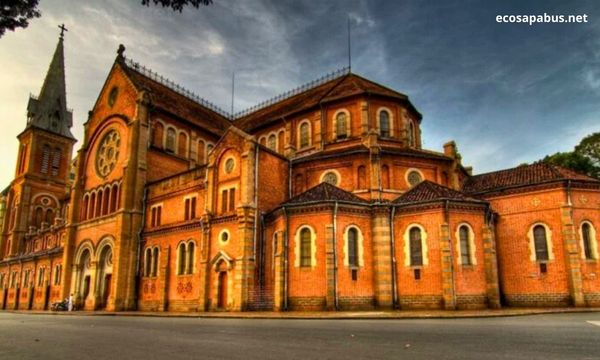
Saigon Notre-Dame Cathedral (currently under renovation until 2027)
First Things First: Saigon or Ho Chi Minh City?
Both names are correct. Officially it's Ho Chi Minh City (HCMC) since 1976, but locals still call it Saigon in everyday conversation — especially older generations and when referring to District 1 (the colonial downtown core). You'll hear both constantly. Don't overthink it. Street signs say "TP HCM" (abbreviation), your Grab driver will accept both names, and nobody will correct you either way. When discussing things to do in Ho Chi Minh City or searching for the best time to visit Saigon, either name works perfectly.
Getting from Tan Son Nhat Airport to District 1
Tan Son Nhat International Airport (SGN) is only 8km from District 1 but traffic can make it 20-45 minutes depending on time of day. Here's the real breakdown for getting to the main tourist area and deciding where to stay in District 1:
Option 1: Official Airport Taxi (Most Reliable)
Fixed price: 150,000-180,000 VND to District 1. After you clear customs and exit the arrival hall, look for the official taxi counter with signs saying "Taxi Mai Linh" or "Vinasun" — these are the two reputable companies. The attendant will write down your destination and price, hand you a slip, and direct you to the taxi lane. NEVER accept rides from people approaching you inside the terminal saying "taxi? taxi?" — these are unlicensed drivers who will overcharge 3-5x.
Local Tip: Airport Taxi Recognition
Real Mai Linh taxis are bright green with clear company branding. Real Vinasun taxis are white with red/blue stripes. Fake taxis will have similar colors but slightly different names (like "Mai Lin" or "Mai Lính"). Check the spelling on the door before getting in.
Option 2: Grab/Bolt App (Cheapest & Safest)
80,000-120,000 VND depending on traffic. Download Grab app before your flight (works like Uber). The price is fixed before you ride so no meter scams. Exit the arrival hall, follow signs for "Domestic Departure" (one level up), and request your Grab from the Departure level pick-up zone — much easier than fighting traffic at Arrivals. You'll need a Vietnamese SIM card with data or airport WiFi to book.
Option 3: Airport Bus #152 (Budget Option)
Only 5,000 VND but takes 45-60 minutes to Ben Thanh Market with frequent stops. Bus stop is outside the domestic terminal. Good if you have time and minimal luggage. Runs 6am-6pm only. Not practical if you land late at night or have heavy bags.
Airport Scam Warning
The "broken meter" scam: Unlicensed taxi drivers will approach you in the arrivals hall offering rides. If you accept, their meter will run 3-5x normal speed. A normal 150,000 VND ride suddenly becomes 600,000 VND. They'll claim "late night surcharge" or "airport tax." This is a scam. Always use the official taxi counter or Grab app.
The "helpful stranger" scam: Someone in the terminal offers to help you book a taxi, then leads you to their friend's unlicensed taxi. Politely refuse and go directly to the official counter yourself.
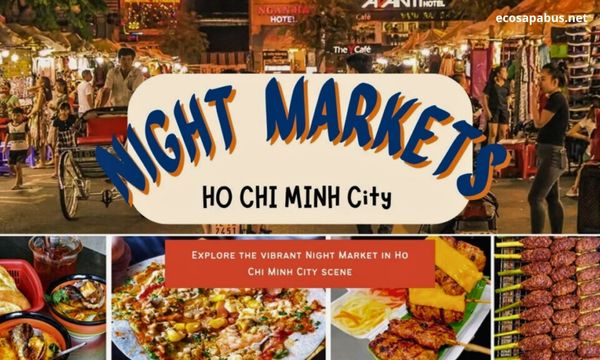
Ben Thanh Night Market — tourist prices during day, better street food outside after 6pm
Getting Around Saigon: Grab vs Taxi vs Motorbike
Grab App (RECOMMENDED for 90% of situations)
Download Grab before arrival — it's the dominant ride app in Vietnam (Uber exited in 2018). Fixed prices, English interface, no arguing over destinations. Two options for exploring things to do in Ho Chi Minh City:
- GrabCar: 4-seater car, air-conditioned. Typical District 1 → District 3: 40,000-60,000 VND. District 1 → District 2: 60,000-90,000 VND.
- GrabBike: Motorbike taxi (xe ôm). Fastest in traffic and super cheap: 15,000-35,000 VND for most District 1 rides. Driver provides helmet (legally required — actually wear it). Not great for luggage or rain but perfect for quick trips. This is how locals move around.
Pro Grab Tips
- Add your hotel as a favorite location in the app — makes booking from Vietnamese addresses much easier
- Screenshot the driver's photo and license plate before getting in (safety habit)
- Grab driver's name is shown — they'll usually say "Em tên [Name], đi [Destination]?" (polite greeting)
- You can pay cash or credit card — if paying cash, have exact change ready as drivers often don't carry change
Traditional Taxis (Use Only Mai Linh or Vinasun)
If you must use a traditional taxi, stick to Mai Linh (green) or Vinasun (white). Both have meters that actually work. Flagfall is around 10,000-12,000 VND then 12,000-16,000 VND per kilometer. A 5km ride should be 70,000-100,000 VND.
Taxi Meter Scam (VERY COMMON)
The scam: You get in a taxi and the meter is already running fast — like video on 3x speed. A normal 80,000 VND ride hits 400,000 VND on the meter. When you protest, the driver acts confused and points at the "official" meter. Solution: Use Grab. If you must use a traditional taxi, watch the meter for the first 30 seconds — it should tick slowly (every 10-15 seconds), not rapidly. If it's jumping every 2-3 seconds, say "dừng xe!" (stop the car) and get out immediately.
Fake Mai Linh taxis exist: They look identical but the name is slightly misspelled (Mai Lin, Mai Lính, etc). Check the door spelling carefully.
Renting a Motorbike (For Experienced Riders Only)
150,000-200,000 VND per day from your hotel or rental shops. You'll need passport as deposit (never leave original passport — ask if a copy is acceptable, or pay a cash deposit). Vietnamese driver's license or International Driving Permit (IDP) technically required but rarely checked. However: Saigon traffic is absolutely insane if you're not used to Asian motorcycle culture. Millions of bikes moving in organized chaos, no lane discipline, red lights are "optional," and pedestrians cross streets while bikes flow around them like water.
Our honest recommendation: Don't rent a motorbike in Saigon unless you've ridden in Southeast Asia before. Use Grab for city riding. Save the motorbike rental for countryside destinations like Mekong Delta or Da Lat where traffic is calmer.
Real Food Prices: What Locals Actually Pay
This is the most important section of this guide. Tourist prices in District 1 can be 5-10x what locals pay three blocks away. Here are real prices as of March 2026:
| Food Item | Local Price | Tourist Trap Price | Where Locals Eat |
|---|---|---|---|
| Pho (beef noodle soup) | 40,000-60,000 VND | 120,000-180,000 VND | Pho Hoa Pasteur (District 1), Pho 2000 (Ben Thanh) |
| Banh Mi (Vietnamese sandwich) | 20,000-35,000 VND | 80,000-100,000 VND | Banh Mi Huynh Hoa (queue = good sign), street carts on Nguyen Trai |
| Com Tam (broken rice) | 35,000-55,000 VND | 100,000-150,000 VND | Com Tam Ba Ghien (District 1), any small shop without English menu |
| Bun Cha (grilled pork vermicelli) | 45,000-65,000 VND | 130,000-180,000 VND | Bun Cha 34 Hang Than |
| Ca Phe Sua Da (iced coffee) | 15,000-25,000 VND | 60,000-100,000 VND | Literally any street corner cafe — avoid cafes with Instagram decor |
| Fresh Coconut | 15,000-20,000 VND | 50,000-80,000 VND | Street vendors with carts (not near tourist sites) |
| Beer (333 or Saigon Beer) | 15,000-25,000 VND | 60,000-100,000 VND | Bia Hoi corner (fresh draft beer), avoid Bui Vien bars |
How to Spot Tourist Trap Restaurants
- English-only menus: Real local places have Vietnamese menus, maybe English as secondary
- Staff standing outside calling to you: Good restaurants don't need to hustle
- No Vietnamese customers: Look around — if it's all Westerners, prices are inflated
- Beautiful Instagram decor: You're paying for the aesthetic, not the food quality
- Menu photos look too perfect: Real local places have faded laminated menus or handwritten boards
- Located on exact corner of tourist street: Rent is higher, prices are higher
Good sign: Small plastic stools on sidewalk, Vietnamese families eating, no English signage, food is cooked fresh in front of you. These are the places that serve 50,000 VND pho that tastes better than 150,000 VND tourist pho.
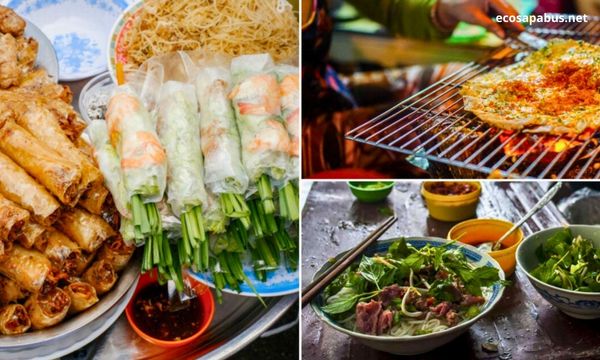
Real Vietnamese street food — pho, banh mi, spring rolls at local prices
Top 5 Saigon Scams (And How to Avoid Them)
1. The Taxi Meter Scam
The scam: Already covered above but worth repeating — meter runs 3-5x normal speed in unlicensed taxis or fake Mai Linh/Vinasun lookalikes. Prevention: Use Grab app exclusively, or only use real Mai Linh (green) / Vinasun (white) from official taxi stands. Check door spelling carefully.
2. The Shoe Shine Scam
The scam: A friendly woman approaches you on the street offering shoe shine. While working on your shoes, she secretly applies dirt or polish you didn't ask for, then demands 200,000-500,000 VND claiming she did "extra work." If you refuse, she makes a scene. Prevention: Politely say "không, cảm ơn" (no, thank you) and keep walking. Never let strangers touch your shoes or belongings.
3. The Ben Thanh Market "Multiply by 10" Scam
The scam: Vendor quotes you a price in Vietnamese Dong but without thousands suffix. Example: "áo này 150" (this shirt is 150). You think 150,000 VND. She means 150 dollars (3,750,000 VND). When you agree, she writes "150 USD" on calculator. Prevention: Always confirm prices in writing on calculator screen and clarify if it's VND or USD. Better yet: avoid Ben Thanh Market entirely — it's 90% tourist trap. Local markets like Binh Tay (Cho Lon Chinatown) or An Dong Market have better prices.
4. The Coffee Shop Bill Scam
The scam: Menu shows ca phe sua da at 25,000 VND. Bill arrives showing 250,000 VND per drink. When questioned, staff point to fine print saying "prices subject to 10% service + 10% tax" or claim you ordered premium version. Prevention: Always ask "giá này đã bao gồm thuế chưa?" (does this price include tax?) before ordering. Take photo of menu showing prices. If bill doesn't match, firmly refuse to pay inflated amount and ask for manager. Real coffee shops show final prices including tax.
5. The Motorbike "Tour Guide" Bag Grab
The scam: Someone on a motorbike offers to show you around or take you to "best local restaurant." During the ride, they grab your bag/phone from your hands and speed away. Or they take you to a restaurant where you're massively overcharged and they get commission. Prevention: Never accept rides from strangers on motorbikes. Use Grab for all motorbike rides. Keep phone and bags secure — phone snatching from motorbikes is a real problem in Saigon. Locals hold phones with two hands or keep them in front pocket, never dangling in outside hand near street.
General Scam Prevention Rules
- If someone approaches you first, it's probably a scam — legitimate businesses don't chase tourists
- Download Grab app before arrival — solves 80% of transportation scam issues
- Learn basic Vietnamese numbers — being able to recognize "muoi" (ten), "tram" (hundred), "ngan" (thousand) helps catch pricing tricks
- Carry small bills — vendors claim "no change" if you pay with 500,000 VND for 30,000 VND item
- Check Google Maps reviews — 4.5+ stars with 500+ reviews = usually legitimate
- Eat where locals eat — if there are no Vietnamese customers, walk away
Must-See Saigon Attractions (Realistic Time Estimates)
Notre-Dame Cathedral & Central Post Office
Time needed: 45 minutes for both. Located side-by-side in District 1. Important note: Notre-Dame Cathedral is under major renovation until 2027 — completely covered in scaffolding. You can't go inside. Still worth quick photo stop for the exterior + post office interior. Free entry. Open 7:30am-6:30pm daily.
Real talk: These are iconic photo spots but there's not much to "do" here. Take photos, mail a postcard from the historic post office (stamps sold inside), then move on. Don't plan more than 30-45 minutes unless you're really into French colonial architecture. For more architectural highlights, check our Hanoi French Quarter guide.
War Remnants Museum (War Museum)
Time needed: 2-3 hours. 40,000 VND entry ($1.60 USD). Open 7:30am-6:00pm daily. This is heavy — photos and artifacts displaying Vietnam War history from the Vietnamese perspective (called the "American War" in Vietnam). The War Remnants Museum (also called Saigon War Museum) has exhibits on Agent Orange effects, prisoner torture, war photographers. Not graphic-for-shock-value but very sobering and emotional. Outside courtyard has captured US military equipment (tanks, helicopters, planes).
Context tip: This museum presents the Vietnamese government perspective on the war. It's one-sided by design. If you're American, be prepared for that. Also be prepared to feel a lot of emotions. Give yourself time and mental space for this one.
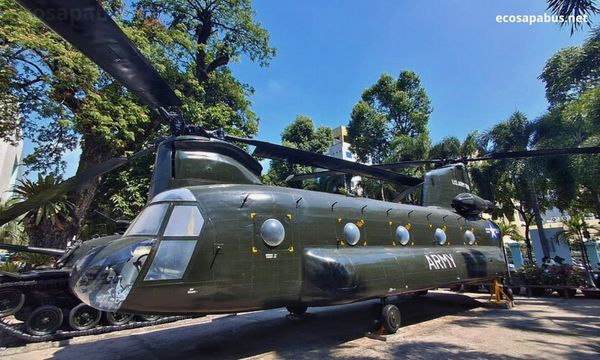
War Remnants Museum — powerful and sobering experience, allow 2-3 hours
Ben Thanh Market
Time needed: 1 hour max. Free entry. Open 6am-6pm. Honest assessment: This is Saigon's most famous market and also its biggest tourist trap. Day market sells souvenirs, clothing, fabric at highly inflated prices — expect to negotiate down to 30-40% of initial asking price. Vendors are aggressive ("Hello! Where you from! Come look!"). Food court inside has overpriced pho and spring rolls aimed at tourists. For a better shopping experience with local prices, visit the markets in Hoi An.
Better alternative: Walk around outside Ben Thanh Market after 6pm when the night market sets up on surrounding streets. Street food vendors here are more authentic and cheaper. Or skip Ben Thanh entirely and go to An Dong Market (District 5) or Binh Tay Market (Chinatown) where locals actually shop and prices are real.
Reunification Palace (Independence Palace)
Time needed: 1.5 hours. 40,000 VND entry. Open 7:30am-11:30am, 1pm-5pm daily. This is where the famous 1975 tank crashed through gates marking the end of the war. Original 1960s architecture preserved — war command room, president's living quarters, rooftop helipad. Self-guided tour with English signage. Interesting if you're into Cold War history or brutalist architecture. Skippable if you're not.
Saigon Skydeck (Bitexco Financial Tower)
Time needed: 45 minutes. 200,000 VND entry ($8 USD). Open 9:30am-9:30pm daily. 49th floor observation deck with 360-degree views of Saigon. Worth it at sunset (5:30-6:30pm) or night when the city lights up. Skip it if you've been to other observation decks in major cities — view is fine but nothing spectacular. Saigon doesn't have dramatic skyline like Shanghai or Bangkok.
Cho Lon Chinatown (District 5)
Time needed: 2-3 hours. Free. This is where we actually recommend spending time — most tourists skip Chinatown completely which means it's authentic. Visit Binh Tay Market (huge wholesale market with Chinese architecture), Thien Hau Pagoda (beautiful Chinese temple with incense coils hanging from ceiling), and eat at Chinese-Vietnamese restaurants on Chau Van Liem Street. Come in morning (7-10am) when markets are most active. For more authentic market experiences, see our Hanoi markets guide.
Cu Chi Tunnels Half-Day Tour
Explore the legendary underground network used by Viet Cong during the war. Crawl through authentic tunnels (widened for tourists), see hidden trap doors, try shooting range with real AK-47 (optional, extra cost). Historical briefing, rice paper making demonstration, tapioca tasting.
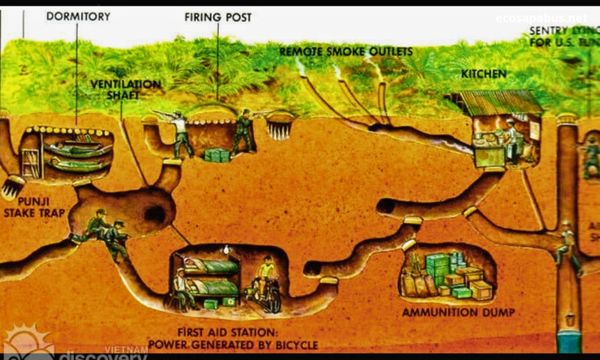
Cu Chi Tunnels — 250km underground network, claustrophobic but historically fascinating
Cu Chi Tunnels: Is It Worth It?
Short answer: Yes, if you're interested in Vietnam War history. Cu Chi Tunnels are 70km northwest of Saigon (1.5 hours drive). This is where Viet Cong soldiers lived underground during the war — a 250km tunnel network with living quarters, hospitals, kitchens, and command centers completely hidden below ground.
What You'll Actually Do
- Watch a propaganda film (10 minutes) about the "heroic Vietnamese people defeating American invaders" — very one-sided but historically interesting
- Crawl through tourist tunnels (widened from 80cm to 120cm for Westerners) — still claustrophobic. You can exit every 20-30 meters if it's too tight. Most people do 50-100m then exit. Original tunnels were too small for most tourists to fit.
- See booby traps — reproduction spike traps and hidden entrances. Guides demonstrate how soldiers disappeared into the jungle.
- Shooting range — fire real AK-47, M16, or carbine rifles ($1-2 USD per bullet, minimum 10 bullets). VERY LOUD even with ear protection. Optional — you can skip this.
- Eat war rations — boiled tapioca (cassava) that soldiers survived on. Tastes like bland potato. Free sample.
Ben Dinh vs Ben Duoc: Which Site?
Ben Dinh: Closer (1.5 hours), more developed, busier with tour groups. Better infrastructure but more touristy.
Ben Duoc: Farther (2 hours), more authentic, fewer tourists, more original tunnels. Better if you want fewer crowds.
Most half-day tours go to Ben Dinh. Full-day tours visit Ben Duoc. Both are fine — you'll see essentially the same things.
Tour vs Independent Visit?
Book a tour — it's much easier. Tours cost $25-35 USD including transport, guide, entrance fee. Going independently requires renting a motorbike or negotiating with taxi (expensive) or taking public bus (complicated). Guide context is valuable for understanding historical significance. Don't try to DIY this one.
Cu Chi Tunnel Tips
- Wear closed shoes — flip flops are terrible for crawling through tunnels
- Bring water — it gets HOT and dusty
- Come early — tours fill up, best to book 1-2 days in advance
- Skip shooting range if loud noises bother you — it's EXTREMELY loud even from distance
- Claustrophobic? You can still enjoy above-ground exhibits and tunnels have frequent exit points
- Expect propaganda — guide will use terms like "American invaders" and "puppet government" — this is standard Vietnamese government narrative
Mekong Delta: Should You Do Overnight or Day Trip?
The Mekong Delta is the "rice bowl of Vietnam" — vast wetlands south of Saigon where the Mekong River splits into nine tributaries before reaching the sea. Floating markets, fruit orchards, narrow canals, local island villages. It's a completely different world from Saigon chaos.
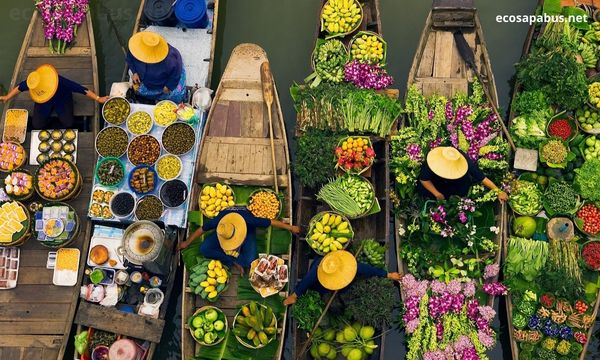
Mekong Delta floating markets — best experienced on 2-day overnight tour to catch morning market
Day Trip (Not Recommended)
12-14 hour day: Leave Saigon 7am, drive 2 hours to My Tho, boat ride on canals, visit coconut candy workshop, lunch, bee farm, fruit orchard, drive 2 hours back to Saigon by 7-8pm. Cost: $25-35 USD.
Why we don't recommend: Too rushed. You spend 4 hours in a van for 4 hours of actual delta experience. The famous floating markets operate 5am-8am only — day trips miss them completely. You see "tourist islands" set up for day-trippers, not authentic village life.
2-Day/1-Night Tour (RECOMMENDED)
Much better experience: Day 1 leave Saigon afternoon, arrive delta evening, stay in homestay or floating hotel. Wake up 5am Day 2 for authentic floating market (Cai Rang near Can Tho is biggest), local breakfast, cycling through villages, afternoon return to Saigon. Cost: $65-95 USD including meals and accommodation.
Why it's worth the extra day: You actually experience delta life — sunrise boat rides, floating markets when they're active, sleeping in traditional Vietnamese homestay, homemade family dinners, cycling through fruit orchards without rush. This is what the delta is actually about.
Mekong Delta 2-Day Floating Market Tour
Experience the real Mekong — sleep in a traditional homestay, wake at 5am to catch Cai Rang Floating Market at its liveliest, cycle through fruit orchards, visit local family workshops, enjoy home-cooked Southern Vietnamese meals.
Independent Mekong Trip (Budget Option)
If you're truly on a budget, you can reach Mekong Delta independently: Bus from Saigon to Can Tho (3.5 hours, 120,000-160,000 VND), stay in Can Tho hostel ($5-10 USD/night), hire local boat at pier for floating market morning tour (negotiate 150,000-200,000 VND for 2 hours), explore by rented bicycle. Saves money but you miss guided context and logistics are complicated with language barriers.
Vietnamese Coffee Culture (The Real Deal)
Vietnamese coffee is not like Starbucks. It's thick, intense, and traditionally served over ice with sweetened condensed milk. The coffee culture here is about sitting on tiny plastic stools on the sidewalk watching motorbikes pass by for 2 hours, not grabbing a to-go cup. For coffee culture in the north, see our Hanoi cafe guide.

Ca phe sua da (iced coffee with condensed milk) — fuel of Vietnam, 15,000-25,000 VND at local cafes
What to Order
- Ca phe sua da: Iced coffee with sweetened condensed milk. The classic. Strong, sweet, served over ice. 15,000-25,000 VND at local cafes, 60,000-100,000 VND at hipster cafes.
- Ca phe den da: Black iced coffee, no milk. Bitter and strong. For purists.
- Ca phe sua nong: Hot coffee with condensed milk. Same as ca phe sua da but served hot — better in air-conditioned cafes.
- Bac xiu: More milk than coffee, sweeter and lighter. Good if you find ca phe sua da too strong.
- Ca phe trung: Egg coffee — whipped egg yolk, sugar, and coffee creates frothy custard-like drink. Hanoi specialty but available in Saigon. Tastes like liquid tiramisu. Must try.
Where to Drink Coffee Like a Local
Avoid: Highlands Coffee, The Coffee House, Starbucks, Trung Nguyen — these are Vietnamese chains but expensive (50,000-80,000 VND) and bland.
Try: Street corner cafes with plastic stools, no name, just "CA PHE" sign. Order "mot ca phe sua da" (one iced milk coffee), sit on tiny stool, watch life happen. This is Vietnamese coffee culture. Cost: 15,000-20,000 VND.
Good authentic spots in District 1:
- The Workshop: Hipster but good quality, 45,000-70,000 VND. Multiple locations. Good for people who can't handle plastic stool culture but want real Vietnamese coffee.
- L'Usine: French-Vietnamese cafe, beautiful space, 60,000-90,000 VND. Overpriced but the coffee is actually excellent and space is calm.
- Any random street cafe on Nguyen Trai Street: This is where locals drink. Look for plastic stools, Vietnamese men playing cards, no English. Order by pointing at what other people are drinking. 15,000 VND.
Coffee Ordering Tips
- Traditional brewing is SLOW — coffee drips through metal filter (phin) for 5-7 minutes. Don't order Vietnamese coffee if you're in a hurry.
- "Da" means ice — if you don't want ice, order "nong" (hot) instead
- It's meant to be sipped slowly — Vietnamese people make one coffee last 1-2 hours
- Condensed milk is already sweet — don't add sugar unless you want diabetes
- Coconut coffee is a thing — ca phe cot dua, tastes like coconut cream + coffee, very rich
Best Time to Visit Ho Chi Minh City
December to April: Dry Season (BEST)
Weather: 25-33°C (77-91°F), minimal rain, blue skies. December-February is peak tourist season and the best time to visit Saigon — most comfortable temperatures (coolest months), hotels fill up fast, prices slightly higher. March-April gets HOT (32-35°C) but still dry and pleasant in mornings/evenings.
Best months: January-February for weather, March for fewer crowds and better hotel deals (shoulder season).
May to November: Rainy Season
Weather: 28-33°C but with afternoon rain. Not constant drizzle — expect 1-2 hours of HEAVY downpour around 2-4pm, then it stops and sun comes out. Mornings are usually clear. Streets flood easily (poor drainage) so bring waterproof shoes.
Pros: Fewer tourists, cheaper hotels, everything is green and lush, mornings are still clear for sightseeing.
Cons: Daily afternoon rain disrupts plans, humidity is brutal (feels like 38-40°C), September-October has worst flooding.
Tet (Lunar New Year): Late January / Early February
Dates vary: 2026 Tet is January 29. Most shops and restaurants CLOSE for 3-5 days. Locals travel to hometowns, Saigon feels like ghost town. However: If you're in Saigon during Tet, the atmosphere is incredible — fireworks, lion dances, families in traditional ao dai, flower markets. Just book accommodation WAY in advance and expect limited food options.
Weather Packing List
Dry season (Dec-Apr): Light breathable clothes, sunscreen, hat, sunglasses. Nights can be slightly cool (23-25°C) so bring one long sleeve.
Rainy season (May-Nov): Add rain jacket or compact umbrella, waterproof shoes (Tevas, Crocs, sandals better than sneakers), quick-dry clothes. Consider timing outdoor activities for mornings before afternoon rain hits.
Where to Stay in Ho Chi Minh City
District 1: Tourist Hub (MOST CONVENIENT)
Best for first-timers deciding where to stay in District 1. Walking distance to Notre Dame, Central Post Office, Ben Thanh Market, War Remnants Museum, best hotels in Saigon, best street food, tons of restaurants. Loud — expect motorbike noise 24/7. Hotels from $15 budget hostels to $200 luxury hotels.
Specific streets:
- Bui Vien Walking Street: Backpacker area Saigon central. Cheap hostels ($8-15 USD/night), 24-hour bars, loud music, Saigon nightlife, very international crowd. Stay here if you're 20-something and want nightlife. Avoid if you want sleep. For a calmer backpacker scene, check Hoi An's Ancient Town.
- Dong Khoi Street: Upscale shopping street near Saigon River. Nice boutique hotels ($50-150 USD), quieter than Bui Vien, close to colonial landmarks.
- Le Thanh Ton / Hai Ba Trung: Mid-range hotel zone, quieter residential streets but still central. Good balance. Hotels $25-60 USD/night.
District 2: Modern & Quiet (EXPAT AREA)
Best if you want calm. Thao Dien neighborhood is where wealthy locals and Western expats live — leafy streets, international restaurants, art galleries, riverside cafes. Not walking distance to tourist sites — you'll need Grab for everything. Hotels more expensive ($60-150 USD) for the quiet and modern infrastructure. Good for families or people who've already done the "tourist Saigon" thing.
District 5: Chinatown (AUTHENTIC)
Best for culture immersion. Cho Lon is where Chinese-Vietnamese community lives — huge wholesale markets, Chinese temples, street food you've never seen. Very few tourists. Hotels cheaper ($15-40 USD) and you'll experience "real Saigon" but it's farther from main tourist sites (15-20 minute Grab to District 1). Choose this if you want authentic local life over convenience.
Hotel Booking Tips
- Book on Booking.com or Agoda — better prices than booking directly with hotels, free cancellation options
- Check Google Maps location carefully — some hotels claim "District 1" but are actually in District 3 or District 10 (farther away)
- Read reviews about noise — street-facing rooms in District 1 can be VERY loud until 2-3am
- Rooftop pool = hotel is probably overpriced — you're paying for Instagram not value
- Vietnamese hotels often include breakfast — confirm before booking separately
Street Food: Where to Eat Like a Local
The best food in Saigon is not in restaurants. It's on plastic stools on the sidewalk where vendors have been making the same dish for 30 years.
Nguyen Trai Street: Local Food Hub
Best street food in District 1. This street runs parallel to Bui Vien but locals actually eat here. Evening (6-10pm) is best time — dozens of vendors set up: pho, bun bo Hue, banh xeo (sizzling pancakes), grilled seafood, che (sweet soup dessert). Nothing costs more than 60,000 VND. Look for vendors with Vietnamese families eating, not tourists. No English menus — order by pointing at what looks good.
Ben Thanh Night Market (Outside, Not Inside)
After 6pm when Ben Thanh Market closes, streets around the market transform into night market. The food is outside on the streets, not inside the market building. Grilled meat skewers, seafood, banh mi, fresh fruit shakes. Still touristy but better than the indoor food court. Expect 50,000-80,000 VND per dish. Walk around first, see what looks good, then sit down and order.
Specific Dishes to Try (And Where)
Pho (Beef Noodle Soup)
Where: Pho 2000 (Ben Thanh Market area, 40,000 VND) — this is where Bill Clinton ate in 2000, now mildly touristy but still good. Better: Pho Hoa Pasteur (259 Pasteur St, 45,000 VND) — locals queue here.
Banh Mi (Vietnamese Sandwich)
Where: Banh Mi Huynh Hoa (26 Le Thi Rieng, 35,000 VND) — the most famous banh mi in Saigon, long queue but fast moving. Absolutely loaded with meats, pate, vegetables. Worth the wait.
Bun Cha (Grilled Pork with Vermicelli)
Where: Bun Cha 34 (34 Hang Than St, 55,000 VND) — Hanoi dish that's hard to find well-done in Saigon. This place nails it. Charcoal-grilled pork, cold vermicelli, dipping sauce with pickled vegetables.
Banh Xeo (Sizzling Crepe)
Where: Banh Xeo 46A (46A Dinh Cong Trang, 45,000 VND per crepe) — crispy rice flour crepe filled with pork, shrimp, bean sprouts. You tear pieces, wrap in lettuce + herbs, dip in fish sauce. Interactive and delicious.
Com Tam (Broken Rice)
Where: Any small shop with "Com Tam" sign. Try Com Tam Ba Ghien (62 Ho Hao Hon, 50,000 VND) — broken rice with grilled pork chop, shredded pork skin, egg meatloaf, pickled vegetables. This is working-class Vietnamese comfort food.
Street Food Safety Rules
- Eat where it's freshly cooked — watch them cook your food, don't eat pre-cooked items sitting out
- Ice is fine in District 1 — restaurants use filtered ice, not tap water ice. Outer districts: skip ice to be safe.
- Avoid raw vegetables at questionable vendors — lettuce/herbs washed in tap water can cause stomach issues. Cooked food is safest.
- Bring toilet paper — many street food spots have squat toilets with no TP
- Pro tip: If Vietnamese families are eating there with young children = safe. If only tourists = question it.
Sample 3-Day Saigon Itinerary
Day 1: Colonial Saigon + Street Food
- Morning: Notre Dame Cathedral (exterior photo), Central Post Office (15 min), walk to Saigon Opera House (exterior), coffee at nearby cafe (ca phe sua da)
- Late Morning: War Remnants Museum (2-3 hours — this will be heavy)
- Lunch: Pho 2000 or Pho Hoa Pasteur (40,000-50,000 VND)
- Afternoon: Walk along Dong Khoi Street shopping district, Reunification Palace (1.5 hours), Ben Thanh Market quick browse (45 min)
- Evening: Street food on Nguyen Trai Street — try banh xeo, grilled seafood, finish with che (sweet soup dessert)
Day 2: Cu Chi Tunnels Half-Day Tour
- 7:30am: Cu Chi Tunnels day trip pickup from hotel
- 9:00am-1:00pm: Tunnel exploration, crawling experience, shooting range (optional), lunch included
- 2:00pm: Return to Saigon
- Afternoon: Rest at hotel (Cu Chi is tiring), swim, nap
- Evening: Saigon Skydeck sunset (5:30-6:30pm), then dinner in District 2 Thao Dien area (art galleries + riverside restaurants)
Day 3: Chinatown + Mekong Departure
- Morning: Cho Lon Chinatown — Binh Tay Market (7-10am when most active), Thien Hau Pagoda, Chinese breakfast on Chau Van Liem Street
- Lunch: Banh Mi Huynh Hoa (worth the queue)
- 1:00pm: Depart for Mekong Delta tour from Saigon 2-day trip OR if staying in Saigon: afternoon spa/massage, evening Bui Vien Walking Street experience (if you want backpacker party vibe). Alternatively, take the train to Da Nang to continue your Vietnam journey.
Essential Apps for Saigon
- Grab: Ride-hailing (most important app). Download before arrival.
- Google Maps: Navigation. Works well in Saigon, has Vietnamese addresses.
- Google Translate: Download Vietnamese language pack for offline use. Camera translation helps reading menus.
- XE Currency: Quick VND to USD/EUR conversion. Helpful when negotiating prices.
- Booking.com / Agoda: Hotel bookings with Vietnamese listings.
- WhatsApp: Most tour operators communicate via WhatsApp for booking.
Quick Vietnamese Phrases
- Xin chào (sin chow) — Hello
- Cảm ơn (gahm uhn) — Thank you
- Không, cảm ơn (kohm gahm uhn) — No, thank you
- Bao nhiêu? (bow nyew) — How much?
- Đắt quá! (daht gwah) — Too expensive!
- Giảm giá được không? (gee-um yah doo-uk kohm) — Can you reduce the price?
- Một ca phe sua da (moht gah-feh soo-ah dah) — One iced milk coffee
- Ngon! (ngon) — Delicious!
- Toilet ở đâu? (toy-let uh dow) — Where is the toilet?
- Dừng xe! (zoong seh) — Stop the vehicle! (for scam taxis)
Final Tips from Locals
Things We Wish Tourists Knew
- Cross streets slowly and steadily — motorbikes will flow around you like water. DON'T run, stop suddenly, or go backwards. Just walk at steady pace. This feels terrifying but works.
- Bargain at markets, never in restaurants — negotiating street vendor prices is expected. Negotiating restaurant bills is rude.
- Tipping is not expected — we don't have tipping culture. Leave 20,000-50,000 VND if service was exceptional, but locals don't tip. Tourist restaurants may add 5-10% service charge automatically.
- Vietnamese people are direct but friendly — if someone says "you're fat" or "you look old" they're not being mean, just observational. Our culture is more direct than Western politeness.
- Learn to eat with chopsticks — forks are available in tourist restaurants but locals use chopsticks for everything. Trying shows respect.
- Don't leave chopsticks standing up in rice bowl — this is funeral ritual, very bad luck
- Dress modestly in temples — cover shoulders and knees. No problem in streets/restaurants but pagodas/temples need respectful clothing.
Most important: Saigon is chaotic, loud, overwhelming, and absolutely incredible. Don't fight the chaos — embrace it. Sit on a plastic stool, drink ca phe sua da, watch millions of motorbikes pass by, eat pho at 6am, and accept that crossing the street is an act of faith. This city will exhaust you and exhilarate you, often in the same hour. That's Saigon.
Safe travels, and remember: we're here to help. Message us on WhatsApp anytime with questions or to book tours. We actually respond. 💚