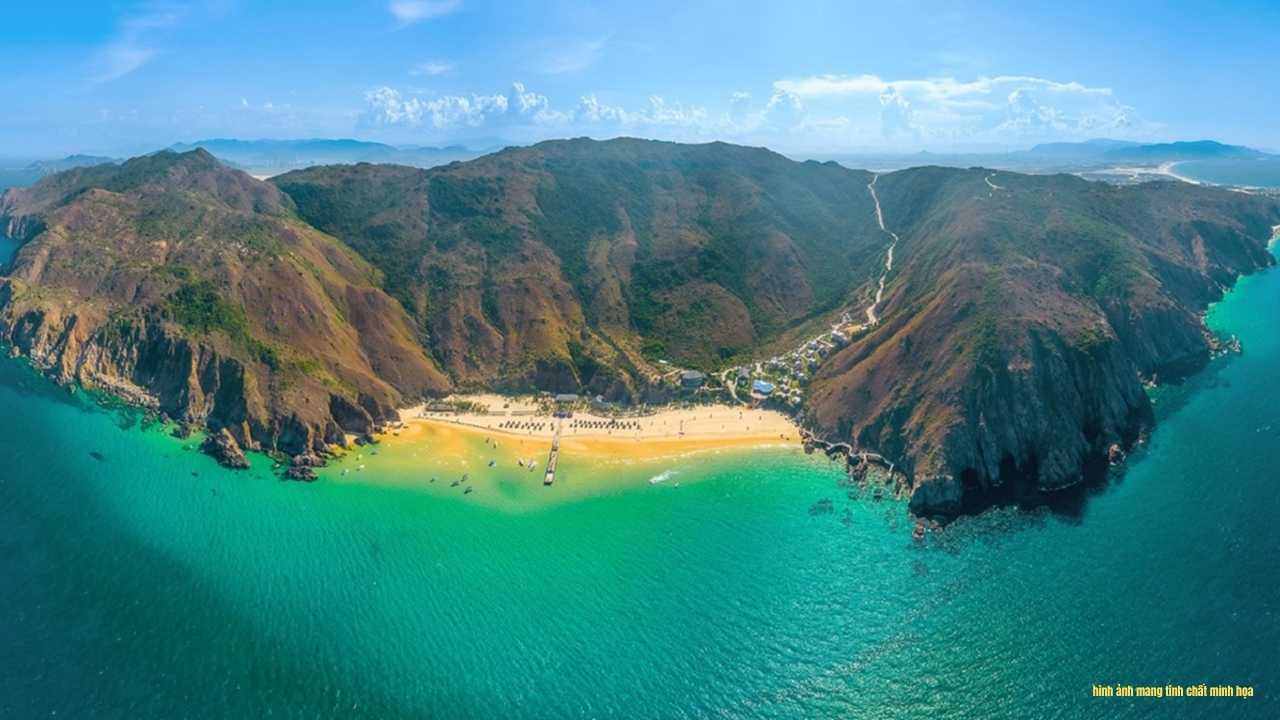

Is Quy Nhon Worth Visiting in 2026? — The Honest Answer
- Location: Binh Dinh Province, south-central coast of Vietnam — roughly 650km south of Hanoi, 300km north of Nha Trang
- Population: ~450,000 — a real Vietnamese city, not a resort enclave
- Known for: Ky Co Beach, Bai Xep fishing village, ancient Cham towers, extraordinary coastal seafood
- Main beaches: Quy Nhon City Beach (free), Ky Co (boat access, ~50k VND), Bai Xep (6km south, free)
- Ideal stay: 3–4 days minimum; 5–6 for slow travelers who want to explore the wider Binh Dinh province
- Best season: March–August (dry, warm, calm seas) — October–December is rainy season, avoid
- Getting there: Fly to Phu Cat Airport (PCW), or train from Da Nang (3.5 hrs) / Nha Trang (2.5 hrs)
Yes — emphatically, and especially in 2026 before it changes further. Quy Nhon is one of the most complete coastal travel destinations in Vietnam: genuinely beautiful beaches that aren't yet overrun, a city with authentic Vietnamese daily life that hasn't pivoted entirely to tourism, a Cham cultural heritage spanning dozens of tower complexes scattered across the surrounding countryside, and seafood so fresh and cheap it'll recalibrate your expectations for the rest of the trip. What Quy Nhon is not is easy to reach by international flight, which is precisely why it's stayed this way. Phu Cat Airport is growing and the resort developers have arrived. The window for experiencing Quy Nhon as it currently is — local, affordable, unhurried — is real but not indefinite. The travellers who come now will be the ones telling others about it in five years.
Quy Nhon sits at the southern edge of Binh Dinh Province, where a long curved bay bends between a headland forested in casuarina pines and the broad flat coastline of the city itself. The bay has been inhabited for over a millennium — this was the heartland of the Cham Kingdom of Vijaya, which flourished here from the 10th to 15th centuries before falling to Vietnamese expansion from the north. The Cham left an extraordinary architectural legacy: more Hindu tower complexes than anywhere else in Vietnam, built in fired brick with a precision that still confounds engineers today. Most visitors know about My Son near Hoi An, but the Binh Dinh towers — Banh It, Duong Long, Canh Tien — are better preserved, less visited, and surrounded by working rice fields rather than tourist infrastructure.
For American, Australian, British and Singaporean visitors, Quy Nhon often slots naturally into a south-to-north or north-to-south Vietnam itinerary between Da Nang and Nha Trang. It works perfectly as a three-to-four-night stop. It also works as a destination in its own right, particularly for anyone who finds Da Nang overstimulating and Hoi An over-curated.

🏖️ Quy Nhon — At a Glance
- Best for: Beach lovers, cultural history, food tourism, photographers, travellers escaping the tourist trail
- Ideal trip: 3–4 nights standalone, or a stop between Da Nang and Nha Trang
- Nearest airport: Phu Cat (PCW), 35km north — about 45 minutes and 150,000–200,000 VND by taxi
- Cost level: Significantly cheaper than Da Nang and Hoi An. Mid-range travellers will spend $30–60/day all-in.
- Best season: March–August · good swimming · calm seas · clear skies
- Vibe: Real Vietnamese city with an emerging but not yet dominant tourism scene
- Don't miss: Ky Co Beach, Bai Xep village, Banh It Towers, Ghenh Rang headland, the Quy Nhon morning seafood market
What to See & Do in Quy Nhon — In Honest Detail
Quy Nhon rewards a loose itinerary. The beaches pull you in one direction, the Cham towers in another, and the city's morning market and seafood restaurants fill the gaps. Here is everything worth your time — including the things most visitors miss.
1. Ky Co Beach — The One That Changes Everything
Ky Co is consistently described by visitors as one of the most beautiful beaches they've seen anywhere in Southeast Asia, and based on what the water actually looks like, this is not an exaggeration. The beach occupies a sheltered cove on a small island-like headland accessed by a 20-minute boat ride from Nhon Ly fishing village, about 20km north of Quy Nhon city. The colour of the water — a layered gradient from aquamarine in the shallows to deep cobalt at depth — is produced by the clarity of the sea and the white sand below. There is good snorkelling around the rocky headlands at either end of the cove. A simple bamboo shack on the beach sells grilled seafood, cold beer and sugarcane juice. That is all there is, and it is exactly enough. Read the full Ky Co Beach guide →
Honest note: Ky Co is busiest on Vietnamese public holidays and summer weekends (June–August), when boats from Nhon Ly run full and the beach gets crowded by Vietnamese domestic tourists. Come on a Tuesday in April and you'll have most of it to yourself. The boat crossing can be rough in afternoon wind — depart for the return by 3 PM at the latest.
2. Bai Xep — The Fishing Village Beach That Deserves More Time
Bai Xep (Làng Chài Bãi Xép) is a working fishing village 6km south of Quy Nhon city, wedged between coastal cliffs and a small sandy cove. The beach here is narrower and more intimate than Ky Co — not the turquoise drama of the island cove, but a genuinely beautiful stretch of dark sand and volcanic rock formations, backed by wooden fishing boats and the kind of village scene that most of coastal Vietnam's tourist beaches have permanently lost. A small community of guesthouses and laid-back beach cafés has grown up around the village over the past decade, and Bai Xep has developed a quiet reputation among slow-travel backpackers as one of the best places in Vietnam to simply stay put for a few days. Bai Xep village guide →
3. Ghenh Rang Headland & Hàn Mặc Tử Tomb
The Ghenh Rang headland, a pine-forested promontory at the northern end of the main city beach, is Quy Nhon's most atmospheric urban escape. A stone path winds through casuarina pines along the cliff edge, passing the tomb of Hàn Mặc Tử — one of Vietnam's most celebrated early 20th-century poets, who spent his final years in Quy Nhon and died here in 1940. The tomb and the sea views from the cliff path are legitimately moving. The path eventually descends to a series of small rocky coves — Quy Hoa Beach and the surrounding inlets — that are excellent for swimming in good conditions. Come at sunrise or late afternoon for the best light and fewest people.
4. The Cham Towers of Binh Dinh — What Most Visitors Skip
The Cham Kingdom of Vijaya ruled from Binh Dinh for nearly five centuries, and its architectural legacy is scattered across the province in a series of tower complexes that are arguably the finest example of Cham religious architecture in Vietnam. Most travellers know the UNESCO site of My Son near Hoi An — but the Binh Dinh towers are better preserved, less visited, and more dramatically situated. Banh It Towers (25km north of Quy Nhon) occupy a hilltop above rice fields with views to the coast — the most visually dramatic of the Binh Dinh complexes. Duong Long Towers (50km north) contain the tallest surviving brick Cham towers in the world. Twin Towers (Thap Doi) sit right in Quy Nhon city — easy to visit, often ignored. A half-day motorbike circuit covering all three is one of the most rewarding day trips on the central Vietnam coast. Complete Cham tower guide for Binh Dinh →
5. Thi Nai Lagoon — Vietnam's Longest Sea-Crossing Road
The causeway crossing Thi Nai Lagoon — Vietnam's largest coastal lagoon — is one of those accidental spectacles that travel guides consistently undervalue. At over 7km long, the road runs almost entirely over water, passing fishing villages built on stilts in the lagoon and offering unobstructed views north and south across the water. At sunset, the lagoon surface goes orange and then purple, the fishing boats return, and the light on the Phuong Mai Peninsula opposite is extraordinary. This costs nothing, requires nothing but a motorbike, and is genuinely one of the most beautiful sunset drives in central Vietnam.
Tourist Traps & Common Mistakes — Read Before You Go
Quy Nhon is one of the more honest tourism environments in Vietnam — the city simply doesn't have the volume of visitors that incentivises the systematic overcharging found in Hoi An or Nha Trang. But it's not entirely trap-free. Here is what to know:
- Unlicensed boat operators to Ky Co: Multiple boat operators work the route from Nhon Ly to Ky Co, and quality varies considerably. Boats should be seaworthy, have life jackets available, and have a licensed operator. Avoid boats that are visibly run-down, have no safety equipment, or whose operators seem to be improvising the operation. The crossing is short but the channel can have chop. Ask your guesthouse to recommend a specific operator they trust rather than accepting whoever approaches you at the dock.
- Taxi overcharging from Phu Cat Airport: The fixed taxi rate from Phu Cat Airport to Quy Nhon city is approximately 280,000–350,000 VND for a metered cab. Some non-metered taxis parked outside arrivals quote 400,000–600,000 VND or more. Use the official taxi counter inside the terminal, request a metered cab, or arrange a grab car through the app before you land. The airport is 35km from the city — the journey takes 35–50 minutes depending on traffic.
- Seafood restaurant tourist pricing: The seafood restaurants on the main tourist-facing streets (An Duong Vuong in particular) do charge more for foreigners, particularly for market-rate items like lobster, mud crab and sea urchin. The practice isn't aggressive but the differential is real. The most reliable strategy: ask for a price before you order anything from the display tanks, and eat where local families eat — follow the noise and the motorbikes. Locals and tourists eating in the same restaurant at different prices is the norm; locals eating somewhere you can't find is the sign you've found the right place.
- Motorbike rental without inspection: Renting a motorbike in Quy Nhon is the correct way to explore the Cham towers, Thi Nai Lagoon, and the coastal road south. However, some rental shops have a habit of noting pre-existing damage after your return rather than before. Take photographs or a short video of the entire bike before riding away, in front of the rental shop staff. This prevents almost all disputes. Standard rental rate: 100,000–180,000 VND per day for a manual 110cc; 200,000–300,000 VND for a semi-automatic or larger.
- Missing the rainy season window: This isn't a scam but it is the single most common mistake. Central Vietnam's rainy season hits hard from October through December. Quy Nhon's bay provides some shelter from typhoon swell compared to exposed coasts, but the rain is persistent, seas are rough, and Ky Co boats often don't run. Several visitors book Quy Nhon in November without checking the climate and arrive to grey skies and closed beaches. March to August is the window. Check before you book.
- Rushing the Cham towers: The Cham tower sites don't have extensive on-site interpretation in English. Visitors who drive up, photograph the exterior and drive away in 15 minutes typically leave feeling underwhelmed. These are extraordinary architectural achievements — brick structures built without mortar that have stood for 800–1,000 years — but they require some context to appreciate fully. Read about Cham history before your visit, or hire a local guide for the morning. The extra investment in context turns a confused roadside stop into a genuinely memorable experience.
What to Eat in Quy Nhon — Local Seafood & Food Guide
Quy Nhon's food culture is one of the strongest arguments for visiting. The city sits at the intersection of central Vietnamese cuisine — already among the most complex and layered in the country — and one of the most productive fishing coasts in Southeast Asia. The result is a food scene that regularly leaves visitors re-evaluating what they thought they knew about Vietnamese cooking.
Real Prices in Quy Nhon 2026 — What Things Actually Cost
Quy Nhon is one of the most affordable major coastal destinations in Vietnam. The city hasn't undergone the price inflation that has hit Da Nang and Hoi An, and even the tourist-facing restaurants and hotels remain significantly cheaper than their equivalents further north. Here are real 2026 ground prices:
| Item | Price (VND) | USD | Notes |
|---|---|---|---|
| Taxi from Phu Cat Airport to city | 280,000–350,000 | $11–14 | Use metered cab or pre-book Grab. Journey ~45 min. |
| Grab car within Quy Nhon city | 25,000–60,000 | $1–2.40 | Grab works well in the city. Motorbike rides cheaper. |
| Boat to Ky Co Beach (return) | 50,000–80,000 | $2–3.20 | Per person, from Nhon Ly village. Confirm includes return. |
| Motorbike rental per day | 100,000–180,000 | $4–7.20 | Manual 110cc. Photograph damage before you ride. |
| Bún chả cá (fish cake noodle soup) | 25,000–45,000 | $1–1.80 | The local breakfast. Available from 6 AM, gone by 9. |
| Bánh xèo (sizzling pancake, 3–4) | 60,000–120,000 | $2.40–4.80 | Best for lunch or an early evening snack. |
| Fresh lobster (per 500g) | 200,000–500,000 | $8–20 | Price varies with catch. Always confirm before ordering. |
| Gỏi cá mai (raw fish salad) | 80,000–150,000 | $3.20–6 | Hyperlocal dish. Order it — you won't find this elsewhere. |
| Cold beer (Bia Saigon/333) | 15,000–25,000 | $0.60–1 | Cold and cheap. The correct pairing for grilled seafood. |
| Budget guesthouse (private room) | 200,000–400,000 | $8–16 | Clean, central, AC. Bai Xep guesthouses often cheaper. |
| Mid-range hotel (private room, sea view) | 600,000–1,400,000 | $24–56 | Good options on Xuan Dieu Street with bay view. |
| Luxury beach resort | 2,500,000–6,000,000+ | $100–240+ | FLC Quy Nhon and Avani are the top-end options. |
| Entry to Twin Towers (Thap Doi) | 10,000–20,000 | $0.40–0.80 | Small site fee at most Cham tower complexes. |
| Banh It Cham Towers entry | 20,000–30,000 | $0.80–1.20 | 25km north of the city. Best combined with Duong Long. |
| Train Quy Nhon → Da Nang (soft seat) | 180,000–350,000 | $7.20–14 | ~3.5 hours. Book at least 1 day ahead. Scenic coastal route. |
Best Time to Visit Quy Nhon — Month by Month
Central Vietnam's climate divides sharply between a dry season and a rainy season, and the timing matters more in Quy Nhon than in many destinations because the beaches and boat trips are the whole point. Here is what the year actually looks like on the ground:
April–August: Peak season — dry, warm (28–34°C), with calm seas ideal for Ky Co boat trips and swimming. June and July see the highest domestic visitor numbers; April–May offers peak conditions with noticeably fewer crowds. March: Transitional — mostly dry but occasional overcast days; sea temperature rising. Good value on accommodation. February: Still some residual cool and occasional cloud from January, but conditions improving rapidly; a quietly underrated time to visit. September: The changeover month — weather can go either way; check forecasts before booking boat trips. October–December: The rainy season hits central Vietnam hard during these months. Heavy rain, rough seas, and Ky Co boat trips often suspended. Typhoon risk peaks in October–November. Unless your schedule is fixed, avoid these months. January can be cool (22–24°C) and occasionally wet; not ideal for beach travel but fine for the Cham tower circuit and city exploration.
How to Get to Quy Nhon — From Hanoi, Da Nang, Ho Chi Minh City & Beyond
Quy Nhon is more connected than it used to be, though the options aren't as numerous as the big tourist hubs. Here is how to get there from each major gateway:
Option 1: Fly to Phu Cat Airport (PCW) — Fastest
Phu Cat Airport, 35km north of Quy Nhon city, receives direct flights from Hanoi (Noi Bai) and Ho Chi Minh City (Tan Son Nhat) with Vietnam Airlines, VietJet Air and Bamboo Airways. Flight time from Hanoi is approximately 1 hour 20 minutes; from Ho Chi Minh City, around 1 hour. From the airport, take a metered taxi (280,000–350,000 VND, 45 minutes) or arrange a pre-booked transfer. Do not use unmarked taxis parked outside arrivals — use the official counter inside or book a Grab car through the app.
Option 2: Train — Scenic and Comfortable
Quy Nhon sits on the Reunification Express line between Hanoi and Ho Chi Minh City. The nearest station with the most services is actually Dieu Tri Station, 10km northwest of the city (not "Quy Nhon Station," which has limited services and requires a connection). From Da Nang, the train south to Dieu Tri takes approximately 3–3.5 hours and is one of the most scenic rail journeys in Vietnam — the line passes directly along sea cliffs and through coastal tunnels between Hai Van Pass and the Binh Dinh coast. Soft seat tickets: 180,000–350,000 VND depending on train class. From Nha Trang, the journey north is about 2.5 hours. Book at least a day ahead, particularly for soft sleeper berths. Full Reunification Express train guide →
Option 3: Sleeper Bus from Da Nang or Nha Trang
Open-tour sleeper buses connect Quy Nhon with Da Nang (roughly 5 hours) and Nha Trang (roughly 4 hours). The most reliable operators are Phuong Trang (FUTA) and Hung Thanh. Tickets cost 120,000–200,000 VND per person. Sleeper buses drop and pick up at bus stations on the edge of the city — arrange a Grab car from the bus station to your accommodation. Buses run in the late evening and overnight for the longer routes.
From Sapa or North Vietnam
If you're starting your Vietnam trip in the north — Hanoi, Sapa, Ha Giang — the most efficient connection to Quy Nhon is to take an EcoSapa Bus limousine from Sapa to Hanoi, then fly Hanoi–Phu Cat directly. The Sapa–Hanoi bus takes 5.5 hours; the flight is 1 hour 20 minutes. You can be in Quy Nhon from Sapa in a single day with an early start. Hanoi travel guide →
Quy Nhon slots naturally into a Hoi An → Quy Nhon → Nha Trang coastal itinerary, with train connections at each end. From Hoi An, take a taxi to Da Nang station (20 minutes), then train south to Dieu Tri (3.5 hours), then taxi to Quy Nhon. From Quy Nhon, take a taxi back to Dieu Tri station and train south to Nha Trang (2.5 hours). This is one of the most enjoyable sections of the entire Reunification Express journey — sea cliffs, fishing villages, mountain passes. Book trains at the station or via dsvn.vn a few days in advance.
Quy Nhon Itineraries — 2 Days, 3 Days & 4+ Days
Itinerary A: 2-Day Quick Stop — Best of the Beaches
| Time | Activity | Notes |
|---|---|---|
| Day 1 AM | Arrive, check in, walk Quy Nhon City Beach | The city beach is best before 8 AM or after 4 PM. Grab bún chả cá for breakfast. |
| Day 1 PM | Ghenh Rang headland walk + Hàn Mặc Tử tomb | 1.5–2 hours. Pine forest, sea cliffs, lovely light in late afternoon. |
| Day 1 Eve | Waterfront seafood dinner | Xuan Dieu Street restaurants. Order lobster, fish cake, morning glory. Cold beer. |
| Day 2 | Full day Ky Co Beach | Leave by 8 AM to Nhon Ly village (20km north by motorbike). Take 9 AM boat. Spend 4–5 hours at Ky Co. Return by 3 PM to avoid rough afternoon seas. |
| Day 2 Eve | Bai Xep village sunset | 6km south by motorbike. Watch fishing boats return. Eat grilled fish at beach shack. |
Itinerary B: 3-Day Recommended — Beaches, Culture & Food
| Day | Activity | Notes |
|---|---|---|
| Day 1 | City orientation + Ghenh Rang + Thi Nai Lagoon sunset | City beach walk at dawn. Bún chả cá breakfast. Ghenh Rang by midmorning. Thi Nai causeway sunset drive — essential. |
| Day 2 | Ky Co Beach full day | 8 AM departure. Snorkelling, swimming, fresh seafood on the beach. Back by 3 PM. |
| Day 3 | Cham Tower circuit (half day) + Bai Xep (afternoon) | Rent motorbike or hire driver. Banh It Towers (25km north, most impressive), Twin Towers in city. Afternoon at Bai Xep — hammock, rock pools, village life. |
Itinerary C: 4+ Days — The Full Binh Dinh Experience
With four days or more, you can extend the Cham tower circuit north to include Duong Long Towers — a full day trip 50km from the city requiring either a hired car or a confident motorbike rider. The towers sit on a ridge above rice fields with views in every direction, and at sunrise or late afternoon the light on the brick surfaces is extraordinary. You can also explore Eo Gio Cape (25km north of the city, dramatic wind-carved rock formations above a turquoise cove) and the less-visited beaches of Phuong Mai Peninsula on the opposite shore of Thi Nai Lagoon. Four days is the minimum to feel like you've understood the place; five days and it starts to feel like home. Full 4-day Quy Nhon itinerary →
Where to Stay in Quy Nhon — Honest Accommodation Guide
Accommodation in Quy Nhon covers the full spectrum from $8-per-night guesthouses in Bai Xep to upscale beach resorts north of the city. The key decision is location: the city beach area is convenient for restaurants and transport, Bai Xep is quieter and more atmospheric, and the resort zone north of the city trades convenience for significantly more expansive facilities.
The largest resort complex on the Binh Dinh coast, FLC Quy Nhon sits on a private peninsula 20km north of the city with a long private beach, multiple pools, a golf course and a range of villa accommodation types. The facilities are genuinely impressive — one of the better five-star resort complexes in central Vietnam — but the location means you'll need a car or motorbike for everything outside the resort. The internal shuttle to the city runs a few times daily. Best for families or couples prioritising beach and pool time over exploring the city.
Avani is the most reliably well-reviewed hotel in the city proper — a low-rise resort on the main city beach with an excellent pool, consistent service and rooms with genuine sea views from the upper floors. The beach here is public (Vietnamese law), but the resort's section is well maintained and significantly less crowded than the open city beach. Walking distance from the best Quy Nhon seafood restaurants. A sensible choice for travellers who want comfort and city access without the remote resort trade-off.
A long-standing Quy Nhon institution with sea-view rooms, clean facilities, a rooftop pool and a location directly on the main beach boulevard. The sea-view rooms on upper floors offer some of the best value beach hotel views in central Vietnam. Staff are experienced with international guests and can help arrange motorbike rental, boat trips to Ky Co and onward transport. Not glamorous but consistently reliable. Book a sea-view room — the price difference is worth it.
Several small guesthouses operate in and around Bai Xep fishing village, 6km south of the city — primarily aimed at backpackers and slow travellers who want to step outside the main tourist circuit. Rooms are basic (fan or AC, shared or private bathrooms, often with hammocks on a small terrace), but the setting — a working fishing village beach with boats, cats, and the smell of the sea — is completely irreplaceable. Life's A Beach and the surrounding handful of guesthouses have developed a loyal repeat-visitor following for exactly this reason. Arrange motorbike rental to get back and forth to the city.
Quy Nhon vs. Other Central Vietnam Coastal Destinations — Honest Comparison
Quy Nhon is not the only option on the central Vietnamese coast. Here's how it stacks up against the alternatives — honestly:
| Destination | Best Beaches | Crowds | Authenticity | Seafood | Best For |
|---|---|---|---|---|---|
| Quy Nhon | Ky Co, Bai Xep — world-class | Low–Moderate | Genuine Vietnamese city | Exceptional | Adventurous travellers, food lovers, culture |
| Da Nang | My Khe — long but busy | High | Heavily tourist-developed | Good | First-timers, Hoi An access, infrastructure |
| Nha Trang | City beach crowded; islands mixed | Very high | Very touristy | Good but expensive | Nightlife, diving, Russian-market tourism |
| Mui Ne | Red/White sand dunes, kite beach | Moderate | Resort-heavy | Decent | Kitesurfing, sand dunes, windy conditions |
| Phu Yen (Tuy Hoa) | Bai Mon, Xep — beautiful | Very Low | Very authentic | Excellent | Off-the-beaten-path, day trip from Quy Nhon |
| Con Dao Islands | Remote, pristine | Very Low | Authentic + history | Good | Remote island escape, diving, snorkelling |
Insider Tips — What Actually Makes a Quy Nhon Trip Work
Practical Notes — Getting Around & Cultural Context
Quy Nhon is a real Vietnamese provincial city — not a resort enclave built around international tourism. That's most of its appeal, but it does mean a few practical realities that visitors coming directly from Da Nang or Hoi An should know:
- English is limited outside tourist-facing businesses. Restaurant menus in local places will often be Vietnamese-only. A translation app (Google Translate's camera mode is invaluable) and a willingness to point and gesture gets you everywhere. Vietnamese people in Quy Nhon are generally warm, patient and amused by foreigner attempts to order food — not impatient.
- Cash is king in most places. The Quy Nhon city beach area has ATMs (Vietcombank and BIDV are reliable). Bai Xep village, Nhon Ly fishing village and Cham tower sites have no ATMs. Withdraw sufficient cash before heading out for the day — a day trip to Ky Co needs boat money, lunch money and motorbike petrol money in cash.
- Cham heritage sites deserve more than a photo stop. The Cham people built temples to Shiva, Vishnu and Uma — the towers are oriented to the cardinal points and constructed according to ritual specifications. Removing shoes before approaching the interior shrines is expected. Photography is permitted almost everywhere; be respectful inside tower interiors where active offerings or spirit houses are present.
- The fishing community uses the beach at dawn. Quy Nhon's city beach and the coves around Bai Xep are working fishing grounds, not resort infrastructure. Boats launch and land throughout the early morning. Watch where you walk on pre-dawn beach walks — fishing nets are sometimes laid on the sand. The fishing boats themselves are beautiful and photogenic; always ask before photographing fishermen at work.
- Vietnamese holidays mean beaches get busy. Tết (Lunar New Year, usually late January/early February), April 30th holiday, and September 2nd national holiday all result in high domestic tourist volumes. Ky Co is genuinely crowded on these dates. If your dates overlap with Vietnamese national holidays, add a day's buffer and go early.
Frequently Asked Questions — Quy Nhon Travel Guide 2026
Yes — strongly. Quy Nhon has beaches that rival the best in Southeast Asia (Ky Co in particular), extraordinary Cham cultural heritage, and some of the finest fresh seafood on the Vietnamese coast, all at prices that feel incongruously low compared to the quality. The city is genuine Vietnamese rather than resort-constructed, which either appeals to you strongly or less so — if you liked Da Nang five years ago before the development wave, you'll like Quy Nhon now. Come while it's still this way.
Fly to Phu Cat Airport (airport code: PCW), 35km north of Quy Nhon city. Vietnam Airlines, VietJet and Bamboo Airways all operate direct routes from Hanoi (Noi Bai) and Ho Chi Minh City (Tan Son Nhat). Flight time is approximately 1 hour 20 minutes from Hanoi and 1 hour from Ho Chi Minh City. From the airport, take a metered taxi (280,000–350,000 VND) or a pre-booked Grab car. Alternatively, from Da Nang or Nha Trang the train (via Dieu Tri station) is scenic and comfortable — 3.5 hours from Da Nang, 2.5 hours from Nha Trang.
Ky Co Beach is the standout — a turquoise cove on a headland accessible only by a 20-minute boat from Nhon Ly fishing village. The water colour and clarity are genuinely extraordinary. For a mainland beach with more character, Bai Xep (6km south of the city) has a real fishing village atmosphere, good rock formations and an excellent slow-travel vibe. The main city beach (Bai Tam Quy Nhon) is best for early morning walks and watching local life. Each serves a different purpose — all three are worth your time.
March to August, with April–June being the sweet spot — dry, warm (28–32°C), calm seas and significantly fewer domestic visitors than July–August. September begins the transition toward the rainy season. October through December is the rainy season in central Vietnam: persistent rain, rough seas and Ky Co boat trips frequently cancelled. January and February can still be cool and occasionally overcast. If your goal is beaches and boat trips, commit to the March–August window.
Three to four days is the sweet spot for most travellers. Day one: city orientation, Ghenh Rang headland, Thi Nai causeway sunset. Day two: Ky Co Beach full day. Day three: Cham tower circuit (Banh It, Twin Towers). Day four: Bai Xep village, slow morning, explore the fishing community. You can compress this into two days if you're passing through, but you'll feel rushed. Five days and it stops feeling like sightseeing and starts feeling like a proper rest — which is also completely valid.
Different rather than definitively better — but for a specific type of traveller, Quy Nhon wins. Da Nang has better international connections, Hoi An nearby, and more developed infrastructure. Nha Trang has more nightlife and established diving. What Quy Nhon has that neither can match: genuinely uncrowded beaches, authentic Vietnamese city life rather than a resort ecosystem, extraordinary Cham cultural heritage, and significantly better-value seafood. If you've already done Da Nang and Nha Trang and want something real and less processed, Quy Nhon is the answer.
Quy Nhon is one of the safest destinations in Vietnam for both solo travellers and families. Crime targeting tourists is very rare. Solo female travellers report feeling safe and unbothered in the city. The main practical considerations are: arrange licensed boat operators for Ky Co (don't accept unofficial offers), rent motorbikes only if you're experienced with Vietnamese traffic, and exercise normal caution with valuables on crowded public beaches during peak Vietnamese holiday periods. For families, the main city beach is calm and suitable for children; Ky Co's deeper water requires supervised swimming. The Cham tower sites are entirely family-friendly and genuinely interesting for curious older children.
The three most impressive Cham tower sites in Binh Dinh are: Banh It Towers (25km north of Quy Nhon) — four towers on a hilltop with 360-degree views, the most visually dramatic; Duong Long Towers (50km north) — the tallest surviving brick Cham towers in the world, with extraordinary carved sandstone decoration; and Twin Towers (Thap Doi) in Quy Nhon city itself — the most accessible, and a good introduction before the provincial sites. A half-day covering Banh It and the Twin Towers is realistic; Duong Long requires a full day due to the distance. Hiring a driver for the Duong Long trip is strongly recommended — 50km of provincial roads each way.