
Vung Tau (Vietnamese: Vũng Tàu, formerly Cap Saint-Jacques) is a coastal city on a peninsula in Bà Rịa–Vũng Tàu Province, Vietnam, located 128km southeast of Ho Chi Minh City with a population of approximately 350,000. It is Vietnam's most accessible beach escape from Saigon, reachable in 80 minutes by the Greenlines DP high-speed ferry. The city is famous for bánh khọt (crispy coconut-rice cakes unique to Vung Tau), ghẹ rang me (tamarind blue crab), the Christ the King statue at 32 metres (Asia's largest outdoor Christ statue), the 1898 White Palace (Bach Dinh), and three distinct beaches: Back Beach (Bãi Sau), Front Beach (Bãi Trước) and Pineapple Beach (Bãi Dứa). Best visited November–April (dry season). Recommended stay: 2 days.

Why Vung Tau? — The Honest Answer
- Location: Coastal city on a peninsula, Bà Rịa–Vũng Tàu Province — 128km southeast of HCMC
- Getting there from HCMC: Greenlines DP ferry 80 min · Bus 2–2.5 hrs · Private car 1.5–2 hrs
- Recommended stay: 1 day (day trip) · 2 days (ideal) · 3 nights (slow travel)
- Best season: November–April (dry season, calm seas, blue skies)
- Known for: Bánh khọt, tamarind crab, Christ the King statue, White Palace, colonial history
- Budget: Mid-range — cheaper than Phu Quoc, more expensive than Mui Ne street food strips
- Vibe: Real city, real Vietnamese daily life, beaches as a bonus — not a manufactured resort
Yes — especially if you're based in Ho Chi Minh City and tired of not having a beach. Vung Tau won't give you the Maldives. The water at Back Beach on a busy Saturday is murky, the tourist strip on Thuy Van is loud, and the city smells like diesel and fish sauce in equal proportion. That last part is a compliment. What Vung Tau offers instead of Instagram perfection is something genuinely rare in 2026: a beach city that hasn't been rebuilt for the tourist gaze, where the seafood restaurant you eat at might be the same one the crab fishermen ate at before dawn, where the promenade at sunset is full of Vietnamese grandmothers doing their evening walk rather than cocktail bars with DJs. For travelers willing to meet the city on its own terms, Vung Tau is deeply rewarding.
Vung Tau sits on a narrow peninsula between two volcanic mountains — Núi Nhỏ (Small Mountain) and Núi Lớn (Large Mountain) — with the South China Sea pressing in from three sides. The geography gives the city its character: dramatic, compact, always within sight of water, and naturally divided into distinct zones. The French built their villas here in 1898. The Americans used it as an R&R hub during the war. The oil industry moved in after reunification. Every era left architecture and attitude, and the layering is what makes Vung Tau worth more than one afternoon.
Saigonese have been escaping here for generations. Friday night ferry, Sunday afternoon return. They don't come for luxury — they come because the crab is the best in the south, because the motorbike roads around Small Mountain are empty at 6am, and because somewhere between the lighthouse and the Front Beach promenade, the city stops pressing on you. That's the real reason to go. If you're planning a longer south Vietnam trip, consider combining Vung Tau with Con Dao island — the speedboat connection runs from Vung Tau port directly, making them a natural pairing.
⚓ Vung Tau at a Glance — What You'll Actually Find
- Best for: Seafood, colonial heritage, beach escapes, motorbike day trips, first-time Vietnam visitors
- Ideal stay: 2 full days — one for beaches and food, one for hiking and history
- Nearest hub: Ho Chi Minh City — 80 min by Greenlines DP ferry from Bach Dang Wharf
- Budget level: Moderate — street food 20,000–50,000 VND, mid-range hotel $30–60/night
- Unique dish: Bánh khọt — crispy savoury rice cakes unique to Vung Tau. Eat them first thing.
- Must-do: Sunrise hike to Christ the King statue before 6am — empty paths, pink sky, 180° sea view
- Why locals go: Tamarind blue crab, bánh khọt, the lighthouse, the ferry back with cold beer
Getting from Ho Chi Minh City to Vung Tau — Every Option, Ranked Honestly
128km separates Ho Chi Minh City's District 1 from Back Beach. Depending on the day and time of week, those 128km can take 80 minutes or nearly four hours. Here is the complete, unvarnished breakdown — including the things the official booking sites don't tell you.
Option 1: Greenlines DP High-Speed Ferry ⭐ Best Choice
The Greenlines DP ferry departs from Bach Dang Wharf (Bến Bạch Đằng), District 1 — walkable from most central Saigon hotels. Journey time: 80–85 minutes. Four to five daily departures, earliest typically at 6:30am, last return from Vung Tau around 5:30–6pm.
The Friday evening and Saturday morning departures sell out by Wednesday or Thursday during Vietnamese public holidays and most long weekends. If you're traveling on any weekend in December, January or April 30–May 2, book minimum 5–7 days in advance. Sunday return ferries (especially 4pm and 5pm) are even more congested — choose an earlier return or expect standing room on the dock while you wait for a late seat release.
| Option | Duration | Cost (2026) | Best For |
|---|---|---|---|
| 🚢 Greenlines Ferry | 80–85 min | 200,000–270,000 VND ($8–11) | Solo travelers, couples, experience seekers |
| 🚌 Limousine Bus (FUTA, Hoang Long) | 2–2.5 hrs + traffic | 130,000–180,000 VND ($5–7) | Budget travelers, flexibility on timing |
| 🚗 Private Car Transfer | 1.5–2 hrs via expressway | $35–55 USD (1–4 pax) | Families, groups, luggage-heavy travelers |
| 🛺 Public Bus (Mien Dong) | 2.5–3.5 hrs | 80,000–100,000 VND ($3–4) | Budget backpackers only |
HCMC → Vung Tau Private Car Transfer
Yes, and it's more affordable per person than you think. EcoSapa Bus runs door-to-door private car transfers from any Ho Chi Minh City hotel to Vung Tau — via the expressway, in a clean air-conditioned vehicle, with a driver who knows where your hotel is. Return trip also available. No surcharges for luggage.
Getting Around Vung Tau
The city is compact — roughly 10km peninsula from north to south. Rent a motorbike. This is the single most important practical decision. Cost: 150,000–200,000 VND/day ($6–8), dozens of shops on Thuy Van street near Back Beach. Bring your passport (photocopy kept, passport returned). Wear the helmet. Stay left. Traffic inside Vung Tau is exponentially calmer than Saigon.
Grab (Vietnam's Uber) works well city-wide with honest metered pricing. A Grab car from the ferry terminal to Back Beach runs about 60,000–80,000 VND. Never accept unsolicited xe ôm (motorbike taxi) offers near the ferry terminal — aggressive pricing targeting newcomers is the city's main tourist nuisance.
Best Time to Visit Vung Tau — Month by Month
Vung Tau's weather is more forgiving than most of Vietnam's coast — it avoids the most severe monsoon effects and sits in a microclimate that gives it relatively stable conditions even in shoulder season. But there's still a right and wrong time to come.
Peak season (Dec–Jan): Best weather but highest weekend crowds and hotel prices up 40–60%. Book accommodation 2+ weeks ahead. Shoulder (Nov & Mar–Apr): Nearly as good weather, meaningfully fewer crowds, better prices. The best value window. Wet season (May–Sep): Afternoon thunderstorms arrive around 3pm and seas can get rough at Back Beach. Hotels 30% cheaper. Mornings are often clear — manageable for budget travelers. Weekday vs Weekend: Vung Tau on a Wednesday is a different city from Vung Tau on a Saturday. Crowds, prices and ferry availability all shift dramatically. If you can travel midweek, do it.
Current Weather in Vung Tau
Vung Tau Beaches — Compared Honestly
Vung Tau has three beaches and they are not interchangeable. Understanding the difference saves you from spending your best swimming hours at the wrong one. Here is the full comparison:
| Beach | Water Quality | Crowd Level | Best For | Verdict |
|---|---|---|---|---|
| 🏖️ Back Beach Bãi Sau |
Moderate — can be murky after rain. Waves in wet season. | High on weekends. Moderate weekdays. | Swimming, bodyboarding, beach bars, family afternoons | Best for swimming |
| 🌅 Front Beach Bãi Trước |
Poor for swimming — sheltered but not clean enough | Always buzzing — promenade life, not beach life | Sunset walk, coconut vendors, local atmosphere, evening cafes | Best for sunset |
| 🐠 Pineapple Beach Bãi Dứa |
Excellent — clearest and calmest water in Vung Tau | Half-empty even on weekends. Hidden cove. | Snorkeling, couples, solitude, photography, clean swimming | Local's choice |
Back Beach (Bãi Sau) — The Main Stage
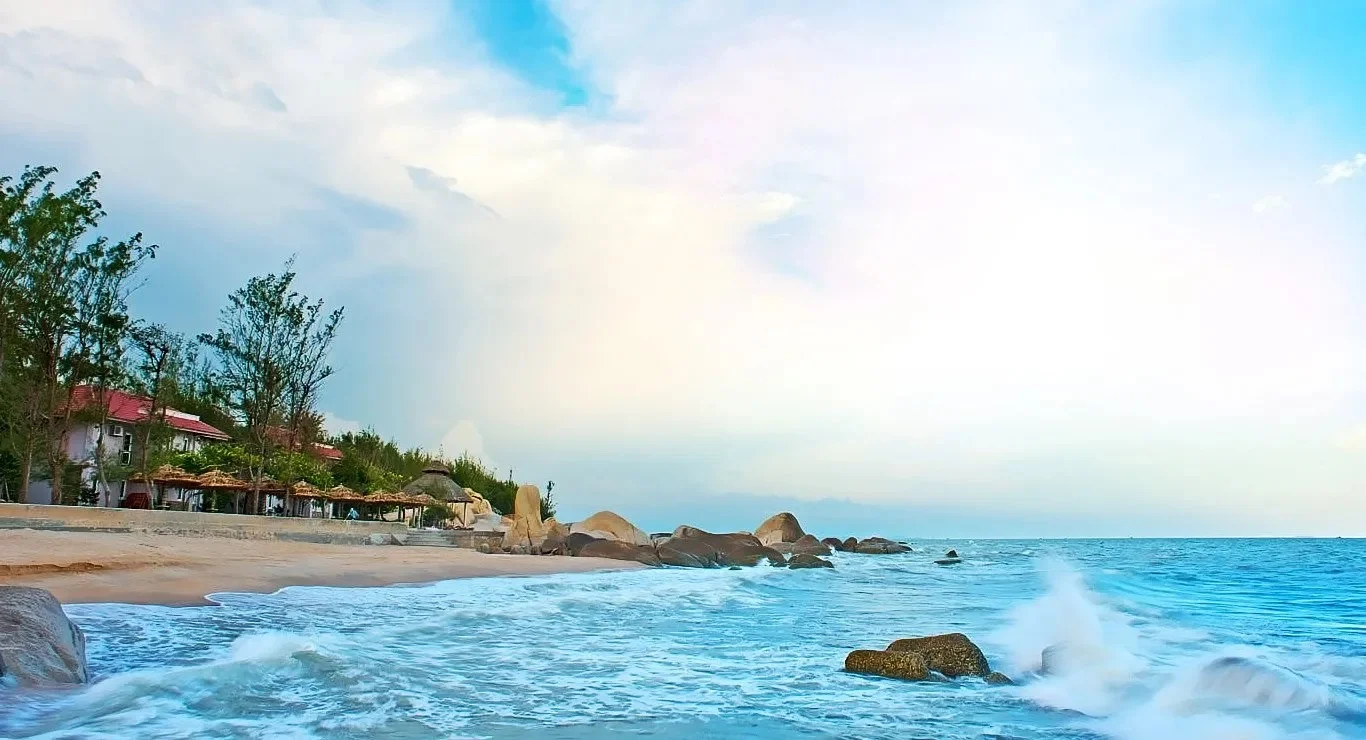
8km of open-sea beach facing the South China Sea. This is the busiest and most developed of Vung Tau's beaches — the row of seafood restaurants behind the sand is where to eat at sunset, the beach chair vendors are everywhere (20,000–30,000 VND to rent), and in the right season, the waves are good enough for bodyboarding. Water quality varies — after heavy rain, run-off affects visibility. In dry season, it's perfectly swimmable. Arrive before 9am on weekends if you want a decent spot.
Front Beach (Bãi Trước) — Promenade, Not Swimming
The city-facing beach along Tran Phu street. Smaller, more sheltered, with a wide promenade lined with palm trees and open-air cafes. This is where local families come for their evening walk, where coconut vendors work the crowd until 9pm, and where the sunset over the estuary is genuinely, reliably beautiful. Don't come here to swim — the water isn't clean enough for it. Come here to feel what Vung Tau actually is when the tourist strip falls away.
Pineapple Beach (Bãi Dứa) — The One Worth Finding
At the southern tip of Small Mountain, this sheltered cove is the best swimming spot in Vung Tau. Park the motorbike on the road above, descend 30 steps, and find yourself on a small beach with calm, clear water, rocky outcrops for snorkeling, and usually a fraction of the crowd at Back Beach. No beach clubs, no jet skis, no vendors except a couple of simple food stalls. This is the Vung Tau that rewards the effort of renting a motorbike and riding the mountain circuit.
Top Things to Do in Vung Tau — Practical Guide
1. Christ the King Statue — Sunrise Hike
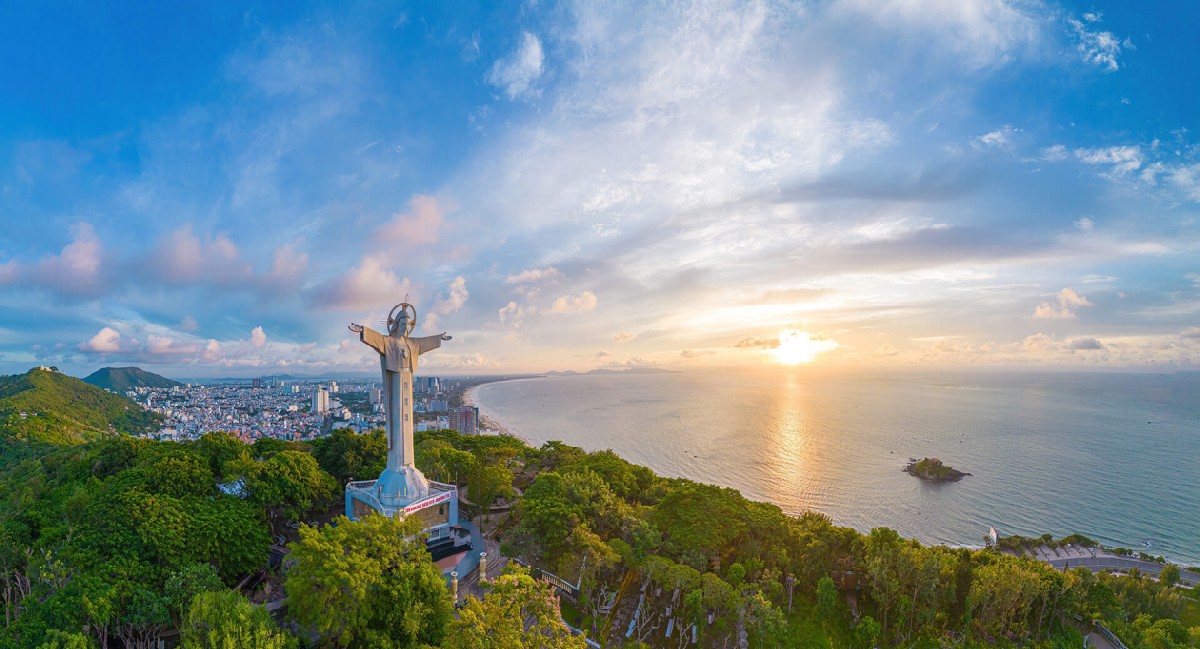
At 32 metres, the Tượng Chúa Kitô Vua (Christ the King statue) is the largest outdoor Christ statue in Asia — and unlike many superlatives in Southeast Asian tourism, this one actually earns it. Built between 1974 and 1993 on the summit of Small Mountain, it stands with arms stretched wide over both the sea and the city simultaneously. The climb — nearly 3,000 steps up a winding mountain path — is the experience, not just the destination.
Inside the statue, a spiral staircase of 133 steps leads up into the outstretched arms, ending at narrow windows in the palms of the hands. Standing there at 6am with the sky turning pink and both beaches visible below is — genuinely, without hyperbole — one of the best views in southern Vietnam. The path up passes shrines, viewpoints, and small food carts at the base where elderly Vietnamese buy coffee before their daily climb. Buy a coffee. Join the queue. This is what the statue is actually for.
Go at sunrise or late afternoon (after 4:30pm). Midday is brutal — direct sun, 35°C heat on a shadeless stone staircase, and haze that wipes out the panorama. Weekday mornings the path is shared with locals doing their daily exercise — you'll pass grandmothers in their 70s descending while you're still wheezing up. That's part of it. Open daily 7:30am–5pm. Free entry. Dress modestly — shoulders and knees covered.
2. White Palace (Bach Dinh) — Vung Tau's Most Underrated Attraction
Built in 1898 as a retreat for French Governor-General Paul Doumer, then used by Vietnamese emperors Thành Thái and Duy Tân, then by South Vietnamese presidents — Bach Dinh (Villa Blanche) has quietly absorbed more than a century of colonial and postcolonial complexity. And unlike many Vietnamese heritage sites, it hasn't been over-restored into blandness.
The building is a hybrid dream: French windows, Vietnamese roof tiles, wrap-around verandas with uninterrupted sea views. Inside, the original French furniture is still in place — dining chairs, heavy dressers, iron bedframes. Display cases hold ceramics recovered from merchant ships that sank in the waters below the hill. The garden — frangipanis, ancient cycad palms, absolute quiet — is alone worth the entry fee. Come before 10am on weekdays. The tour groups arrive at 10:30 and the stillness ends.
⏰ Open daily 7am–5pm · 30,000 VND ($1.25) entry · Allow 1–1.5 hours
3. Vung Tau Lighthouse (1862) — The Oldest View
Built by the French in 1862, the Hải Đăng Vũng Tàu is one of Vietnam's oldest functioning lighthouses. It sits near the summit of Small Mountain, accessible either from a path that continues from the Christ statue area or from a separate road entrance. The keeper still lives on-site — a quiet, formal man who has been climbing this hill since before most visitors were born. He sometimes offers tea and speaks broken English about the history.
The panorama from the lantern room is arguably the best 360° view in Vung Tau: the two beaches visible simultaneously, oil tankers anchored in formation offshore, and on the clearest days in dry season, the faint outline of Con Dao island 100km to the south. The climb is brief but the staircase is steep and narrow — one person up, one person down, no passing.
⏰ Open daily 8am–5pm · 15,000 VND entry · Combine with Christ statue: allow 3–4 hours total
4. Niết Bàn Tịnh Xá Pagoda — Silence on the Hillside
One of the most photographed Buddhist temples in the south, the Niết Bàn Tịnh Xá on Large Mountain contains a 12-metre reclining Buddha in white marble, half-lidded in absolute serenity, tucked under a hillside overhang with a terrace overlooking a bend of the Cua Lap estuary. Go on a weekday morning — incense, chanting, monks in saffron robes, the kind of ambient stillness that genuinely takes the edge off. Photography is welcome. Enter quietly. No entry fee. A monk will probably offer you tea if you sit near the main hall long enough.
What to Eat in Vung Tau — The Complete Seafood & Street Food Guide
Vung Tau's food identity is inseparable from the water. The fish market on Hoang Hoa Tham opens at 4am. By 8am, the freshest catch is already being prepped in restaurant kitchens. The afternoon trawlers bring in mực (squid), ghẹ (blue swimming crab) and sò điệp (scallops) in quantities that explain why this city of 350,000 has more seafood restaurants per capita than almost anywhere in Vietnam.
Before the seafood: Vung Tau has a signature dish unique to this city, and most travel guides bury it at the bottom. We are putting it at the top where it belongs.
The tourist strip along Thuy Van (Back Beach road) has the highest prices and lowest value ratio. For 30–40% lower prices and equivalent freshness, eat on Quang Trung street or Hoang Hoa Tham street — where Saigonese regulars eat when they visit. Always agree on price per kilogram before the kitchen weighs your selection. A mid-sized crab shown to you in a tank can become a 600,000 VND dish after weighing. Not a scam — just how it works. Know what you're ordering.
Vung Tau Seafood Dinner + Reservation
We know every restaurant worth eating at in Vung Tau. Our team can make a reservation at a local-facing seafood restaurant where prices are fixed and fair, recommend what to order for your group size, and ensure you know the per-kilogram prices before you sit down. Takes the stress out of the city's best meal.
Where to Stay in Vung Tau — 2026 Accommodation Guide
Location matters more than star-rating in Vung Tau. Back Beach (Bãi Sau) area gives you closest access to the action, restaurants and surf. Front Beach (Bãi Trước) area is quieter, better for the promenade walk, and most hotels there are older and better value. Small Mountain slope (south side) has the newest boutique options with sea views but requires a motorbike for most meals.
April 30 (Liberation Day), May 1 (Labour Day), September 2 (National Day) and the Lunar New Year holiday cause a complete sellout across all price tiers in Vung Tau — sometimes three weeks in advance. If your travel dates fall within 3 days of any Vietnamese national holiday, book accommodation immediately. Prices jump 50–80% during these periods and late bookers end up in genuinely poor-quality hotels at luxury prices.
Money & What It Gets You in Vung Tau
ATMs are plentiful on Tran Hung Dao and Thuy Van streets. Vietcombank and BIDV ATMs accept most international cards with minimal fees (check your bank's foreign ATM policy — Vietcombank charges around 50,000 VND per withdrawal). A growing number of restaurants and mid-range hotels accept Visa/Mastercard, but street food, markets and smaller guesthouses remain cash-only. Carry a mix.
A comfortable day in Vung Tau — guesthouse accommodation, 3 meals including dinner seafood, motorbike rental and admission fees — costs approximately $30–50 USD per person. Backpacker budget (dormitory or budget guesthouse, street food only): $18–25/day. Mid-range with a decent hotel and crab dinner: $60–80/day.
Vung Tau Itineraries — 1 Day & 2 Days
Greenlines Ferry or Private Car Departure
Take the first ferry from Bach Dang Wharf D1 (6:30am, arrives ~8am) or a private car transfer. Best seats are the upper deck front on the ferry — you watch the city recede and the sea open up.
Bánh Khọt Breakfast — Gốc Vú Sữa
Drop bags at hotel (early check-in or bag storage) and walk immediately to bánh khọt. This is not optional. Order two servings. Ask for extra dipping sauce. Eat slowly — this might be the best thing you eat in Vietnam.
Rent a Motorbike — Thuy Van St
Any shop on Thuy Van will do. 150,000–200,000 VND/day. Take the Small Mountain coastal circuit — 12km of ocean views with almost no traffic on weekday mornings. Stop at Pineapple Beach and swim.
Pineapple Beach (Bãi Dứa)
Park above, descend the steps, swim in the calmest cleanest water in Vung Tau. Snorkel at the rocks. Stay at least an hour. Bring water — no vendors at the cove itself.
Bún Cá Lunch — Market Area
Find a street stall near Nguyen An Ninh. Bowl of fish noodle soup: 35,000 VND. The local alternative to a tourist-facing restaurant lunch — and considerably better.
Back Beach Afternoon
Full afternoon at Bãi Sau. Beach chairs 20,000 VND. Cold beer from vendors. Bodyboard if the sea allows. Sleep if it doesn't.
Front Beach Promenade Sunset
Ride to Tran Phu. Buy a young coconut (20,000 VND from a cart). Watch the sun hit the estuary water. This moment is why Saigonese keep coming back.
Tamarind Crab Dinner — Gành Hào
Book a table. Order ghẹ rang me (tamarind blue crab), mực nướng (grilled squid), rau muống xào tỏi (morning glory with garlic), two cold Saigon Specials. This is the meal. Spend 400,000–600,000 VND and don't regret a cent.
Christ Statue Sunrise Hike
Start the 3,000-step climb before 6am with a coffee from a base vendor. Summit with a pink sky and near-zero crowds. Climb the spiral staircase inside the arms — 133 more steps — for the window view over both beaches. Non-negotiable.
Vung Tau Lighthouse
Continue along the ridge path from the Christ statue area to the 1862 lighthouse. 25-minute walk or short motorbike ride. Keeper sometimes offers tea. Lantern room panorama: best 360° view in the city.
White Palace (Bach Dinh)
Arrive before 10:30am when tour groups descend. Walk the garden slowly. Read the exhibition. Sit in the original furniture for a moment and think about who else sat there.
Hủ Tiếu Mực Lunch
Market area, squid noodle soup. 50,000 VND. The best version of a meal you'll have eaten somewhere else before — and nothing like it.
Niết Bàn Tịnh Xá Pagoda
Reclining Buddha, incense smoke, complete quiet. 30–45 minutes. The kind of visit that costs nothing and stays with you for weeks.
Last Swim + Ice Lolly on Front Beach
Kem que (ice lolly on a stick) from a promenade vendor: 5,000 VND. Eat it watching the boats. This is your last Vung Tau moment. The ferry home is in an hour.
Return to Ho Chi Minh City
Greenlines 5:30pm ferry back to Bach Dang Wharf — golden light on the water the entire way. Or your private car pick-up if you booked with us. You will plan your return before you dock.
HCMC to Vung Tau — Round-Trip Private Transfer + Itinerary Planning
Yes. EcoSapa Bus arranges your round-trip private car transfer from any HCMC hotel, coordinates timing with your accommodation's check-in, sends you the full local itinerary (including which restaurants to book in advance, which beaches to hit at which time, and the motorbike rental contact), and is available on WhatsApp throughout your trip.
Vung Tau vs Mui Ne vs Phu Quoc — Which Should You Choose?
| Factor | Vung Tau | Mui Ne | Phu Quoc |
|---|---|---|---|
| Distance from HCMC | 128km · 80 min ferry | 200km · 4–5 hrs bus | Flight required (1 hr) |
| Water Quality | Moderate–Good | Good on some beaches | Excellent (most beaches) |
| Food Scene | ⭐⭐⭐⭐⭐ Outstanding | ⭐⭐⭐ Good | ⭐⭐⭐ Good (expensive) |
| Cultural Heritage | ⭐⭐⭐⭐⭐ Exceptional | ⭐⭐ Limited | ⭐⭐ Limited |
| Crowds | High on weekends | Moderate | Very high in season |
| Budget Level | $ – $$ (very affordable) | $ – $$ (affordable) | $$$ – $$$$ (expensive) |
| Best For | Food, history, day trips, authenticity | Kite-surfing, dunes, resort relax | Luxury beach resort holiday |
| Ideal Trip Length | 1–2 days | 3–4 days | 5–7 days |
Our honest take: If you have one or two days and you're based in Ho Chi Minh City, Vung Tau is not just the default choice — it's the genuinely best choice. The food alone justifies the ferry ticket. Mui Ne makes more sense as a longer trip with specific wind sport interests. Phu Quoc is a different holiday category entirely — plan a week and fly. Many travellers do all three on a longer Vietnam trip; they are not in competition with each other.
Practical Tips — Everything You Need Before You Arrive
SIM Cards & Internet
Coverage across Vung Tau is excellent — Viettel and Mobifone work without dead zones including on mountain trails. Pick up a tourist SIM in Ho Chi Minh City before departure. Vietnamobile's 30-day unlimited data SIM costs approximately 150,000 VND ($6) and is the standard recommendation for foreign travelers. Download Google Maps offline for Vung Tau before leaving HCMC — mountain trail GPS is unreliable with a slow connection.
Health & Safety
Vung Tau has no meaningful health risks beyond standard Vietnam travel precautions. Don't drink tap water. Apply sunscreen aggressively — beach reflection at 28°C burns faster than it feels. City Hospital of Vung Tau handles emergencies adequately; serious incidents require evacuation to Ho Chi Minh City. Pharmacies are plentiful and well-stocked on Tran Hung Dao.
The city is one of Vietnam's safest for tourists. Primary concern is petty theft on the beach (never leave valuables unattended on a towel). Motorbike helmet theft happens — always D-ring lock your helmet to the bike when parking. The mountain roads are safe at normal speed but the corners are blind — ride cautiously.
Language
English is limited outside hotel front desks and a handful of tourist-facing restaurants. Young Vietnamese in tourist-facing businesses usually manage basic phrases. Google Translate with camera mode handles menus reliably. Three Vietnamese phrases that earn enormous goodwill from locals: "Bao nhiêu tiền?" (how much?), "Ngon lắm!" (delicious!), "Cảm ơn" (thank you). Say all three at bánh khọt breakfast and you'll probably get extra sauce.