Phu Quoc Travel Guide 2026 — Vietnam's Island Paradise
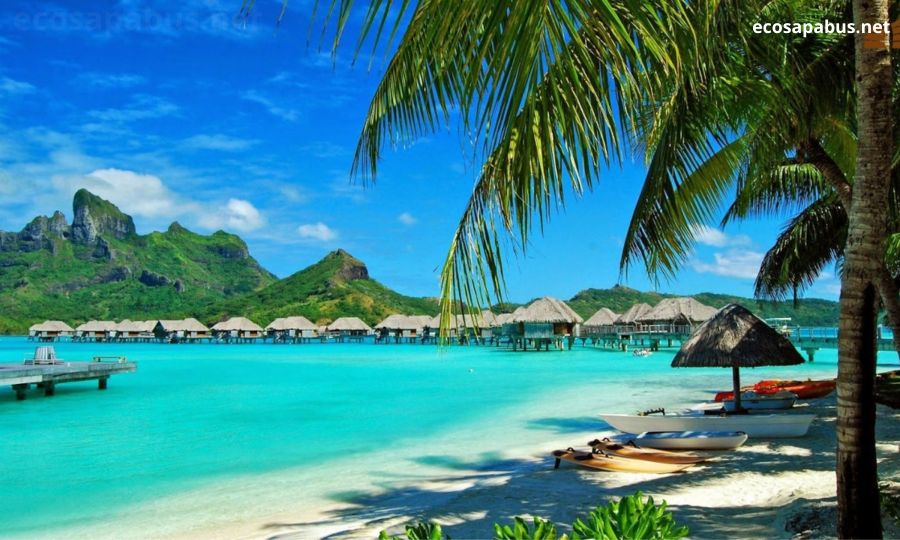
From the powder-white arc of Sao Beach at low tide, to trekking through ancient jungle in Phu Quoc National Park, snorkeling the coral reefs of the An Thoi archipelago, and eating grilled sea urchin at Dinh Cau Night Market as fishing boats pass in the dark. This is Phu Quoc as very few travelers plan it — properly, unhurried, and beyond the resort pool.
🏝️ Written by locals — real prices, no sponsored fluff
|
🚐 Airport transfers & HCMC–Ha Tien private cars
|
💰 Real 2026 prices in VND & USD
|
🗺️ 3-day & 5-day itineraries
🏖️ Sao Beach🌊 Snorkeling & Diving🌿 National Park🐟 Seafood & Night Market🚐 Airport Transfer🏝️ Island Hopping🌶️ Fish Sauce & Pepper
Written by the EcoSapa Bus Local Team
Licensed Vietnam travel operator based in Ho Chi Minh City since 2015. Our team arranges Phu Quoc airport transfers, HCMC–Ha Tien private cars and island tours regularly. All prices and logistics in this guide are verified on the ground in 2026.
Known for: Beaches, coral reefs, national park, fish sauce (PDO), black pepper plantations
🏆 Quick Answer — Is Phu Quoc Worth It?
Yes — Phu Quoc is Vietnam's best beach destination and one of Southeast Asia's top island holidays, and it's not close. Sao Beach rivals anything in Thailand for sand and water quality. The surrounding coral reefs offer excellent snorkeling and diving. Phu Quoc National Park — a UNESCO World Heritage site — covers over half the island with largely intact tropical forest. And unlike Koh Samui or Koh Lanta, Phu Quoc still has a local working fishing community that gives the island genuine character: a proper fish sauce industry, fresh seafood markets, pepper plantations and a night market that's actually for locals as much as tourists.
Here's what most travelers miss about Phu Quoc: the resort strip on Long Beach is just one version of the island. The real Phu Quoc is the southeast coast — Sao Beach and its sister beaches Bai Vong and Bai Chuong — which most package tourists never reach. It's a 30-minute drive from the airport on a smooth road, and the difference in crowds is enormous: clear turquoise water, white sand, wooden beach shacks serving grilled seafood, and almost no one beyond the occasional Vietnamese family on a weekend getaway.
Add the national park, where ancient forest trails lead to freshwater swimming holes and the island's highest point (Ham Ninh Mountain, 603m), and Phu Quoc becomes a rare combination: genuine beach paradise plus proper nature. Whether you're planning a Phu Quoc family holiday, a Phu Quoc trip, a couple's beach escape, or a solo adventure, you won't run out of things to do — and you'll almost certainly want to come back. For travelers planning a Phu Quoc holiday from Australia, the UK or Singapore, this guide covers everything you need to know — from the best beaches and things to do, to real 2026 prices, transport logistics and honest tips from a team on the ground.
🏝️ Phu Quoc Quick Facts — At a Glance
Best for: Beaches, snorkeling, diving, national park trekking, seafood, island life
Ideal stay: 3–5 days (5–7 for a relaxed island holiday)
Nearest hub: Ho Chi Minh City — 1-hour direct flight (PQC airport)
Best season: November–April (dry season, flat sea, peak snorkeling visibility)
Vibe: Tropical island, laid-back, mix of resort luxury and working fishing town
Why people go: Sao Beach, island hopping, national park, night market, fish sauce, sunset drinks
What Phu Quoc Is Famous For — In Honest Detail
Phu Quoc is Vietnam's most developed island destination — but development here means something different than in, say, Nha Trang or Da Nang. The island retains a genuine local identity rooted in fishing and agriculture, alongside its growing reputation for beaches and resorts. Here's what actually makes Phu Quoc worth crossing the country for.
1. Sao Beach (Bãi Sao) — The Best Beach in Vietnam
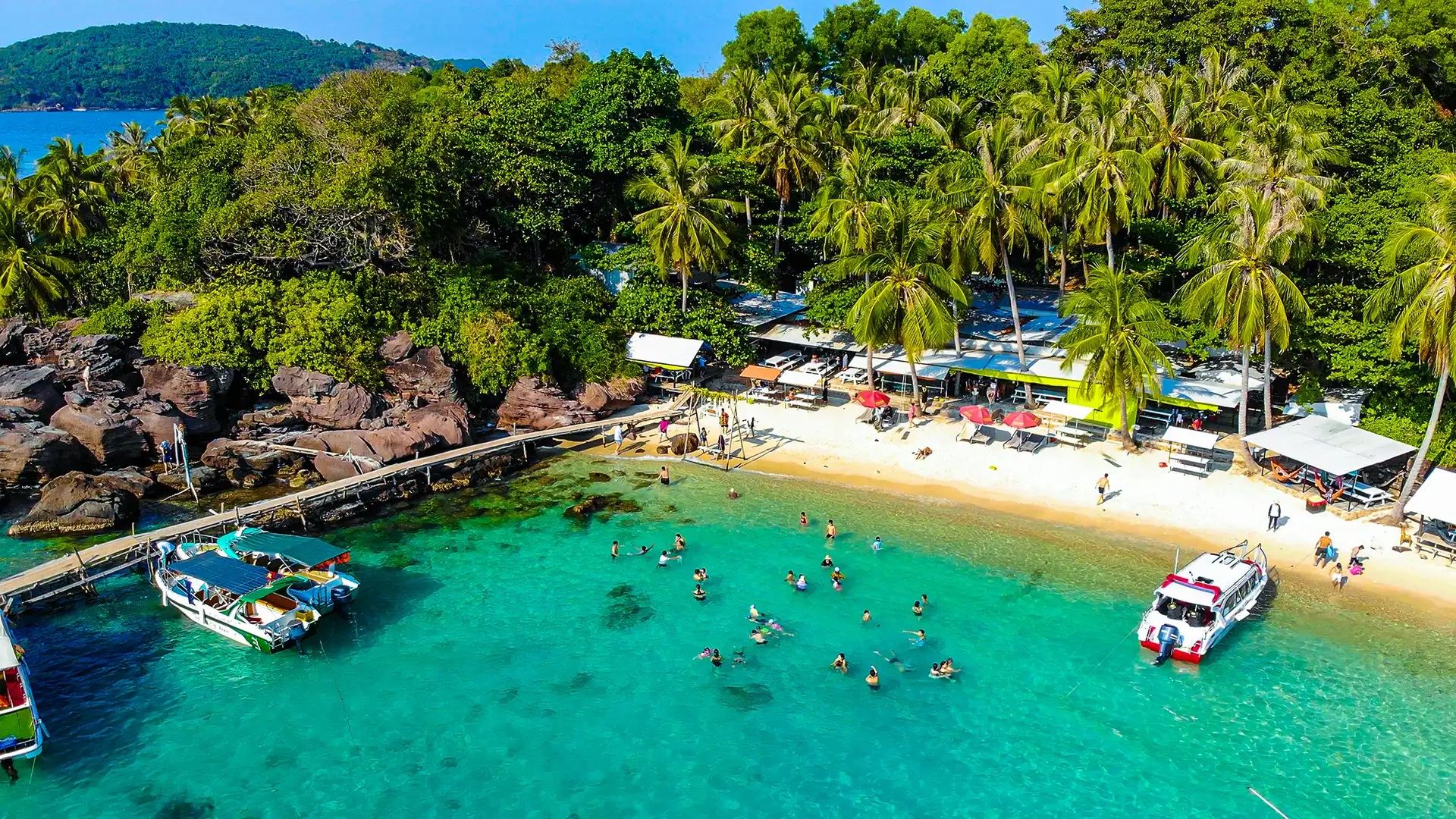
Bãi Sao is a 7km arc of fine white sand on the southeast coast, backed by casuarina pines that provide natural shade — rare on Vietnamese beaches. The water is shallow, warm and genuinely turquoise: a shade of blue that looks photoshopped but isn't. The beach faces south and east, so it's sheltered from the winds and swells that affect the west coast during the inter-monsoon transition. Low season (May–October) can bring jellyfish and occasional rough water at the western beaches — but Sao Beach's sheltered position keeps it swimmable almost year-round. The beach has a handful of seafood restaurants and beach bar shacks serving fresh coconut, cold beer and grilled squid.
2. Phu Quoc National Park — Jungle, Waterfalls & Wildlife
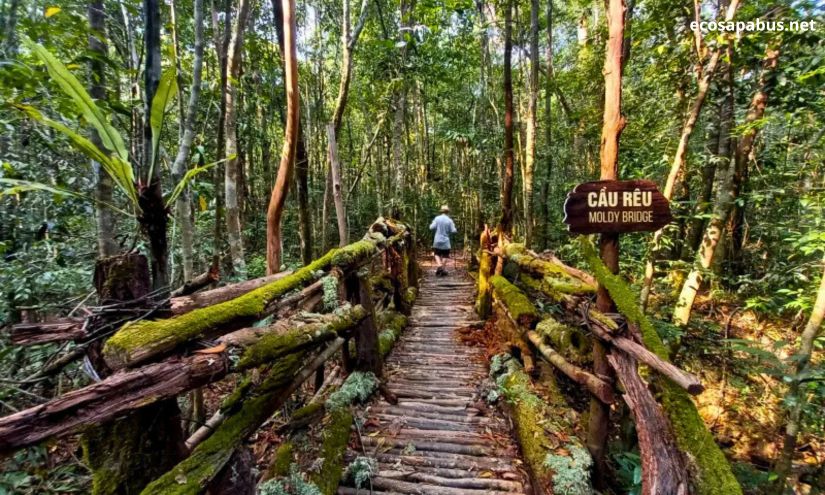
Phu Quoc National Park covers 57% of the island — one of the last large intact lowland tropical forests in southern Vietnam. Suoi Tranh (Tranh Stream) is the most accessible entry point for visitors.
Phu Quoc National Park was recognized as a UNESCO World Biosphere Reserve in 2010. It covers 31,422 hectares — roughly 57% of the island — making Phu Quoc one of the few Southeast Asian beach destinations where you can genuinely disappear into wilderness within 20 minutes of your hotel. The park contains over 929 species of plants, at least 43 species of mammals (including the rare slow loris and Phu Quoc ridgeback dog), 180 bird species and vast areas of old-growth dipterocarp forest. Trekking trails range from easy 2-hour walks to the Ham Ninh summit (full day, guide required). The park is also home to Suoi Tranh (Tranh Stream) — a series of freshwater pools and small cascades popular for cooling off after hiking.
3. Island Hopping & Snorkeling — An Thoi Archipelago
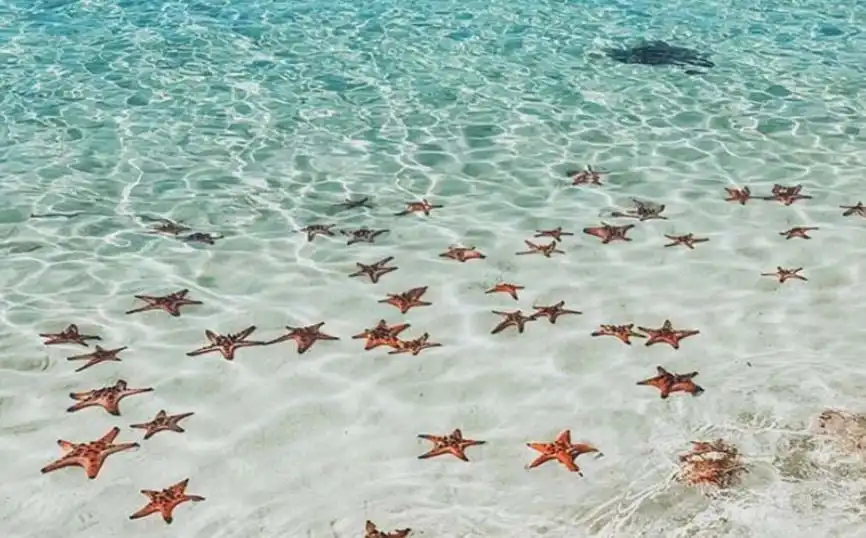
The An Thoi archipelago — 15 small islands clustered off the southern tip of Phu Quoc — offers the best snorkeling and diving in Vietnam's Gulf of Thailand. Day trip boats leave from An Thoi port daily, stopping at three or four islands for snorkeling, kayaking and a beach BBQ lunch on board. Several PADI-certified Phu Quoc diving centres in Duong Dong offer guided dives alongside the snorkeling tours. The coral coverage is patchy but fish life is excellent — you'll see parrotfish, angelfish, moray eels and large schools of snapper over shallow reefs. Dive centers in Duong Dong (the island's main town) offer PADI courses and guided dive trips. Best snorkeling visibility is November–March when the sea is flattest.
4. Dinh Cau Night Market — The Real Food of Phu Quoc
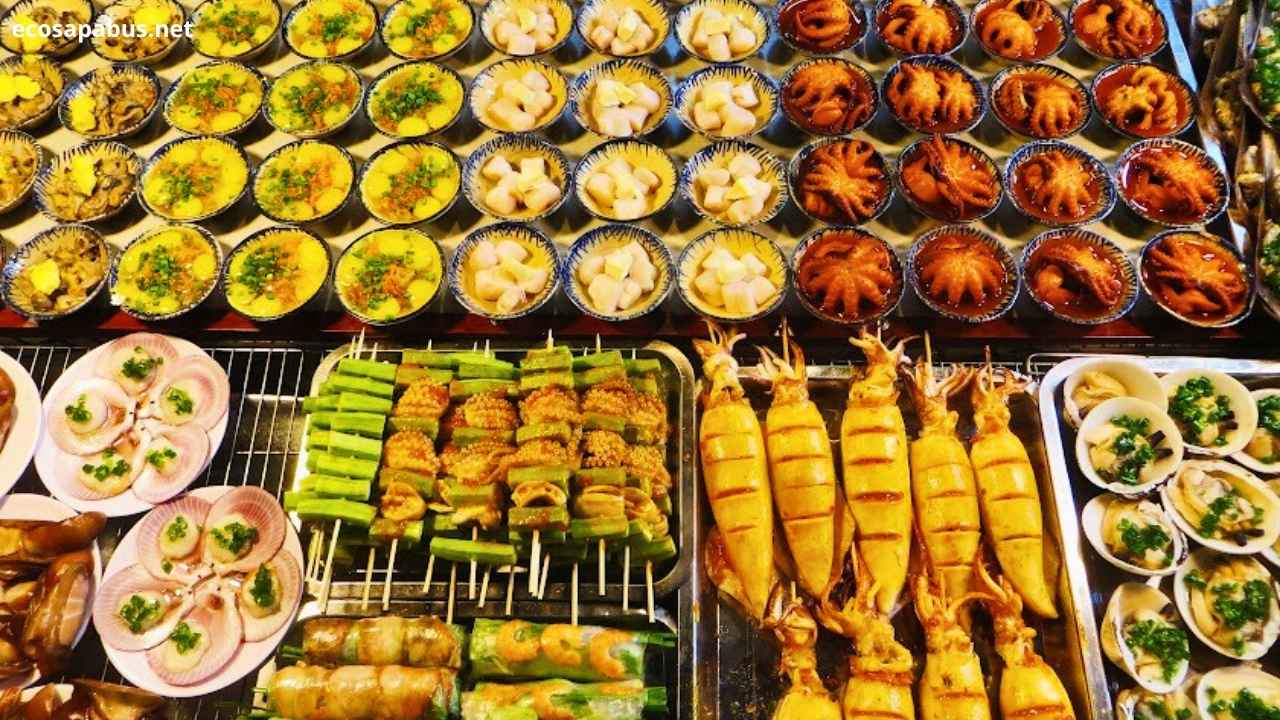
Dinh Cau Night Market (Chợ Đêm Dinh Cầu) in Duong Dong opens at 6:00 PM daily and runs until around 10:00 PM. Over 100 stalls line a long pedestrian strip along the Duong Dong River, selling fresh grilled seafood by weight — crab, lobster, prawns, squid, snails, sea urchin and whatever was landed that morning. Order by pointing at what you want at the raw stall, watch it go on the grill, and collect your plate minutes later. Prices are high by Vietnamese standards but reasonable for the quality. After the market, the surrounding streets of Duong Dong offer Phu Quoc nightlife — beach bars, live acoustic music and late-night cocktails along the Duong Dong River. Go early (6:00–7:00 PM) before crowds and while produce is freshest.
5. Phu Quoc Fish Sauce & Pepper — The Island's Soul
Nước Mắm Phú Quốc (Phu Quoc fish sauce) has a Protected Designation of Origin — the only Vietnamese food product to achieve this distinction. Made exclusively from local anchovy and sea salt in large wooden barrel factories in Duong Dong, the sauce ferments for 12–15 months before bottling. Several factories offer free tours — the smell is confronting but the process is fascinating. Phu Quoc black pepper (Tiêu Phú Quốc) is equally prized: the island's red laterite soil and climate produce a pepper with exceptional aroma. Plantation tours are available in the north of the island near Kien Hai.
Top Things to Do in Phu Quoc 2026 — What to Do, See & Experience
1. Sao Beach — The Must-See ⭐ Don't Miss
Sao Beach (Bãi Sao) on Phu Quoc's southeast coast — widely regarded as the finest beach in Vietnam. Best visited on weekday mornings before the beach restaurants fill up.
Sao Beach is 25km from Duong Dong town and 23km from Phu Quoc airport — about 30 minutes by motorbike or car on a good road. There's no public transport so you'll need to rent a motorbike (~100,000 VND/day), take a Grab, or arrange a driver. The beach is free to access. Beach chairs and umbrellas at the restaurants cost around 50,000–100,000 VND and usually come with a minimum food/drink spend. The best swimming is at the northern end of the beach where the sand is finest and the water deepest. Arrive before 9:00 AM on weekends to get a spot before Vietnamese domestic tourists arrive from the resorts.
💡 Sao Beach Timing Tips — From Locals Who Go Every Week
Best time of day: 7:00–10:00 AM — calm water, cooler temperature, soft light for photos, fewer people. Best season: November–April when the sea is flat and visibility is 5–10m. Avoid: Weekend afternoons (May–October) when the sea can be rough and jellyfish are present. Eat here: The seafood restaurants at the north end of the beach serve excellent grilled fish and cold coconuts — better quality and lower price than the Long Beach resort strip. ⚠️ No shade at the south end — bring a hat and SPF 50+ for the walk from the parking area.
🚐 Most Requested
Phu Quoc Airport Transfer — Arrival & Departure
"I just landed at Phu Quoc Airport — I need a clean, reliable car to my resort without the hassle of negotiating with taxi drivers."
Private car meets you at Phu Quoc International Airport (PQC) with a name sign. AC vehicle, English-speaking driver, direct to your resort or hotel. Fixed price — no negotiation, no meter surprises. Same service for departure pickups. Book in advance and your driver will be waiting on arrival.
✈️ Meet at arrivals🚗 AC private car🏨 Drop at hotel📱 WhatsApp contact⏱️ No waiting
The national park is most accessible from the east and north of the island. The most popular entry point is Suoi Tranh (Tranh Stream) — a 30-minute drive from Duong Dong. Entry ticket: 30,000 VND. A paved path leads to a series of freshwater pools beneath rocky outcrops — perfect for swimming after the short walk in. The pools are at their fullest October–November after the rains; they can run low March–May. For a proper jungle hike, hire a guide at the park entrance (around 200,000–300,000 VND for 2–3 hours) — trails aren't always well-marked and the forest is dense enough that it's genuinely easy to get turned around.
3. Island Hopping — An Thoi Archipelago
The An Thoi archipelago off Phu Quoc's southern tip — Vietnam's best snorkeling destination. Best visibility November–April when seas are flat and water clarity reaches 8–15 metres. ⭐ Best on a Clear Day
Day trips to the An Thoi islands depart from An Thoi port in the south of Phu Quoc, 28km from Duong Dong. Most tours run 8:00 AM–4:00 PM and cost 350,000–500,000 VND per person for a group boat, or $60–100 for a private speedboat. The itinerary typically includes three island stops, snorkeling at two sites, kayaking, a beach lunch (included or extra), and time at a sandbar. The boat journey itself — crossing open water with the islands silhouetted on the horizon — is part of the experience. ⚠️ Check sea conditions before booking. May–October swells can make the crossing rough and snorkeling visibility poor. November–April is the reliable window.
4. Dinh Cau Night Market — Eat Like a Local
Dinh Cau Night Market in Duong Dong — open daily from 6 PM. Over 100 stalls of fresh grilled seafood sold by weight. Arrive early for the best selection before tour groups arrive.
Dinh Cau Night Market is a 15-minute walk north of the main resort area along the Duong Dong River waterfront. Open daily from 6:00 PM, the market is a long strip of seafood and street food stalls illuminated by bare bulbs and neon signs. The drill is the same at every stall: look at what's on ice (lobster, crab, tiger prawns, mantis shrimp, clams, sea urchin), point to what you want, agree a price per 100g, and collect your plate when it's grilled. A full spread for two people — including beer — typically comes to 400,000–800,000 VND ($16–32) depending on what you order. Lobster will push the bill up sharply; squid and clams are the best value.
5. Fish Sauce Factory & Pepper Plantation — Half Day
Two free (or very cheap) attractions that most resort tourists skip and most serious travelers love. The Khai Hoan Fish Sauce Factory in Duong Dong town is the most visitor-friendly — open daily, free entry, short guided tour of the 12-metre wooden fermentation barrels, and a shop selling various grades of sauce. The smell is intense but the process is genuinely fascinating. Combine with a visit to one of the pepper plantations in Kien Hai commune in the island's north — a 40-minute drive from Duong Dong through rubber and fruit plantations. Plantation visits include tasting (green, black, red and white pepper all come from the same vine at different stages of ripening).
🚐
Need an airport transfer or island tour in Phu Quoc?
Chat with our team on WhatsApp — we arrange Phu Quoc airport pickups, HCMC to Ha Tien private transfers (for the ferry), and custom island day tours. Fixed prices, AC cars, English-speaking drivers.
What to Eat in Phu Quoc — Island Seafood & Local Specialities
Phu Quoc food is seafood food — the island's fishing fleet lands enormous quantities of fish, shellfish and crustaceans daily, and even the most basic beach shack will have something remarkable on the grill. Beyond the obvious seafood, the island has its own distinctive food culture: fish sauce as a condiment, cooking ingredient and conversation topic; black pepper in everything; and a Vietnamese-Khmer influence that shows in the use of lemongrass and coconut milk.
🦞
Tôm Hùm Nướng (Grilled Lobster)
"Grilled lobster" · tom hoom noong
Fresh spiny lobster split and grilled over charcoal, basted with garlic butter or chilli oil. The lobster here is farmed in the bays of Vung Bau and Ganh Dau — significantly cheaper than imported lobster and extremely fresh. Sold by weight at the night market and at Sao Beach restaurants. One 500g lobster typically serves one person generously.
📍 Best at: Dinh Cau Night Market stalls, or Sao Beach restaurants for lunch
💰 350,000–600,000 VND per 500g depending on size.
🦑
Bạch Tuộc Nướng (Grilled Octopus)
"Grilled octopus" · bach tuoc noong
Whole baby octopus grilled on skewers with a sweet chilli and fish sauce glaze. Phu Quoc's octopus has a distinctive texture from the cold deep water off the west coast — firmer and slightly sweeter than farmed octopus. Eaten with fresh herbs, lettuce wraps and dipping sauce. One of the best-value items at the night market.
📍 Dinh Cau Night Market — look for stalls with rows of octopus skewers on the grill
💰 80,000–150,000 VND per plate (3–4 pieces).
🍜
Bún Quậy (Stirred Rice Noodle Soup)
"Bún quậy" · boon kwai
Phu Quoc's most distinctive local dish — a light, clear broth with soft stirred rice noodles, fresh seafood (shrimp, squid, fish cake), herbs and a squeeze of lime. The name comes from the action of stirring (quậy) the noodles in the broth rather than lifting them out. Completely unique to Phu Quoc. Breakfast or lunch only — most stalls close by noon.
📍 Best at: Bun Quay Co Tuyen on Tran Phu Street, Duong Dong. Very local, no English menu.
💰 40,000–60,000 VND per bowl.
🌿
Nhum Nướng (Grilled Sea Urchin)
"Sea urchin" · nyoom noong
Fresh sea urchin halved, topped with scallion oil and peanuts, grilled until the roe is just set. A Phu Quoc speciality rarely found elsewhere in Vietnam — the sea urchin population in the waters around An Thoi is substantial. Rich, briny and unlike anything most visitors have tried before. Usually available at the night market and better seafood restaurants. Ordered by the piece.
📍 Dinh Cau Night Market, or ask your island hopping boat captain — sometimes served on board as a fresh snack
💰 30,000–50,000 VND per piece.
Real Prices in Phu Quoc 2026 — What Things Actually Cost
Phu Quoc is more expensive than mainland Vietnam — most goods are shipped or flown to the island, pushing up costs. Budget travelers can still get by cheaply by eating at local markets and staying in guesthouses in Duong Dong, but resort prices are genuinely high by Vietnamese standards. Here are the real 2026 prices.
Item
Local Price (VND)
USD
Notes
Bún Quậy (local breakfast)
40,000–60,000
$1.6–2.4
Phu Quoc's signature noodle dish
Grilled lobster (500g)
350,000–600,000
$14–24
Night market or Sao Beach restaurants
Restaurant meal (mid-range)
120,000–250,000
$5–10
Full seafood meal with rice and beer
Iced coffee / coconut
20,000–40,000
$0.8–1.6
Local café vs. beach bar
Sao Beach chair + umbrella
50,000–100,000
$2–4
Usually linked to food/drink minimum
National Park entry (Suoi Tranh)
30,000
$1.2
+ 200–300k for guided trekking
Island hopping day tour
350,000–500,000
$14–20
Per person, group boat, BBQ lunch
Motorbike rental (day)
100,000–150,000
$4–6
Semi-auto recommended for island roads
Airport transfer (PQC–hotel)
450,000–700,000
$18–28
EcoSapa private car, fixed price
Budget guesthouse (Duong Dong)
250,000–450,000
$10–18
Clean, AC, WiFi — away from beach
Mid-range resort (Long Beach)
1,200,000–2,500,000
$48–100
Pool, beachfront, breakfast included
Luxury resort
3,500,000–12,000,000+
$140–480+
JW Marriott, Regent, Premier Village etc.
HCMC → Ha Tien private car
3,000,000–4,000,000
$120–160
Per car (1–4 pax), then ferry to Phu Quoc
Ha Tien → Phu Quoc ferry
200,000–250,000
$8–10
Superdong or Phu Quoc Express, 1 hour
$5
= ~125,000 VND
Bowl of bún quậy. Cold beer. Motorbike fuel for the day.
$20
= ~500,000 VND
Full seafood dinner for two. Motorbike rental. Island day tour.
Best Time to Visit Phu Quoc — Phu Quoc Weather Month by Month — Month by Month
Long Beach (Bãi Trường) at sunset in November — the start of peak dry season. Calm seas, warm evenings and spectacular sunsets over the Gulf of Thailand make November–February the ideal Phu Quoc window.
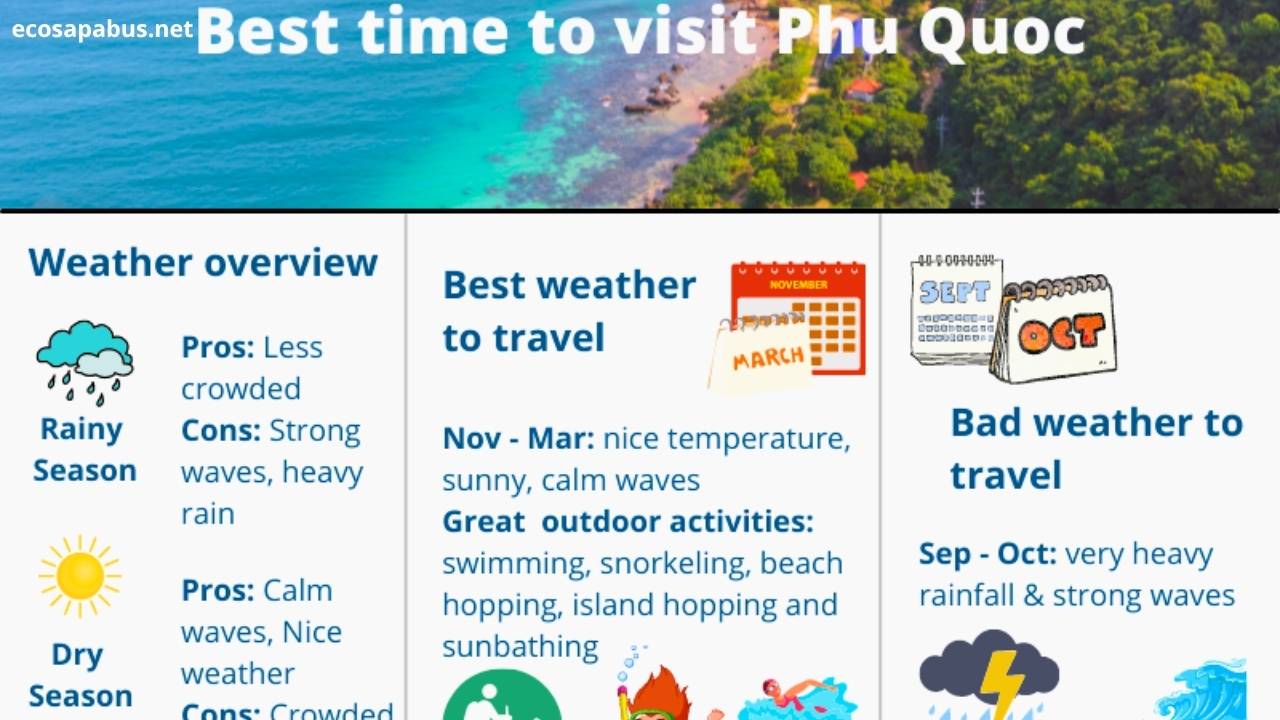
Phu Quoc has a distinct two-season climate: dry season (November–April) and rainy season (May–October). Unlike some Vietnamese destinations where the rainy season is merely wet, Phu Quoc's southwest monsoon can bring strong winds and large swells that make the west coast beaches rough and sea activities dangerous for weeks at a time. Choose your timing carefully.
Nov
⭐ Peak
Dec
⭐ Peak
Jan
⭐ Peak
Feb
⭐ Peak
Mar
✅ Good
Apr
✅ Good
May
🌧 Rainy
Jun
⛔ Avoid
Jul
⛔ Avoid
Aug
⛔ Avoid
Sep
🌧 Rainy
Oct
🌧 Shoulder
💡 Best Time Summary
November–February: Perfect. Flat sea, clear sky, best snorkeling visibility (8–15m), best beach weather. Peak season prices. Book accommodation 2–4 weeks ahead for December. March–April: Still excellent — slightly hotter and drier, seas remain calm. Fewer tourists than peak. May: Transition — rains begin, seas roughening. Some resort discounts appear. Island hopping becomes hit-and-miss. June–August: Heavy rain, rough sea on west coast. Sao Beach (east coast) remains calmer but less reliable. Island hopping unreliable. Resorts at 40–60% discount. September–October: Tail end of monsoon. Improving from September — October can be surprisingly good with green jungle and near-empty beaches at low prices.
🌤️ Phu Quoc — Live Weather
Live
Loading weather data...
Weather data via Open-Meteo API · Phu Quoc Town (10.2897°N, 103.984°E)
Where to Stay in Phu Quoc — The Honest Guide
Phu Quoc accommodation ranges from backpacker guesthouses in Duong Dong to some of the most acclaimed luxury resorts in Southeast Asia on Long Beach and Ong Lang. Where you stay determines almost everything else about your trip — which beach you're near, how easy it is to get around, and how much you'll spend. Here's the breakdown.
Option 1: Long Beach (Bãi Trường) — Most Popular Phu Quoc Resort Area
The 20km west coast strip is where the majority of Phu Quoc's resorts are concentrated. Excellent sunset views, easy access to Duong Dong town and the night market, most restaurants and bars. The beach itself is crowded and heavily developed — not ideal for swimming compared to Sao Beach — but the convenience is hard to beat.
Boutique Resorts (Long Beach)
⭐⭐⭐⭐ Best Value
The sweet spot for most travelers — 4-star boutique resorts with pool, beachfront access, AC bungalows and good restaurants. Prices range widely but the mid-tier (La Veranda, Mango Bay, Chen Sea) offer genuine quality without luxury markup. Book 2–3 weeks ahead for November–February.
💰 $50–120/night
Budget Guesthouses (Duong Dong town)
⭐⭐ Budget Pick
The main town has dozens of clean, cheap guesthouses within walking distance of the night market. No pool, no beachfront — but clean rooms, hot water, WiFi and very low cost. Good base for travelers who plan to rent a motorbike and explore the island independently.
💰 $10–20/night
Option 2: Sao Beach / An Thoi Area — Most Scenic
Staying near Sao Beach means waking up with the best beach in Vietnam a 5-minute walk away. The trade-off: limited restaurants and bars, further from the night market (30 minutes by road), and fewer transport options. Best for beach-focused travelers who rent their own transport.
Sao Beach Bungalows & Resorts
⭐⭐⭐ Beach Access
Several small resorts and bungalow operations have opened along the Sao Beach access road. Simple to comfortable rooms, beachfront or near-beach. On-site restaurants. Much quieter than the Long Beach strip — evenings are genuinely peaceful.
💰 $25–80/night
Premier Village / JW Marriott
⭐⭐⭐⭐⭐ Ultra Luxury
The JW Marriott Phu Quoc in the south of the island is widely regarded as one of the finest resort hotels in Southeast Asia — a theatrical faux-university campus on a private beach near An Thoi. For a special occasion or honeymoon, nothing else on the island comes close.
💰 $250–600+/night
Scams & Tourist Traps in Phu Quoc — What to Watch For
Phu Quoc is generally honest compared to major Vietnamese tourist cities, but rapid tourism growth has introduced some predictable issues — mostly around transport and seafood pricing.
🚨 Phu Quoc Tourist Warning Guide 2026
1
Airport Taxi Price Inflation — Unofficial taxis outside arrivals frequently quote 400,000–600,000 VND for transfers that should cost 200,000–350,000 VND. Some use meters that run fast. Airport taxis are not regulated at a fixed rate.
✅ Fix: Book your airport transfer in advance with EcoSapa Bus — fixed price, driver with name sign waiting in arrivals. Or use Grab app (available on Phu Quoc) — type your destination and see the fixed fare before accepting.
2
Night Market Seafood Weight Tricks — Some night market stalls weigh seafood with the ice still attached, or quote a per-kg price verbally then charge per 100g at the till. A "cheap" lobster can become an expensive surprise.
✅ Fix: Always confirm the price per 100g (not per kg) before ordering, watch the weighing, and ask for the price to be confirmed before it goes on the grill. Go early (6–7 PM) when staff are less rushed and more transparent about pricing.
3
Motorbike "Damage" Claims — Some motorbike rental shops photograph existing scratches but then claim new damage upon return. Disputes over pre-existing scratches are among the most common tourist complaints on Phu Quoc.
✅ Fix: Before riding, walk around the bike with the rental owner and photograph every scratch, dent or chip on your own phone — time-stamped and geotagged. Show the photos when returning the bike. Never leave your passport as deposit — use a cash deposit instead.
4
Fake Fish Sauce / Pepper — Tourist shops near the night market sell bottles labelled as authentic Phu Quoc fish sauce that are actually diluted or blended products, at inflated tourist prices.
✅ Fix: Buy directly at a factory shop (Khai Hoan, Thanh Ha) where provenance is clear and pricing is honest. Authentic Phu Quoc PDO fish sauce should be labelled "Nước mắm Phú Quốc" with the protected origin mark. Avoid unmarked bottles from souvenir stalls.
Is Phu Quoc Safe for Tourists? — Safety Tips & Practical Info? — The Practical Truth
Phu Quoc is very safe. Violent crime against tourists is extremely rare. The island has a settled, prosperous local community and tourism is too important to the economy for bad actors to thrive. The real safety issues are practical — sea, sun, roads and drink.
Sea safety: This is your primary concern. Currents at Long Beach can be strong — always swim between the flags at resort beaches and never ignore red flags. The open water between Phu Quoc and the An Thoi islands can have swells of 1–2m during May–October — don't take island hopping boats in rough weather regardless of what operators tell you.
Jellyfish: Box jellyfish and Portuguese man-of-war are present in the waters around Phu Quoc, particularly June–September. Stings are painful and occasionally serious. Wear a rash guard for snorkeling, especially during these months. Vinegar (not fresh water) neutralises jellyfish stings.
Motorbike safety: Rural roads in the north and east of the island are narrow, pot-holed and have poor signage. Phu Quoc sees more tourist motorbike accidents than almost anywhere in southern Vietnam. Wear a helmet (legal requirement and common sense), don't ride at night on unlit roads, and consider a driver if you're not confident.
Sun exposure: The combination of tropical sun, reflective white sand and clear water makes sunburn happen faster than you'd expect. SPF 50+, hat and rash guard are essential for beach and boat days.
Medical facilities: Phu Quoc General Hospital is in Duong Dong and handles basic injuries well. For serious trauma or illness, evacuation to Ho Chi Minh City is necessary — carry comprehensive travel insurance that covers medical evacuation.
Phone and internet: 4G coverage is good throughout the island including Sao Beach and the national park entrances. The deep jungle trails have no signal — download offline maps (Maps.me or Google Maps) before heading into the park.
Phu Quoc International Airport (PQC) handles direct flights from Ho Chi Minh City (1hr), Hanoi (2hrs), and — for international travelers — direct routes from Singapore, Bangkok and Kuala Lumpur during peak season. From Singapore, the fastest route is a direct flight to PQC (approximately 1.5 hours by air). EcoSapa Bus arranges airport transfers from PQC (1hr), Hanoi, and seasonal international routes. EcoSapa Bus provides private airport transfers to any hotel on the island.
How to Get to Phu Quoc from Ho Chi Minh City — Every Option Explained
Phu Quoc sits in the Gulf of Thailand, accessible by air or sea from mainland Vietnam. Most travelers fly — it's fast, cheap and the island has a large international airport. The overland + ferry option exists but is very long. There is no bridge to the mainland.
Option 1: Fly Direct from Ho Chi Minh City ⭐ Our Recommendation
1
1-hour flight — the only sensible option for most travelers
Vietnam Airlines, VietJet Air and Bamboo Airways all operate multiple daily flights between Ho Chi Minh City (SGN) and Phu Quoc (PQC). Flight time is exactly 55–65 minutes. Prices range from 500,000 VND ($20) for advance VietJet bookings to 2,000,000+ VND ($80+) for last-minute Vietnam Airlines. Book 3–6 weeks ahead for November–February travel. EcoSapa Bus arranges airport pickup at PQC and drop-off at any hotel on the island.
2
Phu Quoc Airport (PQC) — what to expect on arrival
Phu Quoc International Airport is modern, clean and well-organized. Baggage usually appears within 15 minutes. The arrivals hall exits into a scrum of taxi and tour operators — book your transfer in advance to avoid negotiation. Official taxi rank is on the right as you exit. Grab operates on Phu Quoc and is the reliable alternative to pre-booked transfers. The airport is 8km from Duong Dong town (15 minutes) and 23km from Sao Beach (30 minutes).
🚐 Book in Advance
HCMC → Ha Tien Private Transfer + Phu Quoc Ferry
"I want to get from Ho Chi Minh City to Phu Quoc without flying — or I'm doing Mekong Delta first and want to continue to Phu Quoc by road and ferry."
Private car from your Ho Chi Minh City hotel (or Mekong Delta) to Ha Tien port, then Superdong high-speed ferry to Phu Quoc (1 hour). Experienced driver on the 260km route to Ha Tien, scenic stops optional. Great option for combining Mekong Delta + Phu Quoc in one trip — no backtracking to HCMC required.
Getting to Phu Quoc from Singapore, Bangkok & Kuala Lumpur
International travelers increasingly fly direct to Phu Quoc without transiting through Ho Chi Minh City. From Singapore: Scoot, AirAsia and Jetstar operate direct flights to PQC (approximately 1.5 hours). Check Skyscanner for current routes — direct Singapore–Phu Quoc flights run seasonally but are expanding. From Bangkok: Bangkok Airways flies Bangkok Suvarnabhumi to PQC (2 hours). From Kuala Lumpur: AirAsia flies KLIA2 to PQC (1.5 hours). EcoSapa Bus provides airport transfers regardless of which airport you land at on the island.
Option 2: Bus + Ferry from Ho Chi Minh City
The cheapest option — take a Phuong Trang or Futa Bus from HCMC to Ha Tien (260km, 5–6 hours, 150,000–220,000 VND) then a Superdong or Phu Quoc Express high-speed ferry from Ha Tien to Phu Quoc (1 hour, ~200,000 VND). Total journey: 7–8 hours. Buses depart from Mien Tay Bus Station in HCMC, multiple morning departures. Buy ferry tickets at the Ha Tien port ticket office. Not recommended for June–September — ferry can be cancelled in rough weather.
Phu Quoc Itinerary — 3 Days & 5 Days (Practical Pacing)
Ideal 3-Day Itinerary
1
Day 1: Arrive + Duong Dong + Sunset on Long Beach
Morning: Fly from Ho Chi Minh City. Airport transfer to hotel (EcoSapa arranges). Check in, freshen up. Afternoon: Rent a motorbike or Grab to Khai Hoan Fish Sauce Factory (free entry, fascinating tour) — then explore Duong Dong market and the town. Sunset: Long Beach — find a beach bar, cold beer, watch the sun drop into the Gulf of Thailand. 7 PM: Dinner at Dinh Cau Night Market — grilled seafood, sea urchin, cold Tiger beer. Overnight on Long Beach or Duong Dong.
2
Day 2: Phu Quoc National Park + Sao Beach
7:30 AM: Drive 30 mins to Suoi Tranh (Tranh Stream) in the national park — arrive early before heat builds. Swim in the freshwater pools. 30,000 VND entry. 11 AM: Drive south to Sao Beach (25 mins). Lunch at a beach restaurant — grilled barracuda, fresh coconut. Swim and relax until late afternoon. Evening: Return to Duong Dong for dinner and market browsing.
3
Day 3: Island Hopping + Departure
8:00 AM: Island hopping day trip from An Thoi port — snorkeling, kayaking, beach BBQ on the An Thoi islands. Return to An Thoi by 4:00 PM. Evening: Last dinner at the night market, buy fish sauce to take home. Airport transfer for evening flight back to HCMC.
Relaxed 5-Day Itinerary (Recommended)
Day 1: Arrive, fish sauce factory, Long Beach sunset, Dinh Cau Night Market.
Day 2: Full day at Sao Beach — arrive early, swim, eat, stay until the afternoon crowd thins. Watch the sunset from the beach (east coast gets afternoon light, not classic sunset, but golden hour is beautiful).
Day 3: Island hopping day trip to An Thoi — full day on the water.
Day 4: North of the island — Bai Dai beach (long, undeveloped, far fewer tourists than Long Beach), Pepper plantation visit in Kien Hai, swim at Ganh Dau cape with views across to Cambodia. Lunch at a local roadside restaurant in Ham Ninh fishing village.
Day 5: Morning: last swim at whichever beach you liked best. Buy fish sauce and pepper at the factory. Afternoon departure — airport transfer with EcoSapa Bus.
💡 Best Itinerary for First-Timers
Don't just stay on Long Beach. The vast majority of package tourists never leave the resort strip — meaning Sao Beach, the national park, the north of the island and the An Thoi islands all feel dramatically less crowded than Long Beach suggests. Rent a motorbike on Day 1 and get to Sao Beach before 9 AM on Day 2. That moment — arriving at Sao Beach when it's still quiet, turquoise water, white sand, no development in sight — is what people remember Phu Quoc for.
Phu Quoc vs Mekong Delta (and Bali, Koh Samui & Koh Lanta) — Which Should You Visit?
Travelers from Australia, the UK, Singapore and beyond frequently compare Phu Quoc to Bali, Koh Samui and Koh Lanta. The honest comparison: Phu Quoc has better-value beaches than Bali's Kuta, comparable sand quality to Koh Lanta at 30–40% lower cost, and a fraction of the crowds of Koh Samui. The main trade-off is infrastructure — Phu Quoc's resort scene is less polished than Bali's, but for travelers who want genuine tropical island experience without package-holiday prices, it consistently wins.
Both Phu Quoc and the Mekong Delta are in southern Vietnam within easy reach of Ho Chi Minh City, and they're the most frequently compared destinations in the south. Here's the honest breakdown from a team that operates in both.
Category
Phu Quoc
Mekong Delta
Star attraction
Sao Beach — Vietnam's finest white-sand beach
Cai Rang Floating Market — sunrise on the river
Scenery type
Beaches, coral reefs, jungle, sea sunsets
Rivers, canals, rice paddies, coconut groves
Best for
Beach holiday, snorkeling, diving, relaxation
Culture, local food, river life, authenticity
Difficulty
Easy — well-developed tourist infrastructure
Easy — flat terrain, accessible by bus or car
Crowds
Busier — growing international tourism
Fewer foreign tourists — more local feel
Cost
More expensive (island premium)
Cheaper — very budget-friendly
EcoSapa service
Airport transfer, island tours, HCMC–Ha Tien car
Private transfer HCMC, guided delta tours
Ideal stay
3–5 days minimum
2–3 days
From HCMC
1hr flight or 7–8hrs car + ferry
3.5hrs by expressway
Best combined with
Mekong Delta (ferry from Ha Tien)
Phu Quoc (ferry from Ha Tien)
🏆 The Answer: Do Both — They Connect Perfectly
Phu Quoc and Mekong Delta complement each other better than almost any other pair of Vietnamese destinations. From the Mekong Delta, you can take a private car to Ha Tien port (2 hours) and ferry across to Phu Quoc without returning to HCMC. Total southern Vietnam trip: HCMC → Mekong Delta (2–3 days) → Ha Tien → Phu Quoc (3–5 days) → fly back from PQC. EcoSapa Bus handles all transport between these points.Message us on WhatsApp and we'll plan the full logistics.
Phu Quoc FAQ — Questions Travelers Actually Ask
Yes — absolutely worth it. The Long Beach resort strip is indeed heavily developed and feels increasingly like a generic resort zone. But Sao Beach, the national park, the An Thoi islands and the north of the island remain genuinely beautiful and relatively uncrowded. The key is to not spend your entire trip on Long Beach. Rent a motorbike and explore — the island rewards independent travelers enormously.
Fly — it's the only sensible option for most travelers. Vietnam Airlines, VietJet and Bamboo Airways all fly HCMC (SGN) to Phu Quoc (PQC) in 1 hour. Prices start from 500,000 VND ($20) booked in advance. EcoSapa Bus arranges airport transfers on the Phu Quoc end — private car, fixed price, driver with name sign waiting in arrivals. The overland + ferry option via Ha Tien takes 7–8 hours and is mainly for those combining with a Mekong Delta trip.
Minimum 3 days, ideal 5. Day 1: Arrive, explore Duong Dong, Dinh Cau Night Market. Day 2: National park + Sao Beach. Day 3: Island hopping An Thoi archipelago. With 4–5 days add: north island exploration (Bai Dai beach, pepper plantation, Ganh Dau cape), deeper national park trekking, or simply more time at Sao Beach. 7 days is genuinely relaxing without feeling too long.
Sao Beach (Bãi Sao) for the most beautiful sand and water. Long Beach (Bãi Trường) for sunset views and convenience. Bai Dai for isolation and unspoiled scenery (north coast). Ong Lang Beach for a quieter mid-coast alternative with some boutique resorts. Sao Beach wins on pure beach quality — fine white sand, turquoise water, natural shade from casuarina trees — but it's 30 minutes from the main resort area.
November–February is peak season — flat sea, clear skies, best snorkeling visibility (8–15m), perfect beach weather. December–January is the most popular period; book accommodation 2–4 weeks ahead. March–April is excellent with fewer crowds. May–October is rainy season — the west coast (Long Beach) can have rough seas and poor visibility. Sao Beach on the east coast is more sheltered but still affected in June–August. Resorts offer 30–50% discounts in rainy season.
Very safe. Solo women consistently report feeling comfortable throughout Phu Quoc — it's a well-developed tourist destination with a strong local community. The main practical concerns are motorbike safety (wear a helmet, don't ride at night on unlit rural roads), sea conditions (check flags and conditions before swimming) and sun exposure. Book accommodation near Duong Dong or Long Beach for solo travel — more options, better transport access, and the lively night market for evening company.
Yes — this is one of the best southern Vietnam combinations. From the Mekong Delta, take a private car from Can Tho or Ben Tre to Ha Tien port (2–2.5 hours), then the Superdong high-speed ferry to Phu Quoc (1 hour, ~200,000 VND). No need to return to HCMC. Total trip: HCMC → Mekong Delta (2–3 days) → ferry to Phu Quoc (3–5 days) → fly back PQC to HCMC. EcoSapa handles all the transfers — message us on WhatsApp and we'll put together the full logistics.
Essential items: SPF 50+ sunscreen (tropical island sun is intense — apply constantly), rash guard (for snorkeling and sun protection on the boat), reef-safe sunscreen (required for snorkeling in the national park area), motorbike helmet (rentals include one but they're often poor quality — consider bringing a travel helmet), insect repellent (jungle trails have mosquitoes), light rain jacket (afternoon showers even in dry season), cash in small notes (night market is cash-only), and dry bag for the island hopping boat trip. Download offline maps before leaving Duong Dong — the national park and north coast have limited signal.
It depends what you prioritize.Phu Quoc vs Bali: Phu Quoc wins on uncrowded beaches and value; Bali wins on culture, nightlife and Instagram infrastructure. Phu Quoc vs Koh Samui: Phu Quoc is cheaper, less developed and more authentic; Koh Samui has better international resort infrastructure. Phu Quoc vs Koh Lanta: Very similar vibe — Phu Quoc has better beach quality (especially Sao Beach) and more nature; Koh Lanta has a stronger backpacker community. For first-time Southeast Asia travelers from Australia or the UK: Phu Quoc offers the best combination of beach quality, value, ease of access and authentic local culture.
🏝️ Ready to Visit Phu Quoc?
Tell us your flight details — we'll arrange your airport pickup, HCMC to Ha Tien transfer, or island day tours in one WhatsApp conversation. Fixed prices. Reply in 15 minutes. No prepayment required.