What Is Mai Chau — And Why Most Travelers Miss What's Special About It
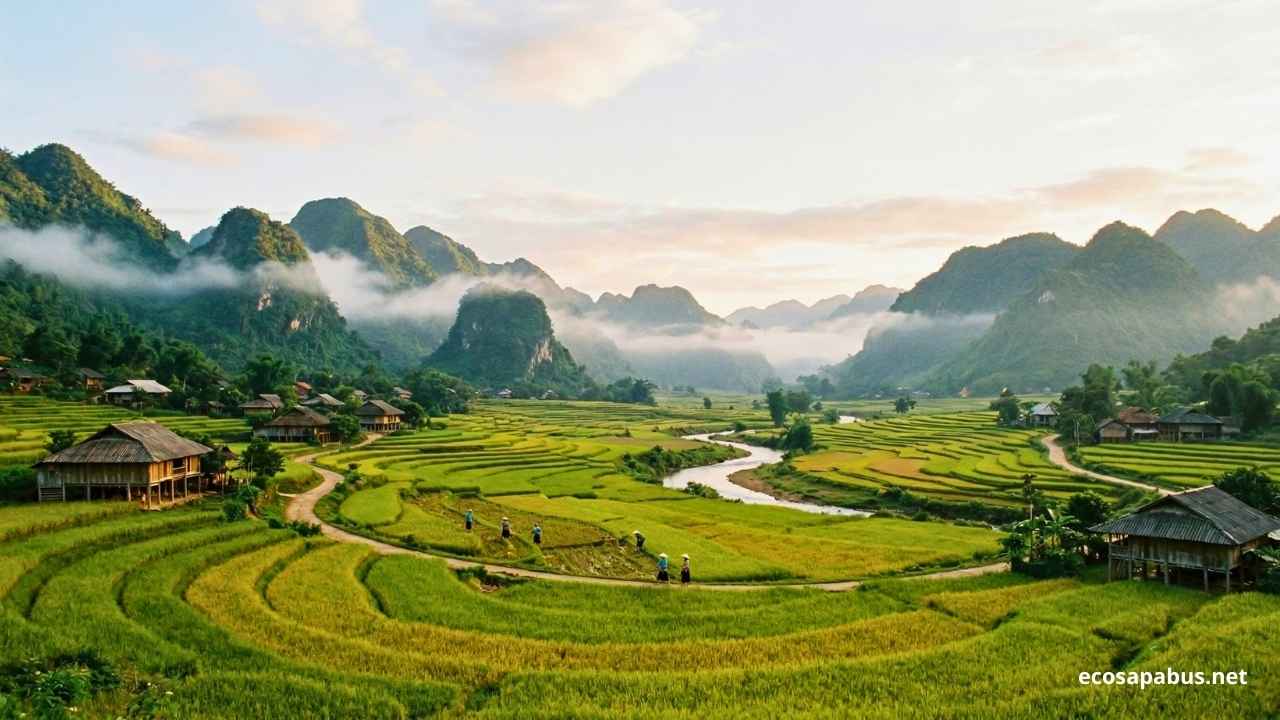
Mai Chau is not a city, a town, or even a single large village. It's a wide flat valley in Hoa Binh Province, northwest Vietnam — 145km from Hanoi, enclosed on three sides by steep limestone mountains draped in jungle. At the bottom of this valley: a patchwork of rice paddies that change colour with the seasons, connected by narrow concrete paths threading between clusters of wooden stilt houses raised a metre off the ground.
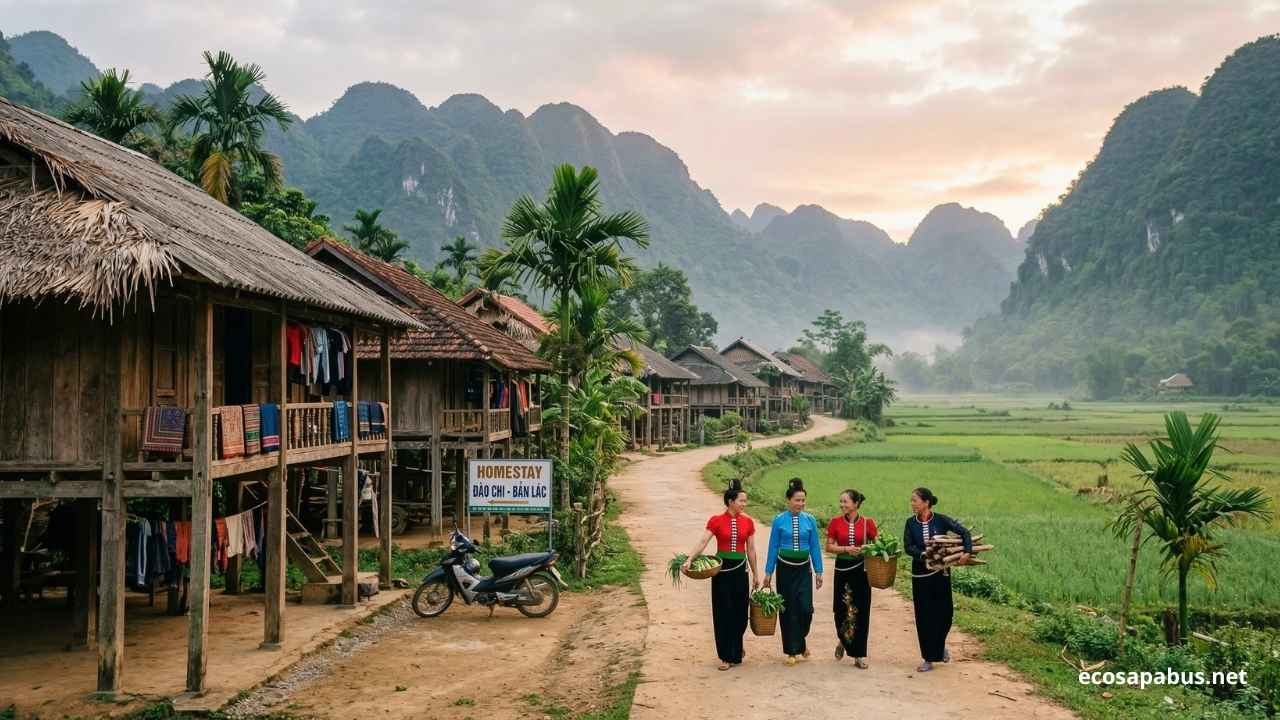
Most of the people who live here are White Thai — an ethnic minority whose ancestors migrated from what is now Thailand and southern China centuries ago. They speak their own Tai Dam language (different from Vietnamese), maintain their own weaving traditions — you'll see looms in almost every house — and cook dishes that exist nowhere else in Vietnam. They are also, in the experience of most travelers who actually sleep here rather than day-trip through, among the warmest and most genuinely hospitable people in the country.
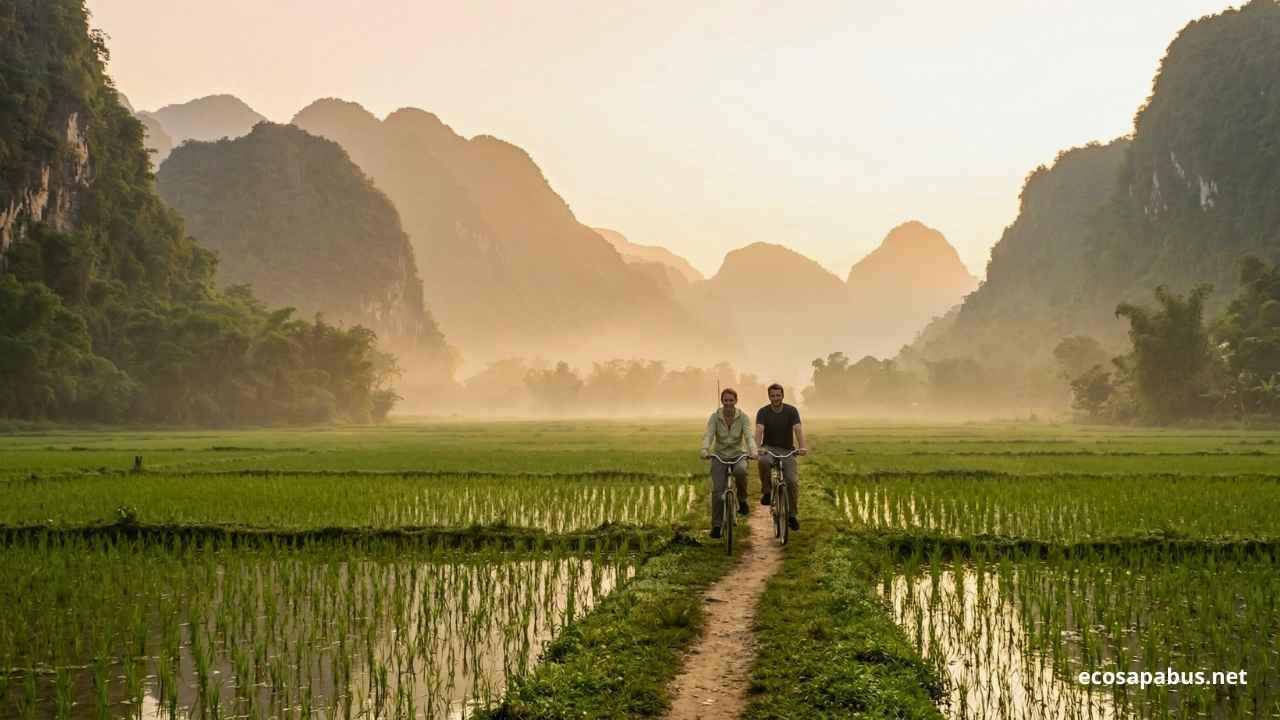
The travelers who love Mai Chau most are the ones who stayed a night in a homestay instead of day-tripping. Day-trippers get the postcard: a few photos of rice paddies, a weaving demonstration, a quick lunch. Overnight guests get something completely different — White Thai dinner cooked over charcoal, rice wine from bamboo jars, traditional music after dinner on the communal floor of a stilt house, and a 6 AM bicycle ride through mist-covered fields when the valley is entirely theirs. Two days minimum. Non-negotiable.
Choose Mai Chau if: You want a slower, more intimate experience. Fewer tourists. Flat terrain ideal for cycling. Easier logistics. Good for families. 3.5 hours from Hanoi.
Choose Sapa if: You want dramatic mountain trekking, higher altitude, more ethnic diversity (Hmong, Red Dao, Tay), and a more developed adventure scene.
Best of all: do both. Combine them on our 5-day north Vietnam circuit from Hanoi.
How to Get from Hanoi to Mai Chau — All Options Compared
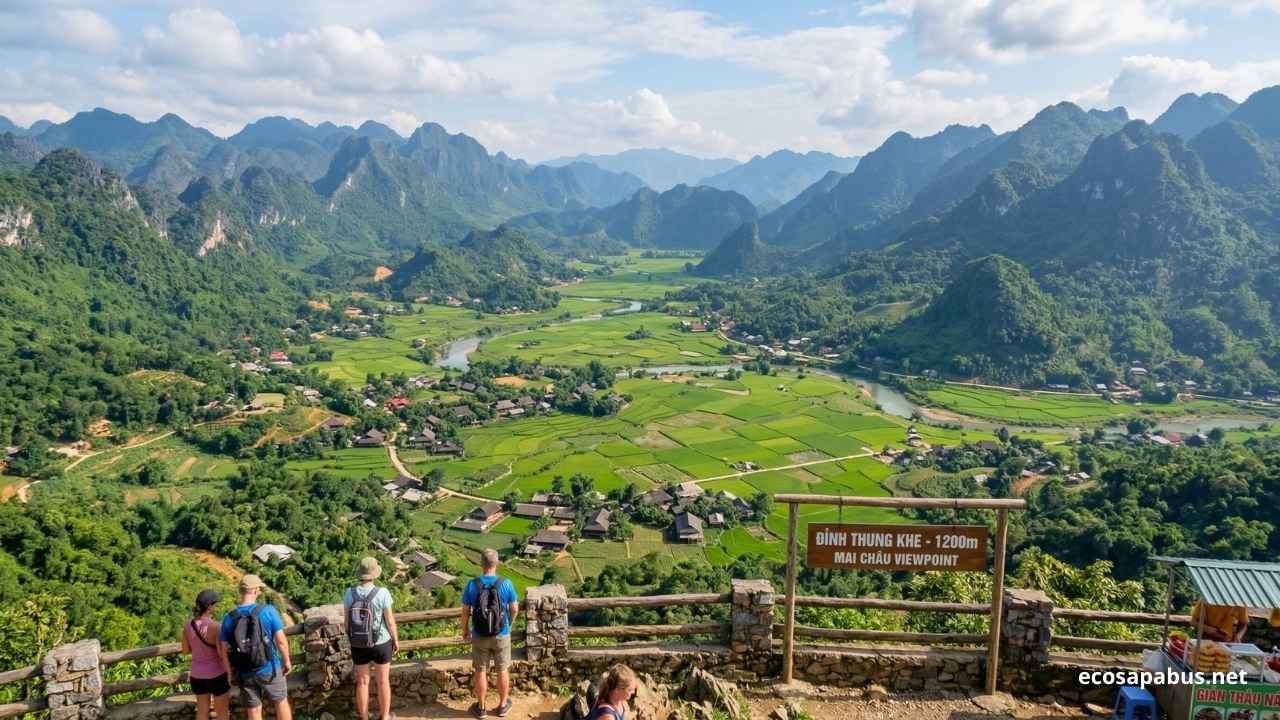
All roads to Mai Chau go through National Road 6 (Quốc lộ 6) — the northwest highway from Hanoi through Hoa Binh City and over the Thung Khe Pass before descending into the valley. The pass itself, at around 1,200m, gives you the first breathtaking view of Mai Chau below — the valley suddenly opens up between mountains like a secret the road has been keeping from you for two hours. Every visitor should stop here. Most shared vans don't.
Daily limousine vans run from Hanoi Old Quarter hotels direct to Mai Chau. Spacious, air-conditioned, reclining seats, hotel pickup included. Book online at least a day ahead. ⚠️ Tip: book directly from the operator — hotel desk middlemen add 50,000–100,000 VND commission.
Private car with English-speaking driver. You stop at Thung Khe Pass, at the Hoa Binh reservoir viewpoint, and arrive on your schedule. Ideal for families, groups, or anyone who wants flexibility. Message us on WhatsApp for a fixed quote.
Buses from Hanoi's My Dinh or Yen Nghia stations go direct to Mai Chau town. Cheapest option but slower, frequent stops. Arrive at the bus station in Mai Chau town, then xe om (motorbike taxi) to Lac Village for 30,000–50,000 VND. ⚠️ Never buy bus tickets from anyone outside the official station.
One of the great motorbike rides of northern Vietnam — winding mountain roads, limestone cliffs, rural villages, the last 15km descent into the valley spectacular. Only if you're an experienced rider. Start before 7 AM. Never ride QL6 at night.
At ~1,200m, just before the road descends into Mai Chau, a wide parking area offers an unobstructed panoramic view of the entire valley. On clear days (best: early morning, October–March) you see the rice fields, stilt house clusters, and mountains beyond in a single frame. Every private car and motorbike rider should stop 15–20 minutes here. Tour buses blow past — one more reason to book a private transfer or ride yourself.
Hanoi → Mai Chau Private Transfer — EcoSapa Bus
Private AC car from your Hanoi hotel to your Mai Chau homestay or resort. English-speaking driver. Thung Khe Pass stop included. Flexible departure time. Return transfer also available.
Getting Around the Valley
Once in Mai Chau, the bicycle is king. The valley is completely flat — unlike Sapa's steep terrain or Ha Giang's mountain roads. Narrow paths between rice paddies connect villages that tourist vans can never reach. Bicycle rental from homestays: 30,000–50,000 VND/day. Electric scooters: 80,000–120,000 VND/day for more range.
Some rental shops show you a bike with no visible damage, then charge 500,000–2,000,000 VND for "scratches" on return. Shoot a 30-second video of the entire bike before leaving — every surface, every angle — and send it to yourself on WhatsApp for a server-stamped timestamp. If damage is disputed on return: play the video. Homestays in Lac and Pom Coong rent their own bikes and never run this scam.
Best Time to Visit Mai Chau — Honest Month-by-Month Guide
Most travel blogs say "October is best" and leave it there. That's true — but incomplete. Mai Chau has two rice harvest seasons, a rainy season that's less threatening than it sounds, and a misty winter that's beautiful in its own way. Here's what actually happens each month.
The two annual rice harvests transform Mai Chau completely. Just before harvest, the paddies shift from vivid green to burnished gold — the single most beautiful sight in the valley.
1st harvest: late May–early June. Fields glow golden. Women in conical hats wade through paddies cutting rice by hand. Less touristy than October — an equally beautiful, quieter experience.
2nd harvest: late September–early October. Peak season: the gold is more intense, weather cooler, valley smells of fresh rice. October is the single best month in Mai Chau.
Between harvests (July–August): brilliant green, occasional afternoon rain, fewer tourists, intensely vivid colours. A completely valid time to go if you don't mind a brief daily shower.
January–February cold warning: The valley drops to 10–12°C at night in January. Bring a proper jacket. Winter mist settling in the valley is genuinely beautiful — but can blanket everything for 2–3 days at a time. February begins to clear.
The Villages of Mai Chau — Which One to Stay In, Which to Visit
Mai Chau District contains dozens of villages across several sub-valleys. Most visitors see only Lac and Pom Coong. These are excellent — but the real discovery is what lies beyond them.
Largest concentration of stilt house homestays, weaving stalls along the central path, easy cycling to surrounding paddies. Slightly commercialised but still genuinely White Thai. Best for: first-timers, families, travelers who want culture with comfort.
5-minute walk from Lac. Smaller, quieter, marginally less touristy. Same stilt house accommodation but fewer souvenir stalls. Rice paddies immediately outside. Best for: travelers who want slightly more peace without sacrificing proximity.
3km from Lac, rarely visited by foreign tourists. More traditional homestay — less English spoken, no souvenir market, but the family dinners are extraordinary and the countryside is pristine. Requires motorbike or guide to reach comfortably.
45 minutes northwest by motorbike. High in the hills, home to Hmong communities (not White Thai), mist-shrouded mountain scenery, traditional clothing in daily use. The Pa Co Sunday market here is one of the most authentic market experiences in northern Vietnam.
Site of Ba Kha Lake — a reservoir surrounded by forested hills where local families paddle traditional wooden boats. Almost no tourists. 1-hour drive from Lac. Ideal combined with a Pu Luong day trip for a perfect second day.
Further out and quieter than any of the above. A White Thai village where most families have never hosted an overnight foreign guest. Go with a guide from your Lac homestay — respectfully, with curiosity and patience.
First visit → Stay in Lac Village. The infrastructure (reliable electricity, hot water, English-speaking hosts, good food) makes it the right base. Use your days to cycle out to Van, Ba Khan, and the open countryside beyond. Second visit → Stay in Van Village for the deeper, slower experience that Lac can no longer fully offer. Visit Hang Kia any Sunday you're there — it requires a motorbike and is completely worth it.
Best Things to Do in Mai Chau — Ranked Honestly
Hanoi → Mai Chau 2 Days / 1 Night — Complete Package
Full round-trip from your Hanoi hotel. Thung Khe Pass stop. Lac Village arrival at lunch. Afternoon cycling through the valley. White Thai dinner with cooking class. Cultural performance. Morning sunrise cycle. Chieu Cave. Return Hanoi by 5 PM. Everything handled.
Where to Stay in Mai Chau — Homestay vs Eco-Resort, Honestly
The most important decision about your Mai Chau trip. The choice between a stilt house homestay and a boutique eco-resort isn't about budget — it's about what experience you're actually here for.
Option 1: White Thai Stilt House Homestay (₫₫ — Best Cultural Experience)
You sleep on a mattress on the communal wooden floor of a traditional stilt house, raised 1–1.5m above ground on wooden pillars. No individual rooms — long sleeping halls divided by curtains. Mosquito nets provided. Basic bathrooms (hot water now standard in established homestays). Family cooks all meals over charcoal or wood fires. Breakfast: sticky rice and vegetables. Dinner: a feast of 7–10 dishes, shared, remarkable.
What homestays give you that no resort can: waking at 5:30 AM to the sound of the family starting their fire and heading to the fields. Being handed a bowl of congee with no ceremony, like family. Being invited to sit at the loom.
Cost: 250,000–400,000 VND/person ($10–16), including dinner and breakfast. For current vetted homestay recommendations in Lac and Pom Coong, message our local team on WhatsApp — we update recommendations seasonally.
Websites selling "homestay packages" in Mai Chau for $35–50/night, claiming direct family accommodation. Many are middlemen who mark up the booking 100% and hand you to the actual family who receives half the money. Book directly with the homestay, or through a trusted operator like EcoSapa Bus who has verified relationships with specific families. If booking direct, ask to video-call the host before paying any deposit.
Option 2: Boutique Eco-Resort (₫₫₫ — Best for Comfort Seekers)
If a private bathroom, reliable WiFi, and a pool matter to you — Mai Chau has excellent boutique resorts that manage to feel genuinely embedded in the landscape rather than dropped onto it.
- Mai Chau Lodge — The original and still the benchmark. Infinity pool overlooking rice fields, bungalows raised above the paddies, excellent restaurant, guided tours arranged on-site. About $80–120/night. Certified local guides for cycling and trekking.
- Avana Retreat — More contemporary design, smaller pool, excellent food. Set slightly higher than the valley floor for views. $70–100/night. Good choice for couples wanting atmosphere without roughing it.
- Little Mai Chau — Bamboo bungalows against a hillside, communal dinner table, a pool. $30–50/night. Most recommended for solo travelers and backpackers wanting amenity upgrades from a basic homestay.
What to Eat in Mai Chau — White Thai Food Guide
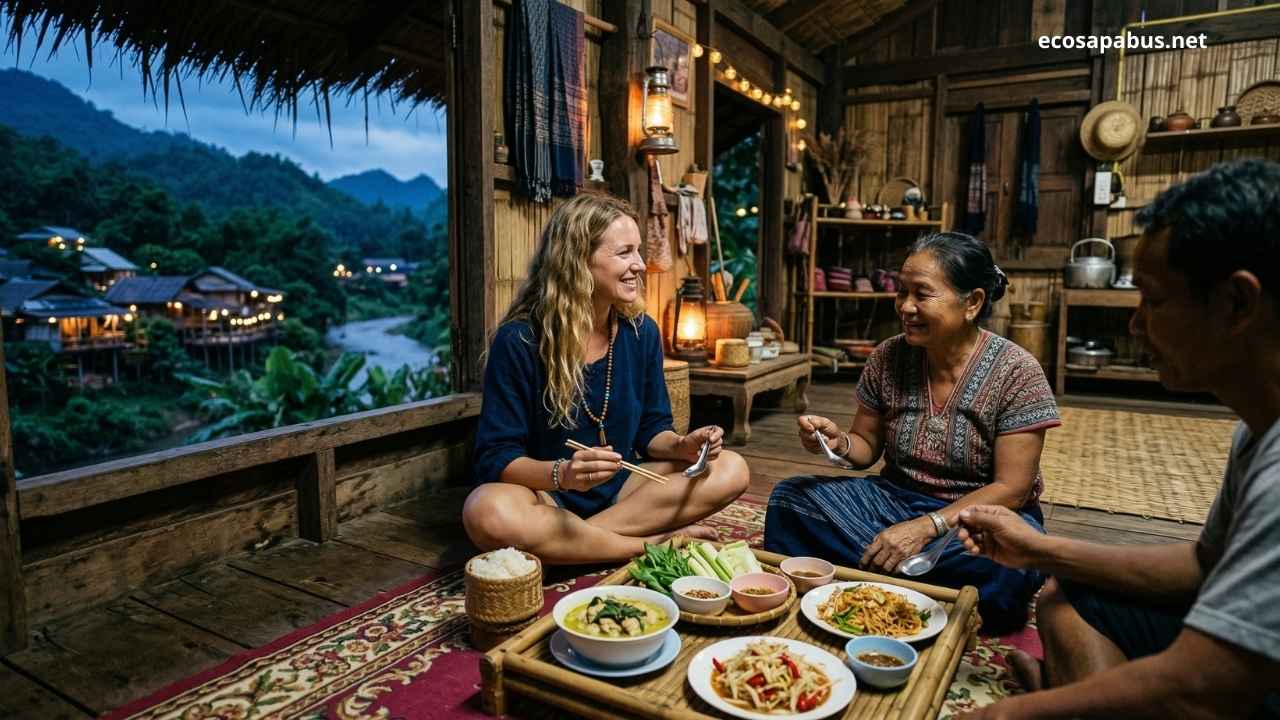
Mai Chau's food is not Vietnamese in the Hanoi or Saigon sense. It is White Thai cuisine — shaped by the forest, the river, the rice paddy, and centuries of cooking traditions that predate Vietnamese settlement in this valley. You'll eat things here unavailable anywhere else in the country.
Tourist restaurants on the main road into Lac Village charge 400,000–700,000 VND/person for "White Thai food" using farmed chicken and MSG-heavy vegetables. A full homestay dinner with 8–10 dishes, rice wine and a cultural performance costs 150,000–250,000 VND/person. The math is obvious. Eat where your host cooks — or ask your guide to take you to a local cơm bình dân (home-cooked rice shop) in Mai Chau town where real people eat.
Mai Chau Scams 2026 — Exactly What to Watch For
Mai Chau is dramatically safer and less scam-prone than Hoi An or Ha Long Bay. Most people leave without a single bad experience. But the specific scams that exist here mostly target first-day arrivals who haven't had time to orient themselves.
Suggested Itineraries — 2, 3 & 5 Days in Mai Chau
📅 2 Days / 1 Night — The Classic First Visit
📅 3 Days / 2 Nights — The Full Valley Experience
If not Sunday: Morning bicycle deeper toward Na Phon village, stop at local school if timing allows, return Lac by 11 AM, lunch, transfer Hanoi.
Day 1: Hanoi → Ninh Binh (2 hrs). Trang An boat tour, Bich Dong pagoda. Overnight Ninh Binh.
Day 2: Ninh Binh → Mai Chau (2.5 hrs scenic route). Afternoon cycling. Homestay dinner + cultural show.
Day 3: Mai Chau sunrise cycle. Pu Luong day trip or village trekking. Second homestay night.
Day 4–5: Mai Chau → Hanoi → Ha Long Bay cruise 2D/1N. Return Hanoi Day 5.
Contact EcoSapa Bus to arrange this full circuit — we handle every transfer.
Mai Chau + Pu Luong Nature Reserve — 3 Days / 2 Nights
Night 1 in a White Thai stilt house in Lac Village. Night 2 in a bamboo eco-lodge inside Pu Luong Nature Reserve. Between: the Hieu Waterfall, ancient bamboo water mills, rice terrace paths with almost no other tourists, and forest untouched for decades.
Money in Mai Chau — VND Cheat Sheet & ATM Tips
Mai Chau has very limited ATM access — one small ATM near the main market in Mai Chau town that frequently runs empty on weekends. Bring all the cash you need from Hanoi. This is not optional advice. Travelers who arrive assuming they'll find an ATM in the valley regularly find themselves borrowing from other guests.
| What | VND Price | USD |
|---|---|---|
| Bicycle rental (full day) | 30,000–50,000 | ~$1.50–2 |
| Electric scooter rental | 80,000–120,000 | ~$3–5 |
| Homestay / person (dinner + breakfast) | 250,000–400,000 | ~$10–16 |
| Eco-resort / night | 1,750,000–3,000,000 | ~$70–120 |
| Local guide (half day) | 150,000–250,000 | ~$6–10 |
| Chieu Cave entrance | 30,000–50,000 | ~$1.50–2 |
| Hand-woven scarf (fair price) | 80,000–150,000 | ~$3–6 |
| Bamboo rice (Cơm Lam) from stall | 15,000–25,000 | ~$0.60–1 |
| Rice wine at market | 20,000–40,000 | ~$0.80–1.60 |
| Fried cicadas (seasonal) | 30,000–50,000 | ~$1.20–2 |
| Xe om (moto taxi) within valley | 30,000–60,000 | ~$1.20–2.40 |
Vietnamese & White Thai Phrases — For Mai Chau
Most locals in Lac and Pom Coong speak basic Vietnamese as a second language (their first language is White Thai / Tai Dam). Any Vietnamese spoken to them is treated with disproportionate warmth. The three White Thai phrases at the end will make your homestay host's day.
White Thai people are deeply proud of their language. Even one phrase in Tai Dam creates an immediate, genuine connection with your host family.
"Kop chai" (gop chai) — Thank you in White Thai. Say it after every meal and your host will light up.
"Kin khao bo?" (kin cow bo?) — "Have you eaten yet?" The most important social greeting in White Thai culture. Asking this to your host in the morning is an extraordinary gesture.
"Khao lam ngiep lai" (cow lam nyep lie) — "The bamboo rice is very delicious." Practice this before dinner. The reaction will be worth it.
White Thai Culture in Mai Chau — What Every Visitor Should Know
The Stilt House — Architecture With Purpose
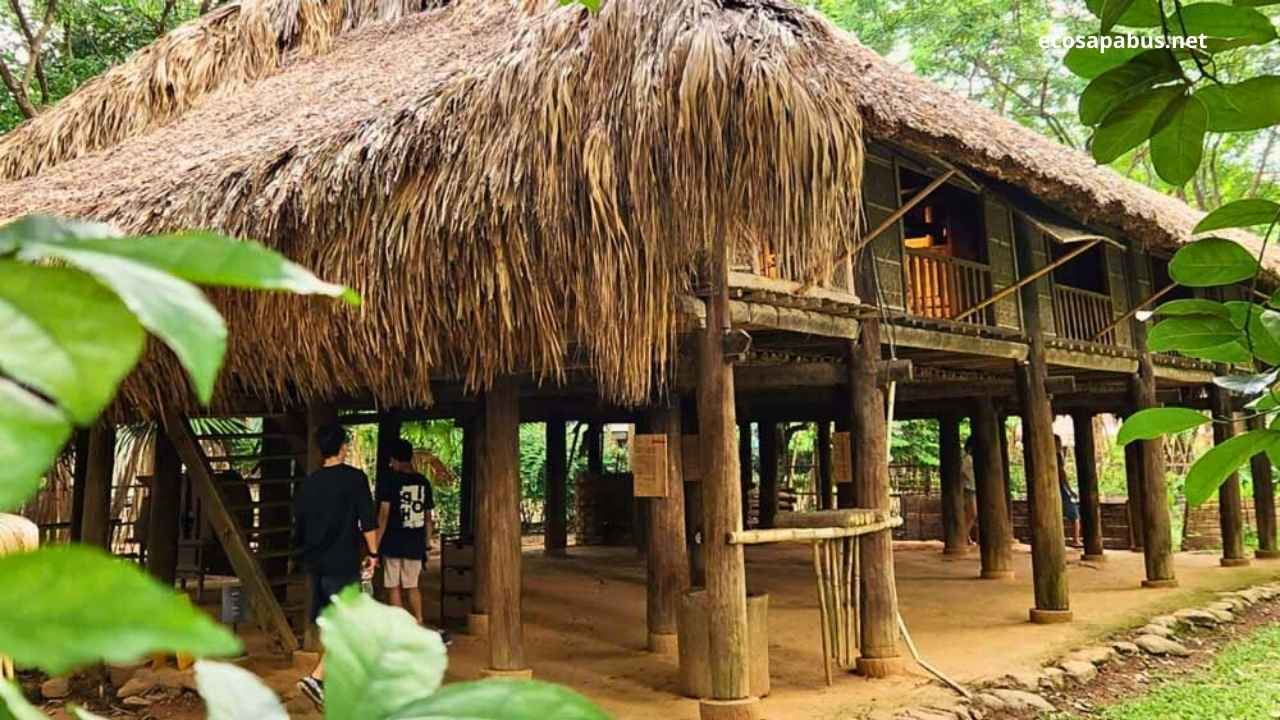
White Thai stilt houses are raised 1–1.5m above ground on wooden pillars. This was practical: flood protection during the wet season, ventilation in the heat, distance from ground-level insects and animals. The space beneath is used for storage, handicraft work, and occasionally shelter for animals. Climbing the steep wooden steps to the communal floor above is the threshold between the outside world and White Thai domestic life.
Weaving — The Living Art Form
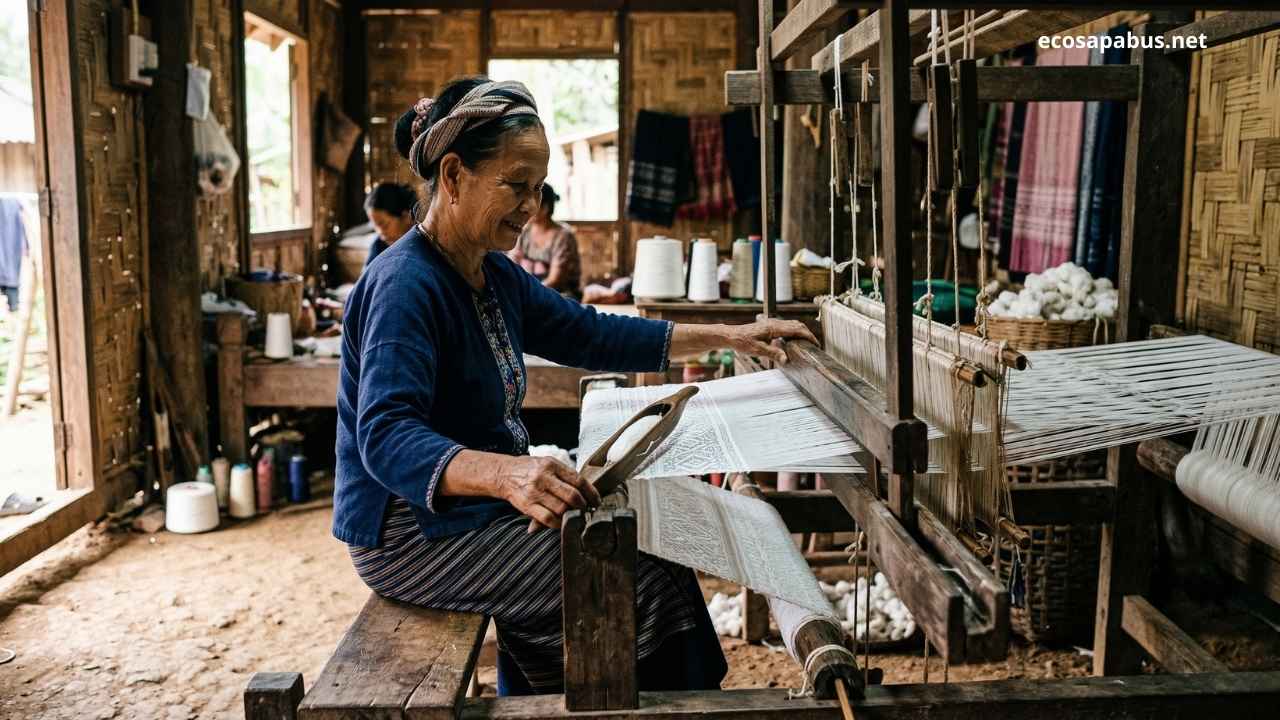
White Thai women learn to weave from childhood. The looms in front of stilt houses in Lac Village are functional, not decorative — they're being used daily to produce fabrics White Thai people wear at festivals and sell to visitors. The geometric patterns carry specific meanings: particular combinations indicate village of origin, marital status, and social standing. When you buy a piece of White Thai fabric, you're buying a text as much as a textile — just one you can't read yet.
You're welcome to watch. Ask permission before touching the loom or sitting at it — most weavers will invite you to try. Don't offer to buy cloth that's half-finished on the loom. Buy from the completed pieces displayed for sale.
Stilt House Etiquette — Things Guests Get Wrong
- Remove shoes before climbing the steps. No exceptions. Shoes at the bottom of the stairs, always.
- Don't walk between an elder and the ancestral altar. The altar at the back of the communal space faces the door — the area in front of it is respectful space. Walk around, not through.
- Accept the first offering of food or drink. Refusing is mildly rude. You can eat a small amount and decline more — but the first acceptance matters.
- Ask before photographing inside the house. Especially never photograph the ancestral altar without explicit permission.
- The sleeping arrangement is communal. Mattresses laid side by side, separated by curtains but not walls. This is normal. It is not a problem to solve.
Pa Co Sunday Market — Hmong Culture Unfiltered
While most of Mai Chau valley is White Thai, the higher communes of Hang Kia and Pa Co (45 minutes northwest by motorbike) are Hmong. The Pa Co Sunday market is one of the most genuinely cultural markets in northern Vietnam — not a tourist market, but an actual weekly gathering where Hmong families from surrounding hills come to trade, arrange marriages, drink together, and maintain social ties. Indigo-dyed clothing, heavy silver jewellery, and embroidered bags on display are everyday wear, not costumes.
Photography: smile and make eye contact before pointing any camera. Many Hmong elders are uncomfortable being photographed — respect this without question. Children are usually delighted. Young people may want to see the photo — show them.
Practical Information — Mai Chau 2026
| Topic | What You Need to Know |
|---|---|
| Cash | Bring all cash from Hanoi. One ATM in Mai Chau town — frequently empty on weekends. No ATM in villages. Cards not accepted at homestays. |
| Mobile Signal | Viettel has the best valley and hillside coverage. Mobifone works in the valley but weakens toward Hang Kia. Buy a Viettel SIM at Hanoi airport. |
| WiFi | Available in homestays but slow (1–5 Mbps). Eco-resorts have better WiFi. Consider it a feature, bring a book. |
| Electricity | 220V. Outages occur during heavy rain. Charge devices during the day. Bring a power bank. |
| Water | Never drink tap water. Bottled water usually included in accommodation. Extra bottles: 5,000–10,000 VND. |
| Mosquitoes | Present near paddies and water at dawn and dusk. All reputable homestays provide nets. Bring DEET repellent for outdoor activities. Dengue risk exists Aug–Oct. |
| Weather & Layers | Valley sits at ~300m altitude — notably cooler than Hanoi in summer, cold in Jan–Feb nights. Pack a light jacket for evenings year-round. |
| Shoes | Flip-flops for the village (you'll remove shoes constantly). Comfortable walking shoes for trekking. Waterproof sandals for wet season rice paddy walks. |
| Medical | No pharmacy in Lac Village. Basic medical supplies in Mai Chau town. Bring: antihistamines, DEET, blister plasters, oral rehydration salts, and any prescription medication. |
| Best Apps | Maps.me (offline maps of the valley paths). Google Translate with Vietnamese downloaded. WhatsApp to reach your homestay and EcoSapa Bus. |
Frequently Asked Questions About Mai Chau
🗺️ Continue Exploring North Vietnam
🔗 More EcoSapa Bus Guides & Tours
Ready to Experience Mai Chau?
We've been running Hanoi–Mai Chau tours for years. Private transfers, 2D/1N homestay packages, Pu Luong extensions, and full north Vietnam circuits. Tell us your dates and we'll sort the rest.