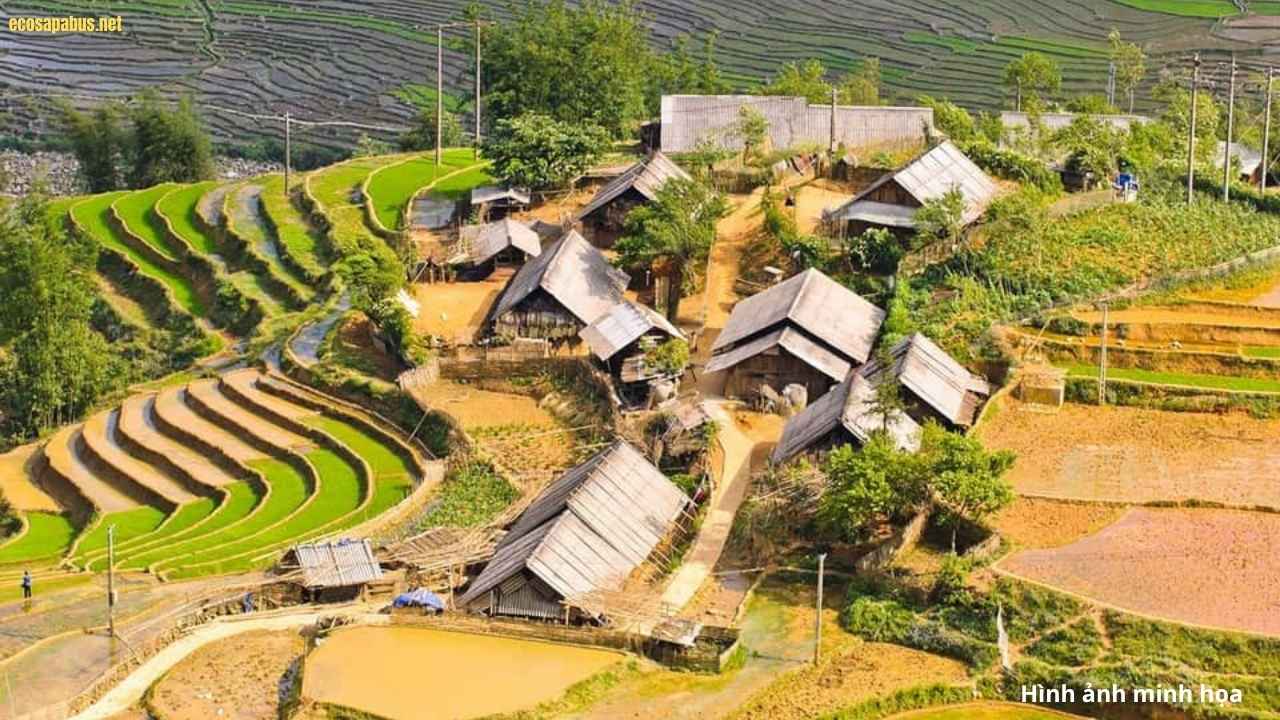

Is Ma Tra Village Worth Visiting in 2026? — The Honest Answer
- Location: Upper slopes above Sapa town, ~3km from the town center on the Tram Ton Pass road, Lao Cai Province
- Elevation: ~1,500m — slightly higher than Sapa town and the Muong Hoa Valley villages
- Ethnic community: Black Hmong (H'Mông Đen) — same group as Cat Cat, with deeply preserved textile traditions
- Entrance fee 2026: None — Ma Tra has no ticketed gate, unlike Cat Cat
- Visit duration: 3–4 hours for an unhurried village walk; 5–6 hours combined with Ta Phin or the Tram Ton Pass area
- Best season: September–November (harvest gold) · March–May (vivid green planting season)
- Getting there: 40–55 min walk from Sapa · 15 min by motorbike taxi (40–60k VND) · guide strongly recommended
Yes — and especially so if you've already done Cat Cat. Ma Tra operates on entirely different terms. There's no entrance fee, no route that's been paved and railed for tourist flow, and no performance slot at 10 AM. What you get instead is a Black Hmong community that has been shaping these mountain slopes since long before the tourism industry arrived — and whose daily life (hemp cultivation, indigo dyeing, loom weaving, corn-growing, rice-farming) continues on its own terms rather than on a tourist schedule. The trade-off is that Ma Tra requires more from you: it's less immediately readable than Cat Cat, the path isn't signposted, and without a local guide you'll walk through the village without really seeing it. With a guide, it becomes one of the most authentic encounters available this close to Sapa town.
Ma Tra (Mả Tra in Vietnamese) is not a secret — it appears on maps, and occasional independent travelers find it. But it sits on the mountain flank above the main valley circuit, off the route most tourists take, and as a result it's seen perhaps a tenth the visitor traffic of Cat Cat on any given day. The families here earn most of their income from agriculture, with tourism playing a smaller supplementary role. That balance — agricultural community first, tourism destination second — shows in everything from the way the paths are maintained (for practical use, not for photographic presentation) to the reactions you get when you walk through (curiosity and occasional wariness rather than the practiced welcome of a heavily-visited village).
The cultural DNA is the same as Cat Cat: Black Hmong, indigo fabric, hemp weaving, stilt-house architecture, terraced rice. But where Cat Cat has been adapted to receive thousands of visitors a week, Ma Tra is still largely a place where people just live. That distinction matters more and more as Sapa becomes one of the most visited destinations in northern Vietnam.
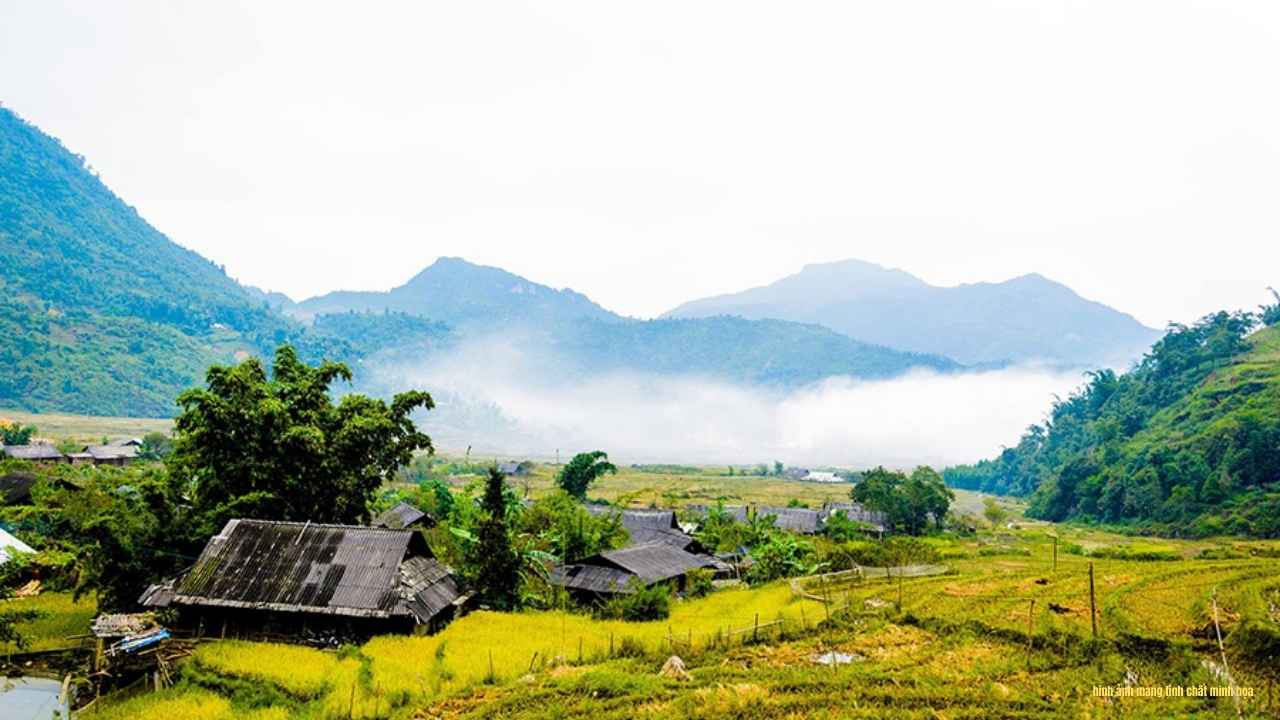
🏔️ Ma Tra Village — At a Glance
- Best for: Authentic Hmong cultural immersion, photography, moderate trekking, repeat Sapa visitors
- Ideal visit: Half-day from Sapa (morning only) · or day-loop combining with Ta Phin or Tram Ton circuit
- Nearest town: Sapa (3km — motorbike taxi back, or walk if you're fit)
- Cost: No entry fee · 40,000–60,000 VND motorbike taxi each way · guide from 250,000–400,000 VND half-day
- Best season: Sep–Nov harvest gold · Mar–May vivid green · Dec–Jan cold & atmospheric
- Vibe: Working agricultural village with minimal tourist infrastructure — genuine, unmanaged, sometimes challenging to navigate alone
- What not to miss: Hemp drying racks, loom weaving demonstrations, terraced field walk, upper village views toward Fansipan
What to See in Ma Tra Village — In Honest Detail
Ma Tra doesn't have a curated visitor route. There's no map at the gate, no numbered stopping points, no cultural performance area at the bottom of the trail. What it has is a real village laid out across a steep slope — and the things worth seeing are embedded in daily life rather than arranged for observation. Here's what that actually means:
1. The Upper Village — Where Daily Life Happens
The upper section of Ma Tra is where most of the residential activity is concentrated. Traditional Black Hmong stilt houses — dark-planked timber raised on stilts, with corrugated iron or thatch roofs — sit on narrow terraced platforms cut into the hillside. Pigs, chickens and dogs share the lower levels of the houses. Corn hangs in heavy yellow cobs from every eave, drying for winter feed. In the morning, the sound of looms — a rhythmic clacking that carries surprisingly far in the mountain air — tells you someone is weaving before you can see the house. The upper village is where a guide makes the biggest difference: a local guide can introduce you to specific families, explain what each element of the house construction means, and translate the interactions that make a visit feel like an encounter rather than a drive-through.
2. Hemp Processing — The Textile Chain from Field to Fabric
The Black Hmong are among the last ethnic groups in Vietnam to maintain a complete traditional hemp textile process — from planting and harvesting the raw fibre to spinning, warping, weaving and finishing with natural dyes. In Ma Tra, this process is more visible than in Cat Cat because it hasn't been compressed into a demonstration slot: you may walk past a family retting hemp stalks in a stone trough to soften the fibres, see bundles of dried hemp hanging from a fence, pass a woman spinning thread on a hand spindle while watching her children, and find a completed warp stretched between two posts outside a house. The indigo dye pots — dark, slightly viscous vats of fermented indigo leaf — are usually in the yards of households that specialize in dyeing for the wider community. The smell is distinctive and not unpleasant: fermented leaves, mineral earth, something organic and ancient.
With a guide, a visit to a weaving family adds roughly 30–40 minutes to your village walk and is the most genuinely enriching part of a Ma Tra visit. You'll see the entire production sequence, handle raw and finished materials, and understand why a handmade Hmong hemp garment costs what it costs — and why buying one from the maker in the village is the only transaction in Sapa where the money unambiguously goes to the right person.
3. The Terraced Fields — Views That Need Context
Ma Tra's terraced rice fields are impressive but different from those at Cat Cat or the Muong Hoa Valley floor. At this elevation, the fields are smaller and more steeply graded — less the broad shelving staircases of valley photography, more the narrow, irregular plates of a mountain community farming difficult land with extraordinary precision. The views from the upper field edges, looking west towards Fansipan (on the days you can see it through the cloud — particularly clear in October–November and February–March) are genuinely exceptional. Fansipan at 3,143m is Vietnam's highest peak, and from Ma Tra's elevation the summit profile is much more dramatic than from the valley floor. The walk down through the lower terraces to the stream at the base of the village is the recommended route — it passes through the most active agricultural land and offers the widest variety of views. The path can be muddy after rain; appropriate footwear matters here more than at Cat Cat.
4. The Mountain Atmosphere — What Makes Ma Tra Different
This is difficult to describe but easy to feel. Ma Tra sits on the windward slope of the ridge that separates Sapa town from the Hoang Lien Son range. Cloud and mist move through the village differently here — not the valley mist that rises slowly from the terraces below, but horizontal cloud that sometimes rolls across the hillside in the morning and clears suddenly to reveal crystalline air and the full height of the mountain above you. The temperature at Ma Tra on a clear November morning is usually 3–5°C colder than Sapa town in the valley — bring a warm layer even if it looks sunny when you leave the hotel. The cold is part of the atmosphere, and the Hmong families here have adapted their daily movements to it in ways you'll notice: indoor fires burning all morning, children in thick embroidered jackets, corn and vegetables spread on any flat surface to catch the midday warmth.
Practical Warnings for Ma Tra Village — What to Know Before You Go
Ma Tra has far fewer scam risks than Cat Cat — the absence of heavy tourist infrastructure means the problematic dynamics that develop in heavily-visited villages haven't established themselves here. But there are practical issues that catch independent visitors off guard:
- Navigation without a guide: The path to Ma Tra is not clearly signposted from Sapa town, and once inside the village the trail network branches unpredictably. Several paths lead off the mountain toward the Muong Hoa Valley or toward Tram Ton Pass — routes that are longer and more demanding than planned. Without offline maps (download Maps.me before you leave your hotel) or a local guide, getting lost is a genuine possibility rather than a minor inconvenience. This is not a dangerous situation but it costs time and energy, particularly in afternoon heat or after rain when paths become slippery.
- Motorbike taxi pricing: Because Ma Tra is less frequently visited than Cat Cat, motorbike taxi drivers unfamiliar with the route may quote prices that reflect their uncertainty rather than the standard rate. The fair rate from Sapa center to the Ma Tra trail junction is 40,000–60,000 VND one way. Quotes above 80,000 VND for a single rider are overcharging — negotiate politely or find another driver. Using Grab app in Sapa (it works, though availability is lower than in cities) removes this uncertainty entirely.
- Terrain and footwear: Ma Tra's paths are not paved like Cat Cat's tourist trail. The agricultural tracks through the fields are compacted earth and stone — manageable in dry conditions with basic hiking shoes, genuinely hazardous in sandals or fashion trainers after rain. The descent from the upper village to the lower fields involves a 15–20 minute steep section. Ankle support matters. Several visitors each season require retrieval after slipping — not usually with serious injury, but always with embarrassment and delay.
- Photography and consent: With fewer tourists, Ma Tra residents have had less exposure to the dynamics of being photographed. Some families will be comfortable with cameras; others, particularly elderly residents and women at work, may not. In a more heavily-visited village, the etiquette is well understood on both sides. In Ma Tra, default to asking before shooting close-ups of people. A simple gesture — pointing to your camera, pointing to them, raised eyebrow — is universally understood. Landscapes, architecture and textiles in public spaces require no permission.
- Cold and altitude: At ~1,500m, Ma Tra is consistently colder than Sapa town (which is already cold by Vietnamese standards in winter). Visitors who dress for a mild day in Sapa and walk to Ma Tra in October–February have a miserable time. Pack a wind layer and something warm regardless of how sunny the morning looks in town. Weather changes fast at this elevation — a clear sky at 7 AM is not a guarantee of warmth at 10 AM.
- Mobile signal: Data signal is weak to non-existent in the lower sections of Ma Tra village. Download your offline maps before departure. Tell your accommodation where you're going and when you expect to return — not because of safety risk, but because if you do get delayed or lost, having a contact who knows your plan saves time.
What to Eat Near Ma Tra Village — Local Food Guide
Ma Tra itself has no food vendors — no stalls, no cafés, nothing. You eat before you leave Sapa (the morning market breakfast is ideal) or after you return. However, several genuinely local food experiences are worth knowing about for the area, and a guide can sometimes arrange a simple meal with a family in the village if requested in advance.
Real Prices for Ma Tra & Sapa 2026 — What Things Actually Cost
Ma Tra itself costs almost nothing to enter or move through — there's no ticket gate, no compulsory guide fee, no souvenir corridor. Your costs are transport, the optional guide, and whatever you spend back in Sapa town. The overall Ma Tra visit is significantly cheaper than Cat Cat for that reason alone. Here are ground-level 2026 prices:
| Item | Price (VND) | USD | Notes |
|---|---|---|---|
| Ma Tra Village entrance fee | Free | $0 | No ticket gate — walk right in. |
| Motorbike taxi Sapa → Ma Tra trail | 40,000–60,000 | $1.60–2.40 | Agree price before boarding. Use Grab if available. |
| Motorbike taxi Ma Tra → Sapa return | 40,000–60,000 | $1.60–2.40 | Ask your guide to arrange or flag on road. |
| Local guide (half-day, Ma Tra) | 250,000–400,000 | $10–16 | Strongly recommended. EcoSapa Bus guides from 300,000k VND. |
| Grilled mountain corn (trail stalls) | 10,000–15,000 | $0.40–0.60 | Roadside on Tram Ton Pass route. |
| Handmade hemp fabric (per metre) | 200,000–350,000 | $8–14 | Buy from maker in village — not from town boutiques. |
| Embroidered Hmong bag or pouch | 100,000–250,000 | $4–10 | Direct from village women. Price reflects 1–2 weeks of work. |
| Half-day Ma Tra + Ta Phin guided trek | 500,000–800,000 | $20–32 | Combined circuit, full morning. Entrance at Ta Phin: 40,000 VND. |
| Full-day Sapa village circuit (all villages) | 900,000–1,400,000 | $36–56 | Ma Tra + Ta Phin + Cat Cat or Muong Hoa Valley. Full guide + lunch. |
| Hanoi → Sapa limousine bus (EcoSapa) | 350,000–500,000 | $14–20 | Direct from Hanoi, air-con, 5.5 hrs. Most comfortable option. |
| Sapa budget guesthouse (dorm) | 150,000–250,000 | $6–10 | Clean dorms in Sapa center, several options. |
| Sapa mid-range hotel (private room) | 500,000–1,200,000 | $20–48 | Valley-view rooms worth the supplement. |
| Sapa luxury (Topas Ecolodge etc.) | 3,500,000–8,000,000+ | $140–320+ | Topas Ecolodge has best valley position, 18km from Sapa. |
| Hmong homestay (Ta Van/Lao Chai) | 300,000–500,000 | $12–20 | Per person per night, dinner + breakfast included. |
| Fansipan cable car (return) | 750,000 | $30 | 2026 price. Longest queues 9 AM–2 PM on weekends. |
| Bánh cuốn breakfast (market) | 30,000–50,000 | $1.20–2 | Best breakfast in Sapa — market only, before 9 AM. |
Best Time to Visit Ma Tra Village — Month by Month
Ma Tra tracks Sapa's seasons but with an additional weather variable: at 1,500m on an exposed slope, conditions are more pronounced than in the sheltered Muong Hoa Valley. The views toward Fansipan are clearer at Ma Tra's elevation than from Cat Cat, which makes clear-sky seasons even more rewarding here.
September–November: The absolute peak for photography and atmosphere. Harvest season turns the terraces gold. The sky above Fansipan is cleanest in October–November after summer haze clears. The mountain air is crisp enough to wear a fleece at dawn. This is the season — book accommodation 4–6 weeks ahead for weekends. March–May: The fields are newly planted — intensely green, almost luminous on overcast days. Fewer visitors than autumn and a good season for encountering the community during the agricultural work of planting season. June–August: Rainy season means lush overgrowth, a more dramatic trail atmosphere, and leeches on the path below the upper village (tuck trousers into socks — not glamorous but necessary). The views to Fansipan are mostly obscured by cloud. Still a rewarding visit for travellers who like atmospheric mountain weather. December–January: The coldest months — frost possible on the upper fields, occasional ice on path surfaces, and sometimes cloud so dense the village disappears into white. Bring thermal layers. A good month for serious photographers who can handle cold. February brings blossom to the fruit trees on the lower slopes — brief, spectacular, worth planning around if your dates allow. Every month: Go in the morning. 7–9 AM at Ma Tra is a different village from 11 AM–2 PM. This is true at Cat Cat too but matters even more here — the light is better, the community is more active, and you're more likely to see the weaving and agricultural work happening naturally rather than winding down for the midday rest.
How to Get to Ma Tra Village from Sapa Town
Ma Tra is less straightforward to reach than Cat Cat — there's no clear signposted trail from Sapa center and the approach path branches in ways that can confuse independent visitors. Here are your realistic options:
Option 1: Motorbike Taxi (Most Practical)
From Sapa town, take a motorbike taxi (xe ôm) northward on the road toward Tram Ton Pass (the road to the Fansipan cable car base station). The driver drops you at the trail junction for Ma Tra, approximately 3km from town — a 10–15 minute ride. Standard price: 40,000–60,000 VND one way. The junction itself is not prominently signed — tell your driver specifically "Bản Mả Tra" (the Vietnamese name for the village) and confirm they know the location before departing. Using Grab app in Sapa reduces pricing uncertainty. Return trip: arrange with your guide or flag down a motorbike taxi on the Tram Ton road.
Option 2: Walk from Sapa (For Fit Hikers)
The walk from Sapa town to Ma Tra takes 40–55 minutes, mostly along the Tram Ton Pass road with a branch onto the village trail. The route is not difficult in terms of terrain but it is uphill (Ma Tra sits above the town's elevation) and on a busy road for the first section. The trail branch is not clearly signposted — you'll need offline maps or a guide. The walk is more rewarding than the road and the scenery improves significantly once you leave the tarmac. Return by motorbike taxi is strongly recommended (downhill is less appealing on foot than uphill). Note: the Tram Ton road carries significant tourist traffic heading to the Fansipan cable car — walk on the shoulder and be aware of motorbikes.
Option 3: Guided Trek with EcoSapa Bus (Our Recommendation)
Our Ma Tra half-day trek departs from Sapa town at 7:30 AM, reaches the village by 8:15 AM, covers the upper and lower sections with a family weaving visit, and returns to Sapa by 11:30–12:00. English, French and basic Mandarin-speaking guides are available. We also offer a combined Ma Tra + Ta Phin full-day circuit that adds the Red Dao herbal bath tradition at Ta Phin Village (12km from Sapa) to the Ma Tra Black Hmong experience — two distinct ethnic minority cultures in a single rewarding day. View full Sapa tour options →
Ma Tra is in Sapa — which means your first step is getting to Sapa from Hanoi (the most common arrival point). The most comfortable option is the EcoSapa Bus limousine service: direct Hanoi–Sapa in a recliner seat with AC, 5.5 hours, departing from multiple Hanoi pickup points. From 350,000 VND. The overnight train (Hanoi Lao Cai → Sapa town taxi) is atmospheric and practical. From Ho Chi Minh City or Da Nang, fly to Hanoi first, then connect to Sapa by bus or train. See current Hanoi–Sapa bus schedules →
Ma Tra Village Trekking Itineraries — Half-Day, Full Day & Multi-Day
Itinerary A: Ma Tra Half-Day (3–4 hours) — Best Introduction
| Time | Activity | Notes |
|---|---|---|
| 07:00 | Breakfast at Sapa morning market | Bánh cuốn or phở — fuel before the walk. Market closes 9 AM. |
| 07:30 | Motorbike taxi toward Tram Ton Pass road | Tell driver "Bản Mả Tra." 10–15 min ride, 40–60k VND. |
| 08:00 | Enter Ma Tra Village — upper section | No ticket. Guide handles introductions. Morning light is best. |
| 08:30 | Weaving family visit (with guide) | Hemp preparation through finished cloth. Allow 30–40 min. |
| 09:15 | Terrace walk — lower fields and stream | Best Fansipan views from upper field edges on clear days. |
| 10:30 | Return to road junction | Flag motorbike taxi back to Sapa or arrange via guide. |
| 11:00 | Sapa town — Shan Tuyết tea and market browse | Well earned. Consider buying quality loose-leaf tea here. |
Itinerary B: Ma Tra + Ta Phin Full Morning (5–6 hours) — Our Recommendation
| Time | Activity | Notes |
|---|---|---|
| 07:00 | Early breakfast in Sapa | Early start is the single best thing you can do in Sapa. |
| 07:30 | Motorbike to Ma Tra trail junction | Arrive early for golden light on the upper terraces. |
| 08:00 | Ma Tra Village — upper section, weaving family | Black Hmong hemp and indigo textile traditions. |
| 09:30 | Trek or transport to Ta Phin Village (12km) | Red Dao community — completely different culture from Hmong. |
| 10:00 | Ta Phin — Red Dao village walk (40,000 VND entry) | Herbal medicine garden, traditional bathing traditions, embroidery. |
| 11:30 | Herbal bath at Ta Phin (optional, extra cost) | Traditional Red Dao herbal soaking bath — excellent after a long morning. |
| 12:30 | Return to Sapa for lunch | Try thắng cố at a Hmong restaurant — you've earned the full experience. |
Itinerary C: Sapa Three-Village Circuit (Full Day, 7–8 hours) — For Committed Trekkers
The most rewarding way to understand the diversity of Sapa's ethnic communities is to visit three distinct groups in a single day: Ma Tra (Black Hmong, ~1,500m) → Ta Phin (Red Dao, 12km from Sapa) → Cat Cat (Black Hmong, Muong Hoa Valley, 2km from Sapa). Each community inhabits a different elevation, practices different crafts, and has a different relationship with tourism. A local guide who can navigate between and translate across these communities turns a potentially overwhelming day into one of the most educationally rich experiences available in northern Vietnam. EcoSapa Bus full-day multi-village circuits include guide, transport between villages, entrance fees and a lunch with a local family. See full-day tour options →
Where to Stay in Sapa — Honest Accommodation Guide
There is no visitor accommodation in Ma Tra Village itself — you sleep in Sapa town and visit the village as a morning excursion. Sapa has expanded dramatically over the past decade and now offers every price point from mountain dormitories to extraordinary valley-view luxury lodges. Your choice of accommodation shapes how you experience the surrounding landscape at dawn and dusk.
Eighteen stone bungalows on a high ridge 18km from Sapa town, 270-degree views across the Muong Hoa Valley and toward Fansipan. No phone signal, no TVs, just the valley and the silence. Sunrise from the terrace of Bungalow 4 is one of the finest views in all of Vietnam. Guided treks to Ma Tra and other villages can be arranged through the lodge. Worth every dollar if your budget allows it — this is the benchmark luxury experience in the Sapa region.
Run by a Hmong social enterprise that employs ethnic minority women as guides and hospitality staff. Good food using local ingredients, comfortable rooms, and the best guide quality in Sapa — because the guides are from the communities you're visiting. A percentage of revenue goes to community development. The most coherent choice for travelers who want their money to have a positive local impact. Book trekking packages (including Ma Tra) directly with the lodge.
Central location, consistent service, reliable hot water and WiFi. Rooms on floors 4–6 have partial valley views worth requesting. Helpful English-speaking staff who can arrange motorbike taxis, treks and EcoSapa Bus tickets. The go-to mid-budget option in Sapa town. Nothing exceptional in either direction — clean, functional, well-located and friendly.
Sleeping in a traditional stilt house in Ta Van (8km from Sapa) — dinner on a wood fire, wake up to river sound and rice terrace mist, breakfast with the family before the day begins. Basic facilities (shared bathroom, thin mattresses, cool evenings even in summer) but the experience is irreplaceable and considerably harder to find each year as more homestay operations commercialize. EcoSapa Bus works with host families in Ta Van specifically vetted for international guests, with English-speaking family members and appropriate bathroom facilities.
Ma Tra vs. Other Sapa Villages — Honest Comparison
Sapa has more than a dozen minority villages within day-trekking distance. Here's how the most commonly visited compare — and where Ma Tra fits in that landscape:
| Village | Ethnic Group | Distance | Crowds | Authenticity | Best For |
|---|---|---|---|---|---|
| Cat Cat | Black Hmong | 2km from Sapa | High (10am–3pm) | Genuine — go early | First visit, waterfall, day trip |
| Ma Tra | Black Hmong | 3km from Sapa | Very low | Highly authentic | Hemp weaving, less tourism, photography |
| Sin Chai | Black Hmong | 4km from Sapa | Low | Very authentic | Cat Cat extension, valley floor walk |
| Ta Phin | Red Dao | 12km from Sapa | Moderate | Different culture from Hmong | Red Dao herbal bath, distinct traditions |
| Lao Chai | Black Hmong | 8km from Sapa | Moderate | Scenic + genuine | Full-day Muong Hoa Valley trek |
| Ta Van | Giay minority | 8km from Sapa | Moderate | Different culture from Hmong | Best homestay, rice terrace scenery |
| Y Linh Ho | Black Hmong | 6km from Sapa | Low | Working farm community | Off-the-beaten-path walkers |
| Bản Hồ | Tay minority | 24km from Sapa | Very low | Most untouched | Multi-day trekkers only |
Insider Tips — What Our Local Guides Tell Clients Before the Ma Tra Walk
Cultural Respect at Ma Tra — Being a Good Guest
Because Ma Tra receives far fewer visitors than Cat Cat, the community has not developed the practiced hospitality responses (and practiced tolerances) of a heavily-visited village. This makes the cultural respect guidelines here more important than they might feel at a more tourism-accustomed site. The interactions here are real rather than managed — which means your conduct has a more immediate impact on how the village views tourism overall.
- Ask before photographing people. In a village with hundreds of daily visitors, the etiquette is well understood on both sides. At Ma Tra, a camera directed at someone without acknowledgment may genuinely surprise or discomfort them. The universal ask: eye contact, smile, camera raised, eyebrow up. A nod means yes. A wave away means no. Move on graciously if declined. The photographs you take of people who've agreed to be photographed will be better than any taken without asking.
- Don't enter homes without being invited. Open doors in Ma Tra mean a family going about their morning, not a tourist invitation. A guide will facilitate appropriate introductions to families who are comfortable with visitors. Without a guide, stay on the paths and wait to be invited rather than assuming.
- Fair prices, not minimums. If you buy a handmade textile from a village woman who has spent weeks making it, do not try to pay 40,000 VND for something she's asking 150,000 VND for. The economics here are real: the material cost alone, plus the time, plus the cultural knowledge embedded in the work. Bargaining is acceptable; aggressive minimum-price bargaining on handmade goods from women in a mountain village is not something most travelers would be comfortable with if they thought about it clearly.
- No candy or coins to children. Ma Tra has not developed the child-begging dynamic that affects more heavily-visited Sapa villages — please don't contribute to starting one. Children here are in school or helping with farmwork, not positioned along tourist paths. If you want to support local children, donate through a vetted organization working in the Sapa region.
- Tread carefully on the terraces. The rice terrace walls (bờ ruộng) are the infrastructure of the community's food production. They take enormous labor to build and maintain. Walking on or alongside them — rather than on the paths between — can cause collapse that takes days of work to repair. Stay on the obvious paths. When in doubt, ask your guide.
Frequently Asked Questions — Ma Tra Village Sapa
Yes — especially if you've already done Cat Cat and want something more genuinely off the tourist circuit. Ma Tra is a working Black Hmong community with preserved hemp weaving traditions, excellent mountain views and almost no tourist infrastructure. There's no entry fee, no crowds between 10 AM and 3 PM, and no souvenir stalls following you down the path. The trade-off is that it requires more effort: a slightly longer journey from Sapa, unfamiliar trail navigation without a guide, and an experience that rewards engagement rather than observation. With a local guide, it's one of the best village visits in the entire Sapa region.
The key differences: Ma Tra has no entrance fee, no performance stage, no souvenir strip and far fewer daily visitors than Cat Cat. Both are Black Hmong communities, but Cat Cat has adapted significantly to mass tourism and has a structured visitor experience (waterfall, cultural performance, craft demonstrations along a managed route). Ma Tra retains a much more working-village character — the hemp weaving and agricultural activities you see there are happening for the community's use, not for observation. Ma Tra requires more navigation ability and benefits more from a local guide. Cat Cat is better for first-time Sapa visitors; Ma Tra is better for travelers who want to go further.
The most practical option is a motorbike taxi (xe ôm) from Sapa center toward Tram Ton Pass road, dropping you at the Ma Tra trail junction — 10–15 minutes, 40,000–60,000 VND one way. Tell the driver "Bản Mả Tra" (the Vietnamese village name) and confirm they know the location. The walk from Sapa is possible (40–55 minutes, uphill) but the trail branching is not signposted — offline maps or a guide are strongly recommended for independent walkers. Using Grab app in Sapa removes motorbike taxi price uncertainty.
September–November for the most dramatic scenery — golden harvest terraces and the clearest views to Fansipan. March–May for vivid green planting season with smaller crowds. Both are excellent seasons. June–August brings rain and leeches on the lower trail — manageable but worth knowing about; waterproof layers and tucked-in trousers are practical requirements. December–January can be very cold (frost on the upper fields, occasional ice on path surfaces) — not dangerous but requires proper layering. Whatever month you visit, go in the morning: 7:30–9:00 AM at Ma Tra is a fundamentally different experience from arriving at 11 AM, regardless of season.
More so than at Cat Cat. The path to Ma Tra isn't clearly signposted and the village itself has no tourist infrastructure. Without local knowledge, you can walk through the entire village and see it — but not really understand or connect with what you're seeing. A local guide changes everything: they know which families are weaving today, can facilitate introductions that open actual doors, and have the language to translate the interactions that make a village visit feel like an encounter rather than an observation. EcoSapa Bus guides are Hmong locals from these communities — not guides from Hanoi who have studied the culture academically. The difference in quality is significant and measurable in the depth of what you experience.
Plan 3–4 hours minimum for an unhurried visit that includes the upper village, a weaving family visit (with guide) and the terrace walk to the lower fields. Add 1 hour if combining with the trail toward Ta Phin for a morning Hmong-Dao circuit. A dedicated half-day from Sapa (depart 7:30 AM, return by 12:00 noon) covers everything comfortably. The full Ma Tra + Ta Phin day circuit takes 6–7 hours and is best done with a guide and pre-arranged transport between the two villages (12km apart).
Different experiences, not competing ones. Cat Cat is the best introduction to Black Hmong culture — more structured, more accessible, with a waterfall and terraced valley setting that's spectacular. Ma Tra is better for travelers who want less tourism and more daily life — the same Black Hmong cultural traditions in a setting that hasn't been adapted for visitors. Ta Phin (Red Dao village, 12km from Sapa) offers a completely different ethnic group with distinct traditions — worth visiting specifically for the contrast with Ma Tra's Hmong culture. Our recommendation for a 3-day Sapa visit: Day 1 — Cat Cat + Sin Chai. Day 2 — Ma Tra morning + Ta Phin afternoon. Day 3 — Muong Hoa Valley full-day trek to Lao Chai and Ta Van with overnight homestay.
Yes, with appropriate preparation. Ma Tra is safe — the community is accustomed to occasional visitors and there is no meaningful crime risk. The practical considerations for solo travelers: (1) download Maps.me offline before departing Sapa, (2) tell your accommodation where you're going and when you expect to return, (3) bring sufficient water as there's nowhere to buy any in the village. Solo female travelers can visit without concern. The main challenge is navigation — the trail branches are unmarked and a wrong turn adds significant time. A guide removes this uncertainty entirely and enhances the experience beyond what any solo independent visit provides.