
Is Lao Chai Village Worth Visiting in 2026? — The Honest Answer
- Location: Muong Hoa Valley, 8km from Sapa town center, Lao Cai Province, northern Vietnam
- Elevation: ~950m (Sapa town is at 1,600m — the valley descends gradually over 8km of trekking)
- Ethnic community: Black Hmong (H’Mông Đen) — same group as Cat Cat but in a far less visited setting
- Entrance fee 2026: None — Lao Chai has no ticket gate. You walk straight in.
- Trek duration: 6–8 hours for the full Lao Chai–Ta Van loop from Sapa (with transit); 3–4 hours of actual walking
- Best season: September–November (golden rice harvest) · March–May (vivid green, fewer crowds)
- Getting there: 2.5h trek from Sapa · or 30–40 min by motorbike + trailhead walk · or guided EcoSapa trek
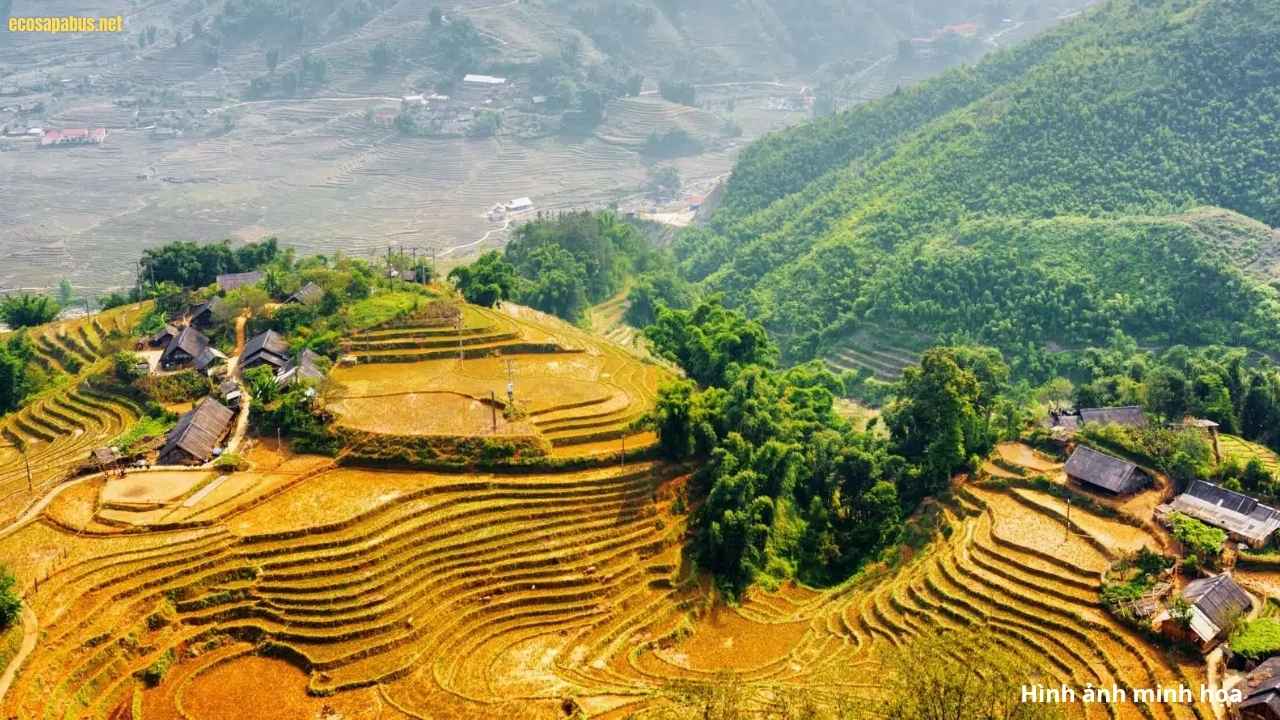
Lao Chai is, in our considered opinion, the best single-day destination in the Sapa region. It’s not said lightly. Eight kilometres and no entrance fee separate it from Cat Cat — and those eight kilometres make an enormous difference to what you experience. No ticket booth means no managed crowds funnelled along a single path. No performance stage means the Hmong women actually weaving at their looms are doing it because they’re making clothing, not because a tour schedule puts them there. The rice terraces of the Muong Hoa Valley are wider and more dramatic here than near Sapa town, the Tac Tinh River runs alongside much of the trail, and the continuation to Ta Van adds a completely different ethnic community (the Giay minority) to the day’s experience. This is what Sapa looked like before the cable cars.
Lao Chai (Lào Chải in Vietnamese) sits at the heart of the Muong Hoa Valley — a natural basin formed by the Tac Tinh River as it drains south from Sapa toward the Red River. The valley floor at Lao Chai is one of the most agriculturally productive areas in the Lao Cai highlands, and the terracing that covers every hillside here is not decorative. These are active rice paddies worked by the same Black Hmong families who carved them from the mountain centuries ago. The stilt houses in the village — dark wood raised on stone footings, with corn hung drying from the eaves — are genuine working homes, not reconstructions.
For travellers who’ve done Cat Cat and want to go deeper, Lao Chai is the obvious next step. For first-timers who have a full day and want to skip the managed tourism experience entirely, Lao Chai is where we’d send them first.

🥾 Lao Chai Village — At a Glance
- Best for: Full-day trekking, cultural depth, photography, homestay, experienced Sapa visitors
- Ideal visit: Full-day Lao Chai–Ta Van loop · or overnight homestay combining both villages
- Nearest town: Sapa (8km uphill — arrange motorbike taxi or vehicle return in advance)
- Cost: Free to enter · guide recommended · return transport ~100–150k VND per person
- Best season: Sep–Nov harvest gold · Mar–May vivid green · Dec–Jan cold and atmospheric
- Vibe: Genuinely working Hmong agricultural community — one of the least staged in the Sapa area
- What not to miss: Lao Chai–Ta Van river trail, morning mist over the valley, Hmong homestay dinner
What to See in Lao Chai Village — In Honest Detail
Lao Chai rewards walkers who take their time. The village itself takes 1.5–2 hours to explore properly; the surrounding trail network through the valley adds as many hours as you want to give it. Here’s what you’ll actually encounter, and what’s genuinely worth your attention.
1. The Muong Hoa Valley Trail — The Best Walk in Sapa
The approach to Lao Chai from the north is through the Muong Hoa Valley — a broad agricultural basin running roughly north–south, flanked by terraced hillsides that are wider and more dramatic than anything visible from Sapa town. The standard trailhead is a few kilometres south of Sapa on the valley road. From there, the walking path follows the Tac Tinh River downstream, crossing simple bamboo and concrete footbridges, passing through patches of primary forest and emerging repeatedly into open views of the most spectacular rice terrace scenery in northern Vietnam. On clear mornings, Fansipan (Vietnam’s highest peak at 3,143m) is visible to the northwest. The path is not always paved — sections involve narrow dykes between paddy fields, muddy farm tracks, and river-stone paths — which is exactly why it’s more interesting than Cat Cat’s managed trail.
2. Lao Chai Village Itself — Real Hmong Life
The village sits on the western bank of the Tac Tinh River, spread across a gently sloping shelf of land above the valley floor. The architecture is traditional Black Hmong: dark rectangular stilt houses built on stone foundations, raised to keep livestock below the living space, with large vegetable gardens beside each house. The village has several dozen households and a small primary school. Unlike Cat Cat, there are no souvenir stalls lining the walking path. Women work at their looms or tend to the fields. Men move water buffalo between paddies. Children walk to school. If you’d arrived without context, you might not immediately register that this is a “tourist destination” at all — which is the point.
A good guide will introduce you to specific families, show you where the indigo dye plants are grown, explain the significance of the embroidery patterns on the women’s jackets, and take you through the village at a pace that allows genuine contact rather than a parade. Without a guide, you can still walk through independently — but the depth of experience is significantly different.
3. Indigo Dyeing & Textile Craft
The Black Hmong textile tradition is one of the most technically complex in Southeast Asia. The cloth starts as hemp — grown in small plots around the village — which is spun, woven on a backstrap loom, and then subjected to an intricate sequence of beeswax batik work and repeated indigo dye baths. Each immersion darkens the fabric by a fraction; twenty or thirty baths produce the deep blue-black that identifies Hmong cloth. The silver embroidery added to jackets and headscarves is a separate skill, passed mother to daughter. In Lao Chai you can see all stages of this process happening naturally — not in a demonstration area but in people’s homes and yards — because the village produces cloth for its own use, not primarily for tourists.
4. The Lao Chai–Ta Van Continuation — The Trek’s Second Act
Most experienced trekkers consider the continuation from Lao Chai to Ta Van the finest section of the entire Muong Hoa Valley route. From Lao Chai, the trail crosses the river on a concrete bridge and follows the eastern bank south through open paddy fields for roughly 2km. The landscape here is at its widest and most spectacular — the valley floor is flat enough that you can see the full sweep of the terracing on both hillsides simultaneously, with the river glinting between them. Ta Van is a Giay minority village with noticeably different architecture and dress from the Hmong communities further north — arriving there after Lao Chai gives the day an interesting cultural contrast that single-village visits don’t offer.
5. Homestay Experience — The Night That Changes Everything
Staying overnight in Lao Chai or Ta Van transforms a good day’s walk into something much harder to describe. The homestay experience is not luxury: a wood-fire kitchen, a shared bathroom, a mattress on a wooden platform. What it is, though, is genuine. Dinner is cooked by your host family — usually three or four dishes of local mountain vegetables, river fish if the catch was good, and the corn spirit that burns warmly on cold mountain evenings. The morning, with mist sitting in the valley below and the first light touching the ridge-top terraces, is something most visitors say they didn’t expect to be so affecting. Book through a licensed operator — EcoSapa Bus works with host families in both villages who have appropriate bathroom facilities and English-speaking family members.
Scam Warnings & What to Watch Out For — Honest Lao Chai Advice
Lao Chai is significantly less affected by tourist scams than Cat Cat Village — the distance from Sapa and the absence of an entrance gate mean that the informal economy around tourism hasn’t had the same time to develop. But there are still a few things worth knowing before you arrive:
- Unlicensed “guides” at the trailhead: Men at the Muong Hoa Valley trailhead parking area offer guiding services informally. Some are genuinely local and knowledgeable; others are opportunists from Sapa town who know the route but not the community. The difference matters enormously for the quality of your experience. Book a guide in advance through a licensed operator — they’ll be there when you arrive and their identity is verifiable.
- Return transport price inflation: At the end of the Lao Chai–Ta Van route, motorbike taxis and minivans waiting on the valley road will quote prices to Sapa. These can range from fair (80,000–150,000 VND per person) to opportunistic (300,000+ VND for what should be a shared vehicle). Agree on price before you walk to the vehicle. Have your operator arrange return transport in advance if possible — it’s cleaner and usually cheaper.
- Souvenir pressure on the trail: Less persistent than Cat Cat, but Hmong women with bags of bracelets and scarves do walk the Muong Hoa Valley trail and approach trekkers. The same approach applies: make eye contact, say “no thank you” clearly, do not engage in bargaining if you have no intention of buying. If you want to buy Hmong textiles, buying from village women in Lao Chai directly supports the maker — far better than tourist shops in Sapa town.
- Homestay quality variation: Not every homestay in Lao Chai and Ta Van is set up for international guests. Some offer mattresses on dirt floors with no bathroom facilities at all. Book through a licensed operator who has inspected the facilities. EcoSapa Bus works with a small number of vetted host families in both villages; we don’t send guests to houses we haven’t personally visited.
- Trail navigation without offline maps: This is less a scam than a genuine hazard. The Muong Hoa Valley trails are not consistently signposted in English. Several paths lead off the main route into private paddy fields with no exit. Download Maps.me with the Sapa region offline before leaving your hotel. The main Lao Chai–Ta Van route is mapped, but side trails are not. Getting lost in the valley is not dangerous but it is time-consuming and sometimes embarrassing.
- Overpriced local products at village entry points: Small stalls near the trailhead occasionally sell bamboo shoots, honey and herbal products at prices several times higher than Sapa market rates. Local produce is excellent and worth buying — but compare prices with Sapa market before you make purchases at the trailhead.
What to Eat in the Lao Chai Area — Local Food Guide
The eating situation at Lao Chai is different from Cat Cat: there are no food stalls inside the village itself. Sustenance on the trek comes from what you carry, what’s prepared at a homestay lunch stop, and what’s available from local families if your guide arranges it. The real Lao Chai food experience is a homestay dinner — simple, seasonal, completely genuine. Here’s what you’ll likely eat on the trek and in the valley:
Real Costs for the Lao Chai Trek 2026 — What Things Actually Cost
Lao Chai Village itself has no entrance fee — the major saving versus Cat Cat Village (100,000 VND gate charge). The costs for a Lao Chai day involve transport, guide (strongly recommended), and return vehicle. Here are real 2026 ground prices:
| Item | Price (VND) | USD | Notes |
|---|---|---|---|
| Lao Chai Village entrance fee | 0 | Free | No gate, no ticket. Walk straight in. |
| Motorbike taxi Sapa → Muong Hoa Valley trailhead | 80,000–120,000 | $3.20–4.80 | Per person. 30–40 min ride. Book at your hotel. |
| Return vehicle (van/motorbike) from Ta Van | 80,000–150,000 | $3.20–6 | Per person. Arrange in advance if possible. |
| Grilled corn at trailhead stalls | 10,000–15,000 | $0.40–0.60 | Essential fuel for the walk. |
| Bottled water (trailhead stalls) | 15,000–20,000 | $0.60–0.80 | Bring 1.5L minimum. Hot months: 2L. |
| Handmade Hmong textiles (village women) | 80,000–400,000 | $3.20–16 | Priced fairly at source. No middlemen. |
| Half-day guided Lao Chai trek (EcoSapa) | 400,000–600,000 | $16–24 | Local Hmong guide + village walk + return transport. |
| Full-day Lao Chai–Ta Van guided trek (EcoSapa) | 800,000–1,400,000 | $32–56 | Guide + entrance fees + lunch + return transfer. |
| Lao Chai / Ta Van homestay (per person) | 300,000–500,000 | $12–20 | Includes dinner + breakfast. Book via licensed operator. |
| Hanoi → Sapa limousine bus (EcoSapa) | 350,000–500,000 | $14–20 | Direct, air-con, 5.5 hrs. Most comfortable option. |
| Sapa budget guesthouse (dorm) | 150,000–250,000 | $6–10 | Multiple options in Sapa center. |
| Sapa mid-range hotel (private room) | 500,000–1,200,000 | $20–48 | Valley view rooms worth the premium. |
| Fansipan cable car (return) | 750,000 | $30 | 2026 price. Lines longest 9 AM–2 PM on weekends. |
| Bánh cuốn breakfast (Sapa market) | 30,000–50,000 | $1.20–2 | Eat before the trek. Morning market before 9 AM. |
Best Time to Visit Lao Chai Village — Month by Month
The Muong Hoa Valley changes dramatically through the year. Each season offers a completely different visual experience of the same landscape — and the trek conditions change accordingly. Here’s what you’re actually signing up for in each month:
September–November: Peak season — the Muong Hoa Valley harvest transforms the terraces gold. October is the visual peak: the colour is extraordinarily saturated and the cooler temperatures make trekking genuinely pleasant. Book accommodation 4–5 weeks ahead for weekends. March–May: The paddy is replanted after harvest and the valley turns a vivid, impossible green. Comfortable temperatures (15–22°C in the valley throughout the day), significantly fewer visitors than autumn, and the waterfall tributaries feeding the Tac Tinh are running high. Our second-favourite time. June–August: Rainy season. The valley is lush, waterfalls are dramatic, but the Tac Tinh can flood certain trail sections. Always check conditions with us before heading out in peak rainy season. December–January: At 950m, the valley floor is cold but rarely frozen — mornings are frequently foggy with beautiful atmospheric photography opportunities. Experienced hikers in proper cold-weather gear find January rewarding; first-timers expecting a warm break often don’t. February: Plum and peach blossoms appear on the sheltered south-facing slopes of the valley — a spectacular few weeks that serious photographers time carefully. Message us for the current blossom timing each year.
How to Get to Lao Chai Village from Sapa Town
Lao Chai is 8km from Sapa town — not a short walk, but one of the most rewarding approaches to any village in northern Vietnam. Unlike Cat Cat, which has a managed entrance near town, reaching Lao Chai requires a decision: trek the whole way from Sapa (2.5–3 hours downhill), take a motorbike taxi to the valley road and walk the final stretch, or join a guided EcoSapa trek that handles all logistics. Here are your options in honest detail:
Option 1: Trek from Sapa Town (2.5–3 hrs) — Most Rewarding
The full trek from Sapa town follows the Muong Hoa Valley trail south. The first section (Sapa to the valley floor, ~6km) is a sustained descent through rice terraces, past viewpoints and cross a couple of small river tributaries. The trail enters the Muong Hoa Valley proper after roughly two hours and arrives at Lao Chai from the north. This is the best way to experience the full transition from Sapa town tourism to genuine valley life — but it requires good footwear, at least 2L of water, and a willingness to navigate. Download Maps.me offline for the Sapa region before leaving your hotel — the trail splits at several points and is not consistently signposted in English. This option is best combined with a Lao Chai–Ta Van return where you take a motorbike taxi or arranged vehicle back to Sapa from the valley road at the end of the day.
Option 2: Motorbike Taxi to Trailhead + Walk (30–40 min ride, then 40 min walk)
From Sapa town, take a motorbike taxi (xe ôm) south along Highway 4D and the valley road to the Muong Hoa Valley trailhead parking area — roughly 30–40 minutes and 80,000–120,000 VND. From the trailhead, the walk to Lao Chai village is approximately 2–3km along the valley floor, following the Tac Tinh River. This option skips the long Sapa-town descent and puts you straight into the most scenic part of the valley. Arrange your motorbike taxi through your hotel the evening before if possible — informal drivers at the Sapa town xe ôm stands sometimes don't know the specific trailhead location.
Option 3: Guided Day Trek with EcoSapa Bus (Recommended)
Our full-day Lao Chai–Ta Van guided trek departs from a central Sapa meeting point at 7:30 AM, takes a vehicle to the Muong Hoa Valley trailhead, and guides you on foot through the valley to Lao Chai and then Ta Van. Lunch is at a local family home in Ta Van; return transport from the valley to Sapa is included. Our guides are Black Hmong locals from the Muong Hoa Valley — they know the families, the fields, and the side trails that no independent itinerary reaches. View full-day Lao Chai trek details →
Lao Chai Village is near Sapa — so your first challenge is getting to Sapa. The most comfortable option from Hanoi is the EcoSapa Bus limousine service: direct door-to-door Hanoi–Sapa in a recliner seat, 5.5 hours, from 350,000 VND. Trains (overnight sleeper Hanoi → Lao Cai, ~8 hours) are atmospheric but require a taxi from Lao Cai station to Sapa town (45 min, 250,000–400,000 VND). From Ho Chi Minh City: fly to Noi Bai then take the EcoSapa Bus to Sapa. See current bus schedules →
Lao Chai Village Trekking Itineraries — Half-Day, Full Day & Overnight
Itinerary A: Lao Chai Half-Day (4–5 hours) — Village Focus
| Time | Activity | Notes |
|---|---|---|
| 07:00 | Breakfast at Sapa morning market | Bánh cuốn or phở — fuel for the trek |
| 07:30 | Motorbike taxi from Sapa → Muong Hoa Valley trailhead | 80,000–120,000 VND. Agree price before boarding. |
| 08:15 | Begin valley floor walk toward Lao Chai | River trail, paddy dikes. Download Maps.me offline. |
| 10:00 | Arrive Lao Chai Village | No ticket. Walk through village, meet families if with guide. |
| 11:00 | Explore: indigo dyeing, stilt houses, terraces | Ask before photographing people. Buy direct from makers. |
| 12:30 | Return walk north to trailhead; motorbike taxi to Sapa | Or arrange vehicle pickup in advance. |
Itinerary B: Full-Day Lao Chai–Ta Van Loop (7–8 hours) — Our Recommendation
| Time | Activity | Notes |
|---|---|---|
| 07:00 | Breakfast in Sapa town | Early start is essential — valley light is best before 10 AM. |
| 07:30 | Vehicle/motorbike to Muong Hoa Valley trailhead | EcoSapa guided trek includes vehicle transit. |
| 08:30 | Begin valley trek south toward Lao Chai | River bridges, paddy dike paths, Fansipan views on clear days. |
| 10:00 | Lao Chai Village — village walk, textiles, families | The best part of the day. Allow 1.5 hours minimum. |
| 11:30 | Continue south to Ta Van Village | 2km river trail between villages. Flat ground, stunning views. |
| 12:30 | Lunch at a local family home in Ta Van | Included in EcoSapa guided packages. Genuine Hmong cooking. |
| 14:00 | Explore Ta Van — Giay minority village | Different culture, different architecture from Hmong Lao Chai. |
| 15:00 | Return transport from valley road to Sapa | Arranged motorbike or van. 80,000–150,000 VND per person. |
Itinerary C: Lao Chai Overnight Homestay (2 days/1 night) — The Complete Experience
The overnight version combines the full Lao Chai–Ta Van day trek with a night at a vetted homestay family in either Lao Chai or Ta Van. Day 1 follows Itinerary B. Take dinner and breakfast with your host family; experience the valley at dawn before the day's visitors arrive. Day 2: morning walk through the terraces while the mist is still down, then return to Sapa by motorbike taxi before midday. Total cost (guided, including homestay dinner and breakfast): approximately $55–75 USD per person. Book through EcoSapa Bus to ensure the host family is set up for international guests. See overnight homestay details →
Where to Stay Near Lao Chai Village — Honest Accommodation Guide
Most visitors base themselves in Sapa town and day-trek to Lao Chai — the safest and most comfortable arrangement, especially for first-timers. For a deeper experience, Lao Chai Village itself and neighboring Ta Van Village both offer Hmong homestays. Here's the full range:
Arguably the finest hotel in northern Vietnam. Eighteen stone bungalows on a ridge 18km from Sapa with 270-degree views over the Muong Hoa Valley and Fansipan. Well-positioned for guided Lao Chai–Ta Van treks — the lodge can arrange guides and transport. Breakfast on the terrace overlooking the valley is exceptional.
Run by a Hmong social enterprise employing and training local ethnic minority women. Comfortable rooms, excellent Hmong cuisine, guides who are from the communities you'll be visiting. The best mid-range choice for travelers who want their money to go directly to the community. Book Lao Chai trekking packages directly through the lodge.
Central location, valley-view rooms on upper floors, reliable hot water and WiFi. Clean, well-maintained, helpful English-speaking staff who can arrange motorbike taxis, treks and buses. The most consistently reviewed budget-to-mid hotel in Sapa town. Rooms on floors 4–6 have the best Muong Hoa Valley views.
Sleeping in a traditional Hmong stilt house in Lao Chai or Ta Van is the single most immersive accommodation in the Sapa region. Dinner cooked by the host family on a wood fire; morning with mist over the terraces. Facilities are basic (shared bathroom, thin mattresses) but the experience is irreplaceable. Book through EcoSapa Bus — we work only with host families set up for international guests.
Lao Chai vs. Other Sapa Villages — Honest Comparison
Lao Chai is our top recommendation for a full-day Sapa experience, but it serves a different purpose from Cat Cat or Ta Van. Here's how the main villages compare honestly:
| Village | Ethnic Group | Distance | Crowds | Authenticity | Best For |
|---|---|---|---|---|---|
| Lao Chai | Black Hmong | 8km from Sapa | Low–Moderate | Very authentic | Full-day trek, homestay, cultural depth |
| Cat Cat | Black Hmong | 2km from Sapa | High (10am–3pm) | Genuine — go early | First visit, waterfall, short half-day |
| Ta Van | Giay minority | 8km from Sapa | Low–Moderate | Different culture from Hmong | Best homestay, end of Lao Chai trek |
| Sin Chai | Black Hmong | 4km from Sapa | Low | Very authentic | Cat Cat extension, photography |
| Bản Hồ | Tay minority | 24km from Sapa | Very low | Most untouched | Multi-day trekkers only |
| Y Linh Ho | Black Hmong | 6km from Sapa | Low | Working farm community | Off-the-beaten-path walkers |
Insider Tips — What Our Local Guides Tell Every Lao Chai Visitor
Cultural Respect — How to Visit Lao Chai Without Being That Tourist
Lao Chai Village is a working Hmong agricultural community that happens to welcome visitors. The residents are not performers, the village is not a museum, and the cultural practices you'll observe — indigo dyeing, textile weaving, rice farming — are not staged for your benefit. They happen because this is how the community lives. Visiting thoughtfully matters:
- Ask before photographing people. A smile and a pointed camera is universally understood. If they wave you away, accept it without repeat. Close-ups of elders and children require clear consent. Landscape, terrace and architecture photos need no permission.
- Don't enter homes without invitation. Hmong homes with open doors are not open to the public. A good guide will facilitate introductions that genuinely welcome you inside — don't replicate this independently with strangers.
- Pay fair prices for crafts. The calculation that you can bargain hard because you're in a poor community is backwards. A woman who spent three weeks embroidering a scarf and asks 200,000 VND for it has already priced it extraordinarily cheaply. Gentle negotiation is culturally expected — aggressive bargaining on handmade goods is not.
- Do not give candy, money or gifts to children. This dynamic has created begging economies in heavily-visited villages across Southeast Asia. Lao Chai has largely avoided this — don't help it start. If you want to support local children, donate through a verified community organization.
- Dress modestly at homestays. Hmong culture is conservative. Arrive at a homestay in shorts and a vest top and you'll be received politely but with private discomfort. Light long trousers and a t-shirt with sleeves is sufficient and respectful.
Frequently Asked Questions — Lao Chai Village Sapa
Absolutely — Lao Chai is our top recommendation for visitors who want a genuine Hmong cultural encounter rather than a managed tourist experience. There is no entrance gate, no ticket booth, no performance stage. The village is a real Black Hmong community farming the same terraces their ancestors carved from the mountain. Combined with the Ta Van continuation, the Lao Chai–Ta Van loop delivers the finest full-day trek in the Sapa region.
No — Lao Chai Village has no entrance fee as of March 2026. Unlike Cat Cat Village (which charges 100,000 VND at the gate), Lao Chai is completely free to enter. You walk directly into the village from the trail with no ticketing system. Some trekking operators include a guide fee in their package — this goes to your guide, not to any entrance booth.
Lao Chai is 8km from Sapa town. Options: (1) full trek from Sapa — 2.5–3 hours downhill; (2) motorbike taxi to the Muong Hoa Valley trailhead (30–40 min, 80,000–120,000 VND) then 40-minute valley walk; (3) guided EcoSapa full-day trek with vehicle transit, local Hmong guide, lunch and return transport included. Do not attempt to navigate independently without offline maps — the valley trails between villages are not consistently signposted.
The full Lao Chai–Ta Van loop from Sapa takes 6–8 hours including transit. Walking time from the Muong Hoa Valley trailhead to Lao Chai is about 1.5–2 hours; Lao Chai to Ta Van adds another 45–60 minutes. Allow 1.5 hours in Lao Chai and 1 hour in Ta Van for a comfortable visit. Most visitors take a motorbike taxi or arranged vehicle from the valley road back to Sapa at the end of the day.
Yes — both Lao Chai and Ta Van offer Hmong homestays for international visitors. These are real family homes with basic but clean facilities: shared bathrooms, wood-fire cooking and mattresses on wooden platforms. The experience — dinner cooked by your host family, waking to valley mist at dawn — is one of the most memorable in northern Vietnam. Book through a licensed operator like EcoSapa Bus who has vetted the host families for international guest suitability.
They serve genuinely different purposes. Cat Cat is 2km from Sapa, has a waterfall, takes only 2–3 hours, and suits first-timers or short visits. Lao Chai is 8km, has no entrance fee, is significantly less visited, offers more authentic daily Hmong life, and the trek there and onward to Ta Van is visually superior. If you only have one full day in Sapa, spend it on the Lao Chai–Ta Van route. If you have half a day, Cat Cat is easier to access.
You don't strictly need a guide to reach Lao Chai — with offline maps and reasonable navigation ability, independent travelers can find the village. But the experience with a guide is dramatically better. A Black Hmong guide from the Muong Hoa Valley introduces you to specific families, explains what you're seeing, takes you to parts of the village independent walkers never reach, and handles communication in a community where English is limited. EcoSapa Bus guides are locals from these communities — not Hanoi guides reading about Hmong culture from a book.
Lao Chai is safe, including for solo female travelers. The community is accustomed to respectful foreign visitors and there is no meaningful crime risk. The main practical concerns are: (1) trail navigation without a guide can go wrong — use offline maps; (2) return transport needs to be arranged in advance, especially outside peak season when motorbike taxis at Ta Van are less reliable; (3) the valley has limited mobile coverage — tell your hotel your expected return time before leaving Sapa.