
Huế — Vietnam’s
Royal Soul
The most complete Hue travel guide written by someone who actually lives here. From landing at the airport to hidden spots the guidebooks miss.
Updated March 2026
For US · AU · CA · SG Travelers
16 Local Experiences
2-Day Itinerary Included
1802
Year Hue became imperial capital
7
UNESCO World Heritage sites
15km
Airport to city center
2–3
Ideal days to explore
$30
Average daily budget (USD)
Why Hue Will Surprise You
Let me be honest with you: most travelers put Hue on their Vietnam itinerary because the guidebook says to. They spend one rushed day ticking off the Imperial City and the famous tombs, then bolt to Hoi An or Da Nang without a second thought. And they leave wondering what all the fuss was about.
That’s not Hue’s fault. That’s a planning problem.
Hue is one of those rare places in Vietnam where the slower you move, the more you discover. The city was Vietnam’s imperial capital for over 140 years — think Beijing’s Forbidden City, but quieter, more atmospheric, and less crowded. It sits right on the Perfume River, a city wrapped in history that also happens to have arguably the best street food in the entire country. Americans often compare it to a smaller, more mystical Kyoto. Australians call it “the most underrated stop in Vietnam.” Singaporeans come back a second time just for the food.
Give it two full days. You won’t regret it.
“People say Hue is slow. I say Hue is the only city in Vietnam moving at the right speed.”
You Just Landed at Phu Bai Airport.
Here’s Exactly What to Do Next.
Phu Bai International Airport (HUI) is about 15km south of Hue city center. It’s small, friendly, and easy to navigate. Here’s the locals’ guide to getting from the plane to your hotel without stress or getting ripped off.
01
Get a SIM Card — First Thing, Before Leaving the Terminal
Right as you exit arrivals, grab a local SIM. Viettel and Vietnamobile counters are right there. Pay no more than 120,000–150,000 VND (~$5 USD) for 7–10 days of data. Don’t rely on your foreign roaming — it’s ridiculously expensive and weaker inside buildings. You’ll need data immediately for Grab (ride-hailing app, like Vietnam’s Uber).
02
Skip the Taxi Touts — Use Grab or the Airport Taxi Counter
The moment you step outside, people will approach offering rides. Ignore them politely. Either open the Grab app (download it before your trip) and book a GrabCar for about 100,000–130,000 VND (~$5) to the city center, or use the official airport taxi counter inside arrivals (green Mai Linh taxis are honest). The ride takes 20–25 minutes.
03
Exchange Money — But Not at the Airport
The airport exchange rate is terrible. Just grab enough cash for your taxi (~200,000 VND). Once in the city, head to any ATM — BIDV, Vietcombank, and ACB have good rates and accept foreign cards. Daily limit is usually 3–5 million VND (~$120–200 USD) per transaction. Alternatively, exchange at a gold shop (tiệm vàng) near Dong Ba Market for the best rates in the city.
04
Check Into Your Hotel — Then Walk to the Perfume River
Most hotels are on the south side of the Perfume River. Drop your bags, freshen up, then take a short walk to the river. This is your orientation. Stand on the Truong Tien Bridge at dusk — the lights reflecting off the water, the Imperial City wall across the river, the sound of motorbikes — this is Hue saying hello. After that, find yourself a bowl of Bún Bò Huế at a street stall. You’ve officially arrived.
05
Plan Your First Morning — Imperial City Opens at 7:30am
The Imperial City is best visited early — ideally right at opening when the light is magical and tour groups haven’t arrived yet. If you can manage an early start, go straight there on Day 1 morning. Buy your ticket at the main gate (Ngo Mon Gate). The full complex takes 2–3 hours to see properly. That’s your entire morning sorted.
🚌 Coming from Hanoi or Planning to Visit Sapa?
If Hue is part of your larger Vietnam trip and you plan to head north to Hanoi and then Sapa, check out EcoSapa Bus for comfortable limousine bus transfers between Hanoi and Sapa. We specialize in the Hanoi–Sapa route with English-speaking staff and WhatsApp support for international travelers.
Where to Actually Stay in Hue
Hue isn’t a huge city, so location matters a lot. Stay in the right spot and you can walk or cycle to most things. Stay in the wrong spot and you’ll be spending a fortune on Grab rides to get anywhere.
South Bank City Center
Best area · All budgets
This is where you want to be. The south side of the Perfume River, between the Truong Tien Bridge and Phu Xuan Bridge, is where 90% of hotels, restaurants, bars, and cafés are clustered. You can walk to the Imperial City in 15 minutes. The Walking Street, Dong Ba Market, and the best food stalls are all within a 10-minute stroll. Grab a hotel here and you’re set.
Imperial Citadel Area
North side of river · Quieter, more atmospheric
If you want to feel more immersed in history and don’t mind being slightly further from the restaurant strip, a few guesthouses and boutique hotels sit just outside the citadel walls. It’s peaceful and unique — you’ll walk past moat-side paths at sunrise — but slightly less convenient for nightlife and dining.
Budget Breakdown (per night)
🛏️
Budget Hostels / Guesthouses
$8–18 USD. Clean, friendly, often with free breakfast. Perfect if you’re spending most of your time out exploring. Many have bicycle rental.
🏨
Mid-Range Hotels
$25–65 USD. Air-con, good Wi-Fi, often a small pool. This is the sweet spot — great value compared to Hoi An or Hanoi prices.
✨
Boutique & Luxury
$80–200 USD. Several beautifully restored colonial villas and riverfront hotels. The La Residence Hotel on the river is stunning and was once the French Resident Superieur’s home.
Local Tip
Always book accommodation with bicycle rental included or nearby. Hue is one of the most bike-friendly cities in Vietnam — cycling along the Perfume River at sunrise is an experience you shouldn’t miss, and many of the tombs and villages are an easy 20–30 minute cycle from the center.
16 Things to Do in Hue
From a Local’s Perspective
I’m going to give you these in a different order than the guidebooks do — not by fame, but by the order that makes sense if you’re actually here for 2–3 days. Start with what will impact you most. Work your way through to the hidden gems.
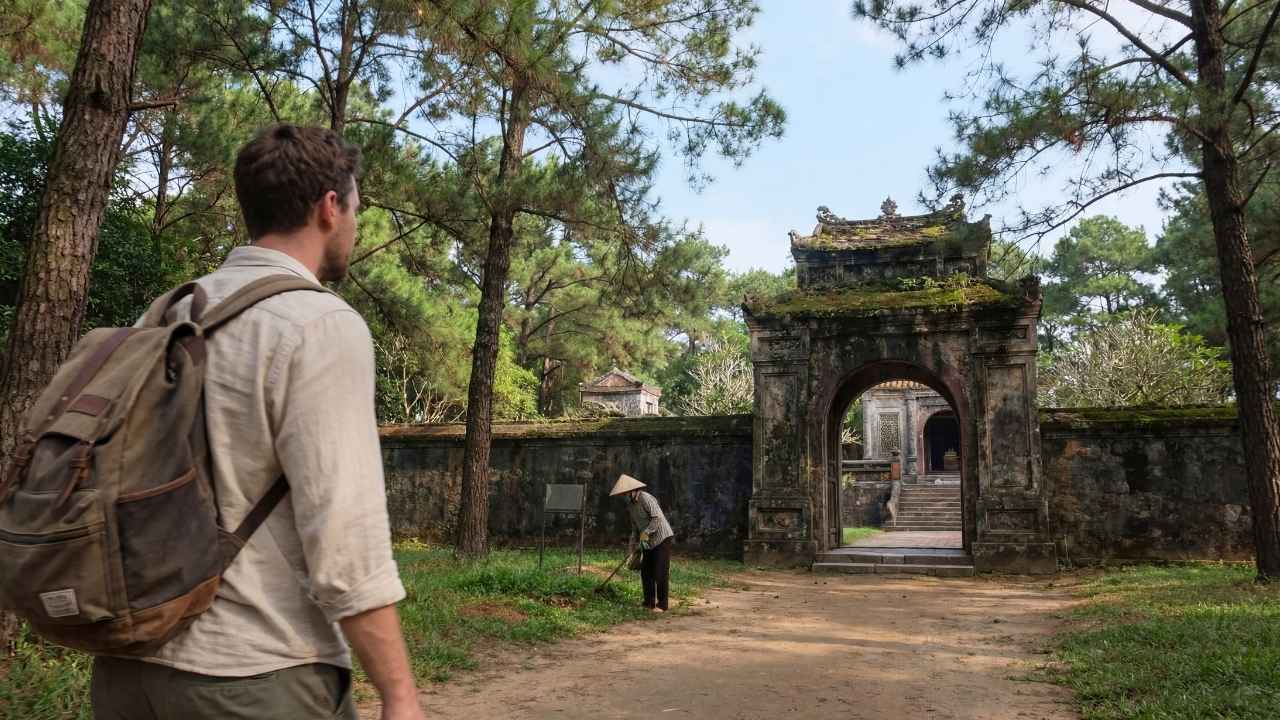
01
Hue Imperial City
Must Do · 2–3 hours
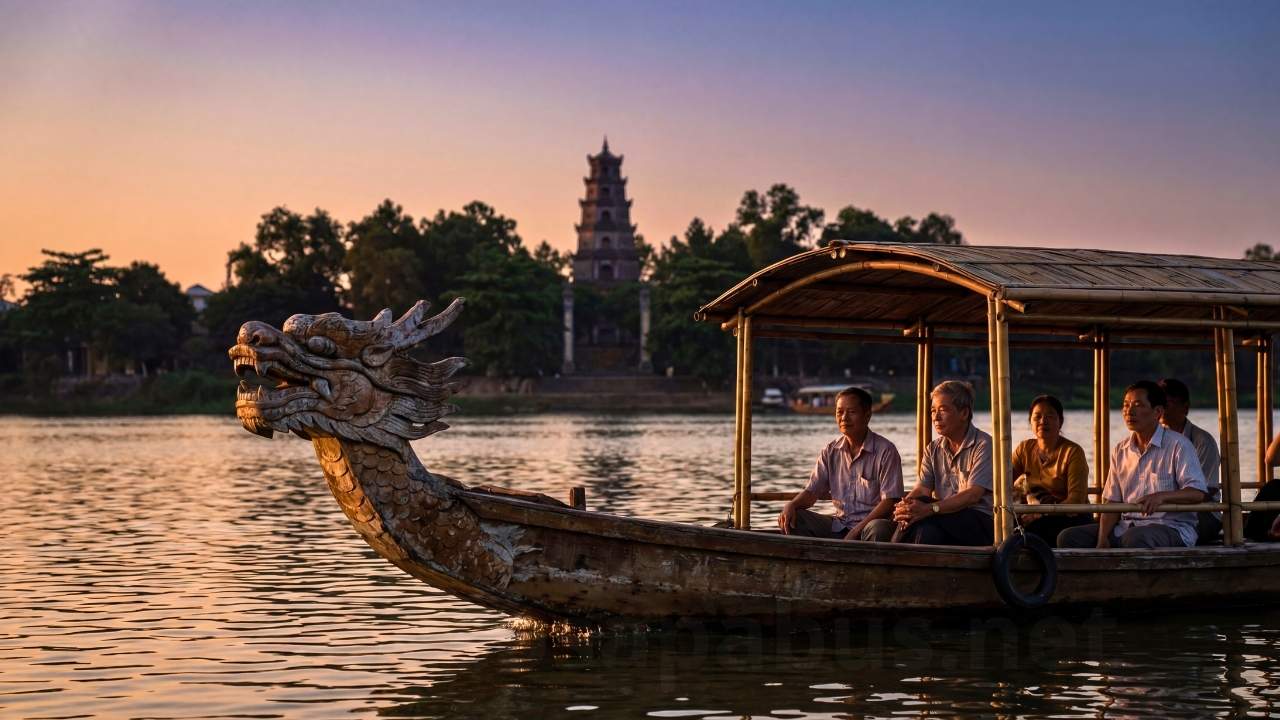
02
Dragon Boat at Sunset
Most Atmospheric · 2 hours
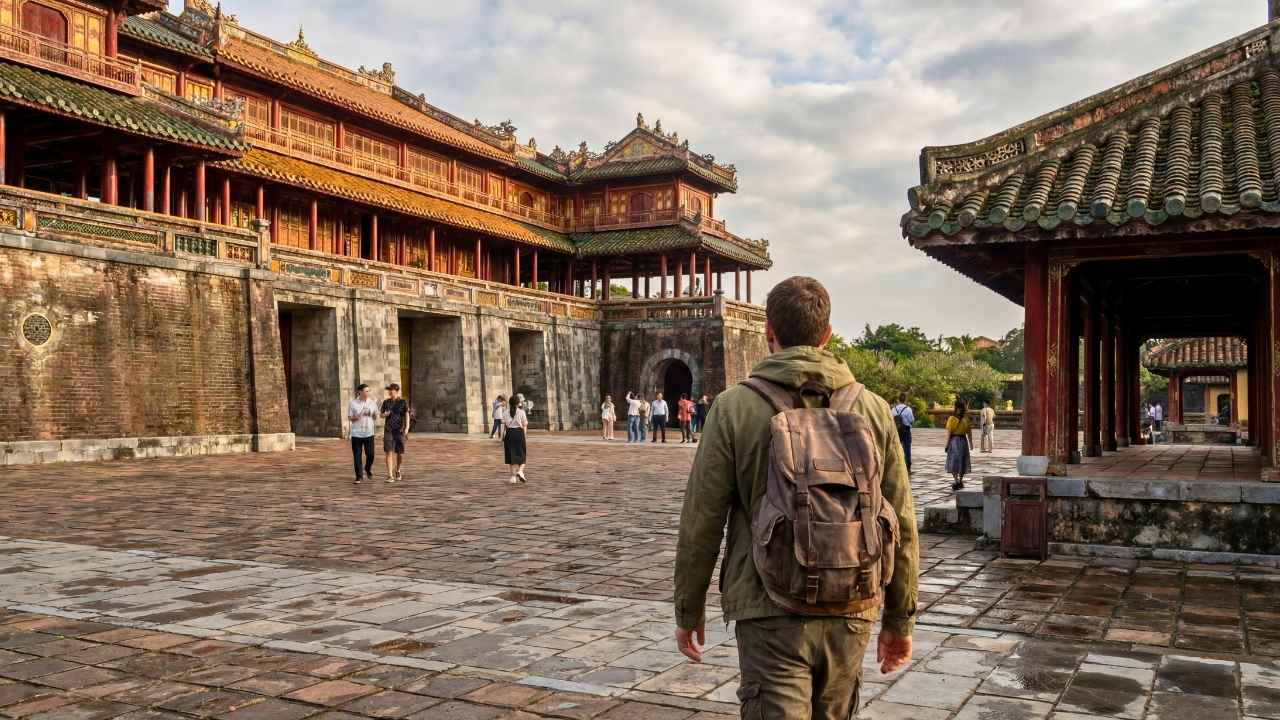
03
Royal Tombs
History · Half Day
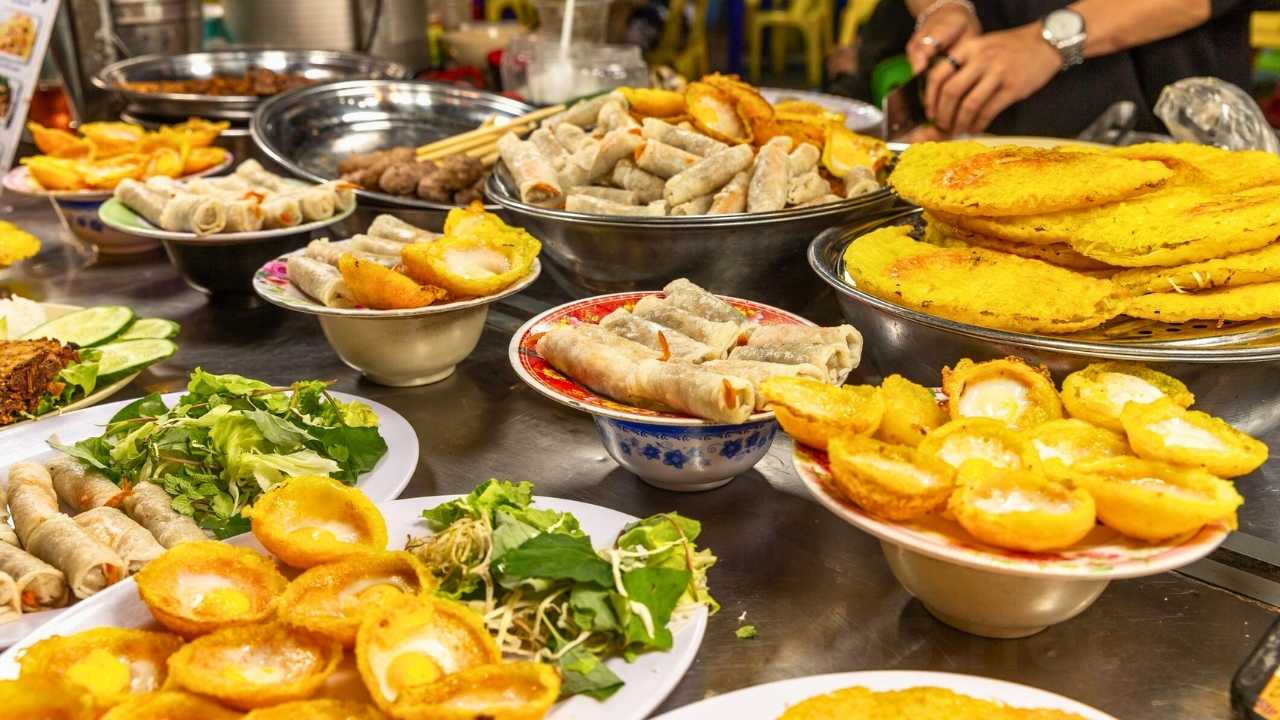
04
Street Food Tour
Food & Culture · Evening
05
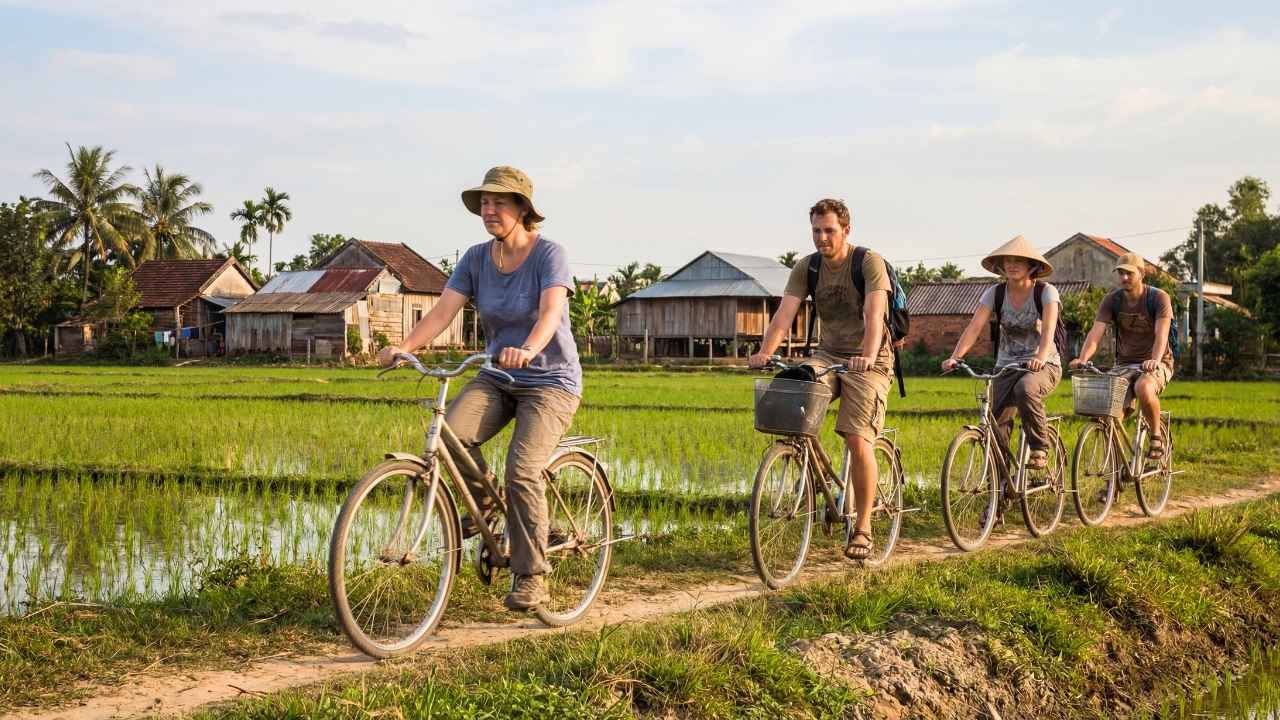
Countryside Cycling
Active · Morning
06
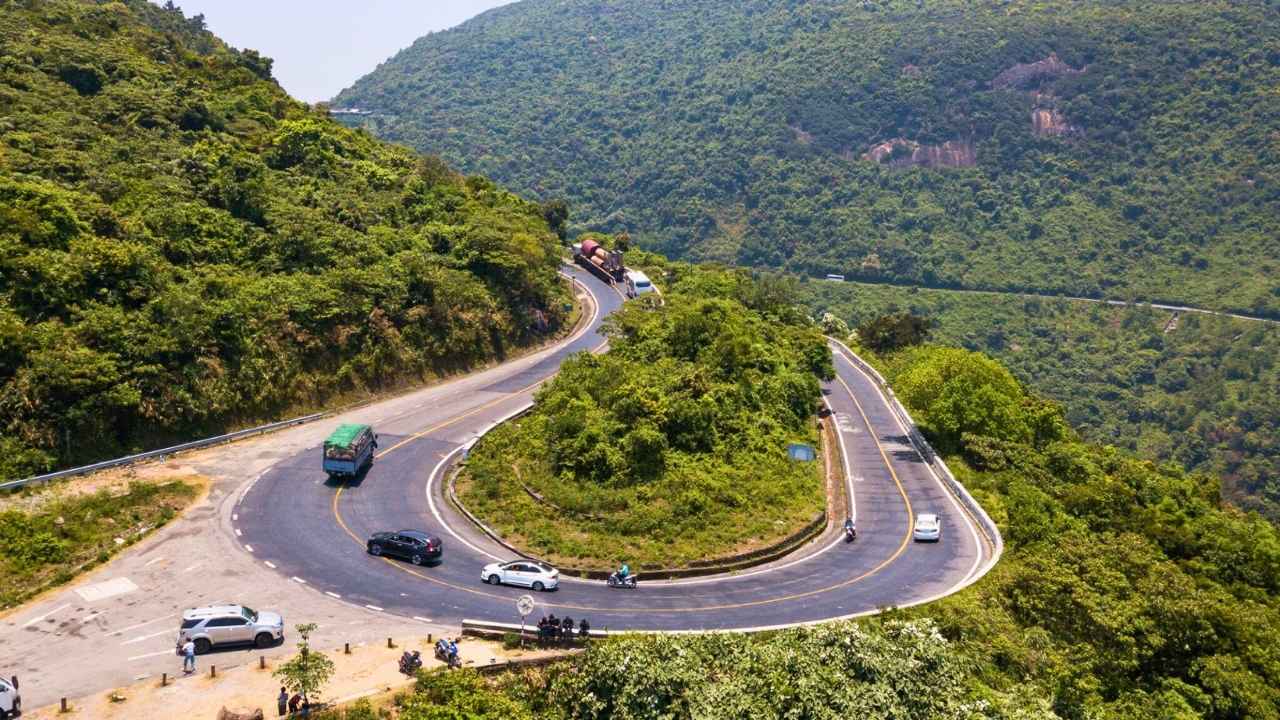
Hai Van Pass Road Trip
Scenic · Full Day
1. The Imperial City — Allow at Least 3 Hours
The Imperial Citadel was built starting in 1804 and modeled loosely on Beijing’s Forbidden City, but with distinctly Vietnamese character. It’s massive — the outer walls alone are nearly 10km in circumference. Inside, you’ll find palaces, temples, gardens, and the haunting ruins of the Forbidden Purple City (the emperor’s private quarters), still partially destroyed from the Tet Offensive in 1968.
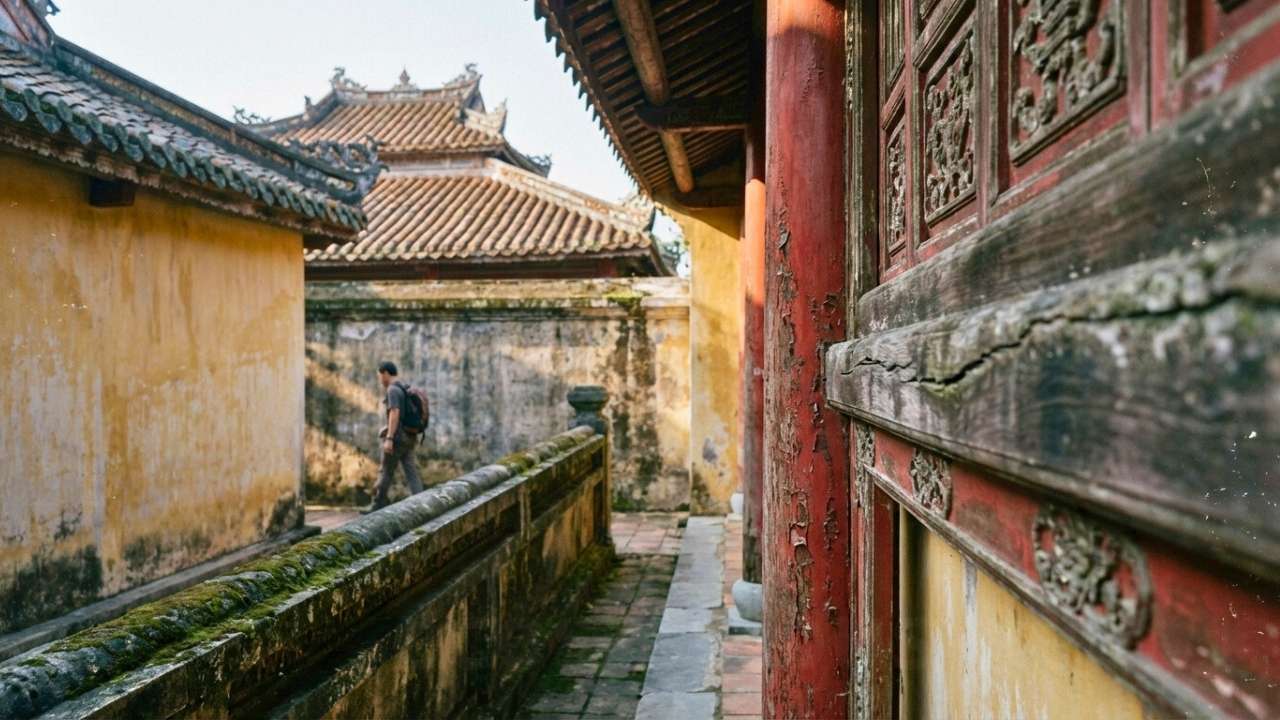
The Imperial City walls and Ngo Mon Gate as seen at golden hour — arrive at 7:30am when it opens for the best light and fewest crowds
Insider Move
Most tourists spend 2 hours and skim the surface. Do it properly: rent a bicycle at the gate for 30,000 VND and cycle the interior perimeter first to get your bearings, then explore on foot. Hire a local audio guide (150,000 VND) — the context transforms the experience from “old walls” to “living history.”
What you shouldn’t miss inside: Thai Hoa Palace (the throne room), the Forbidden Purple City ruins (bring your imagination — this was where no commoner could set foot), and the Nine Dynastic Urns out front — each one casting in bronze the aspirations of a different emperor.
POPULAR CHOICE
EcoSapa Bus · Hanoi ↔ Sapa
Heading to Sapa After Hue?
Lock In Your Seat Now
Sapa is only a flight + bus away from Hue. Our 9-seat VIP limousine is the most comfortable way to travel the Hanoi–Sapa route — AC, reclining seats, hotel pickup in Hanoi Old Quarter. From just $22.
💬 WhatsApp to Book
See Schedules →
✓ Free Hanoi Old Quarter hotel pickup
✓ English-speaking staff
✓ WhatsApp support 24/7
✓ No hidden fees, best price guaranteed
Practical info: Entry is 200,000 VND (~$8 USD). Open 7:30am–5:30pm daily. Main entrance is at Ngo Mon Gate on the south side. Dress modestly — shoulders and knees covered, though it’s rarely strictly enforced.
2. The Royal Tombs — Pick Two, Not All of Them
There are eight imperial tombs scattered around Hue, but unless you’re a serious history buff, visiting all of them will turn into a blur of lotus ponds and stone staircases. Trust me on this: pick two that contrast with each other.
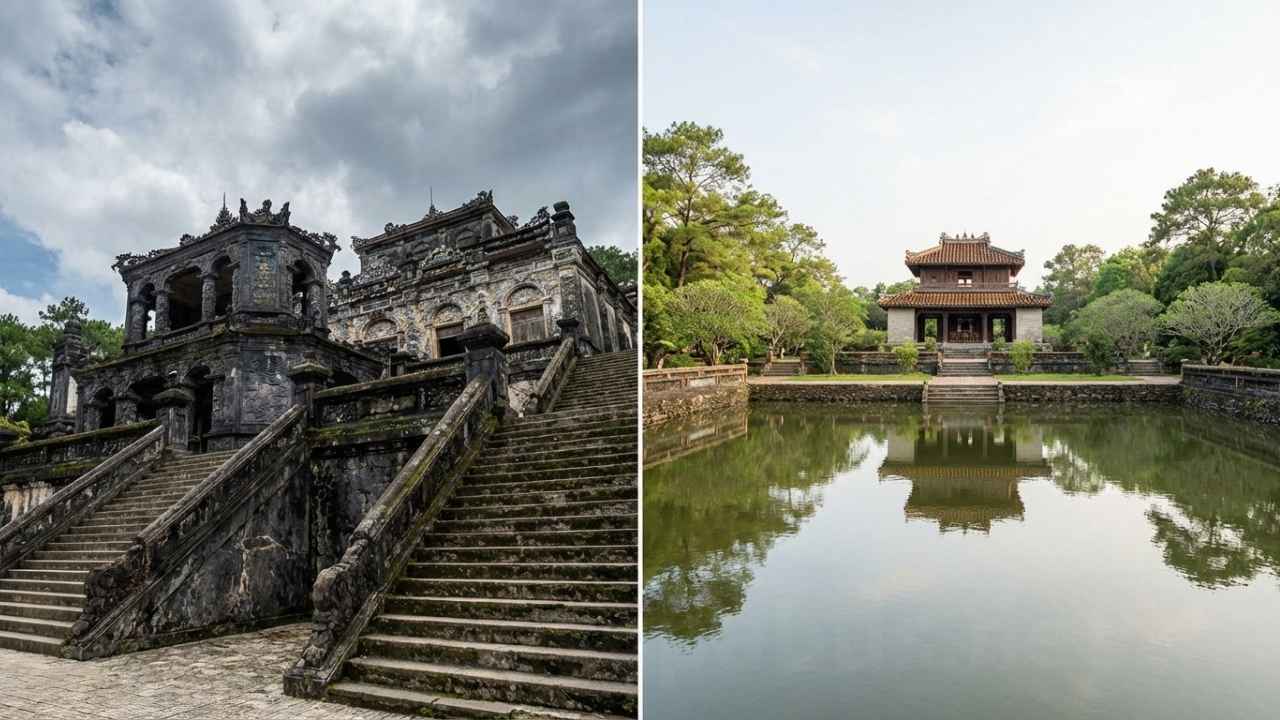
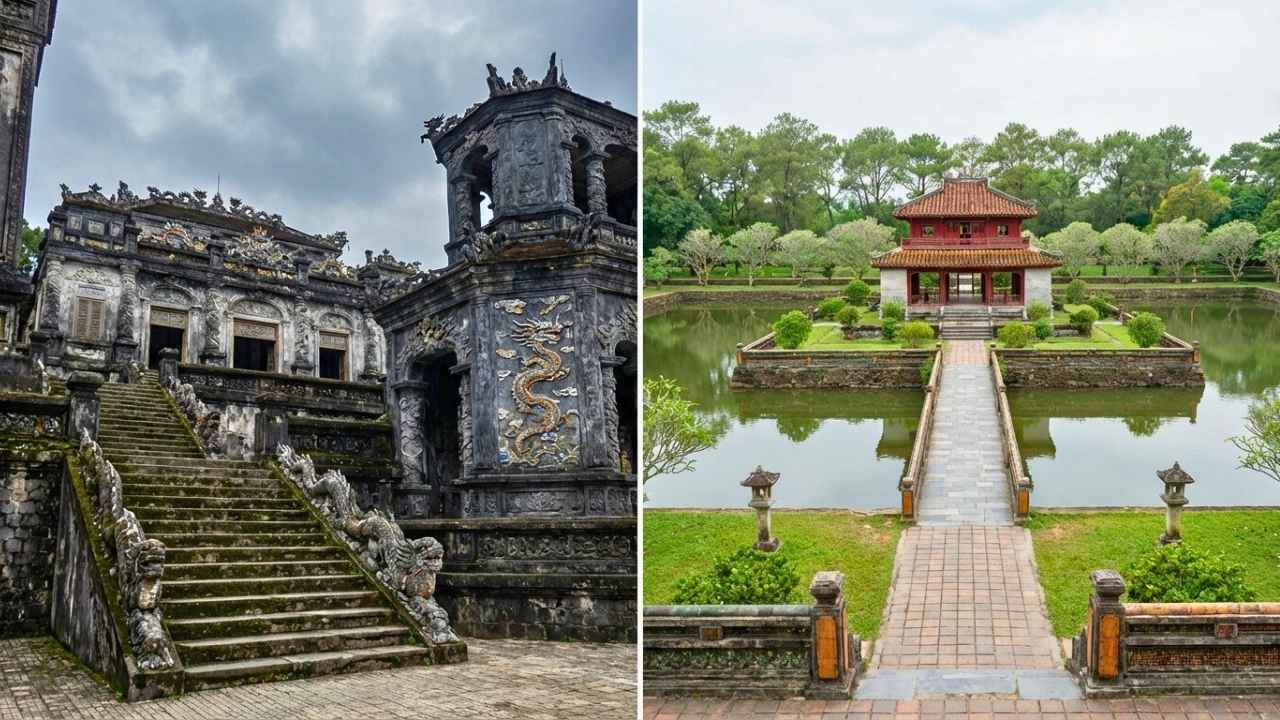
Left: Khai Dinh’s dramatic hilltop fusion of East and West. Right: Minh Mang’s perfectly symmetrical lakeside garden.
My Recommendation: Khai Dinh + Tu Duc
Khai Dinh Tomb will genuinely surprise you. Built between 1920–1931 by a French-influenced emperor who never could quite decide if he was building a Vietnamese palace or a Gothic cathedral, the result is this wild architectural mashup that somehow works. The interior is completely covered in glass and porcelain mosaics — thousands of pieces smashed and reassembled into murals. It’s the most visually unique thing in Hue. Entry 150,000 VND.
Tu Duc Tomb is the emotional counterpart — peaceful, melancholy, overgrown in places. Emperor Tu Duc actually lived here in his lifetime, writing poetry beside lotus ponds while the French were taking over his country. There’s something deeply bittersweet about the place. Entry 150,000 VND.
Save Time & Money
A combined ticket covering the Imperial City + Khai Dinh + Minh Mang tombs costs 420,000 VND (~$17). Buy it at the Imperial City gate. It’s valid for 2 days so you can split your tomb visits across different days.
3. Dragon Boat at Sunset — The Most Atmospheric Thing You’ll Do
If I had to pick one single experience that captures the soul of Hue, it would be a late afternoon dragon boat ride on the Perfume River. These traditional long boats, painted in dragons and bright colors, depart from near Truong Tien Bridge from about 4pm onwards. The Perfume River turns golden in the late light, Thien Mu Pagoda rises from the riverside trees, and for a while everything is quiet except for the gentle chop of water.
How to Book
You can either book through your hotel or just walk to the river near the Trang Tien Bridge and negotiate directly with boat owners. A private 2-hour boat to Thien Mu Pagoda and back costs around 200,000–350,000 VND for the whole boat. Don’t pay more. If there are 2–4 of you, it’s incredibly affordable. Ask to depart around 4–4:30pm to catch the golden hour.
Travel Tip from the EcoSapa Team
+84 84 228 6886
Most of our Hue visitors also book Sapa — and regret not doing it sooner
We talk to hundreds of travelers every year. The single most common thing we hear: “I wish I had more time in Vietnam.” If you have 10+ days, Sapa is the one place that genuinely blows people’s minds after the imperial grandeur of Hue and Hanoi. Rice terraces, misty mountains, trekking with H’mong guides.
We run a 9-seat VIP limousine bus on the Hanoi–Sapa route. No overloaded public buses. No waiting. Hotel pickup in Hanoi Old Quarter, straight to your Sapa hotel. Price from $22 USD — and we genuinely won’t overcharge you. That’s our promise.
💬 Ask Us Anything on WhatsApp
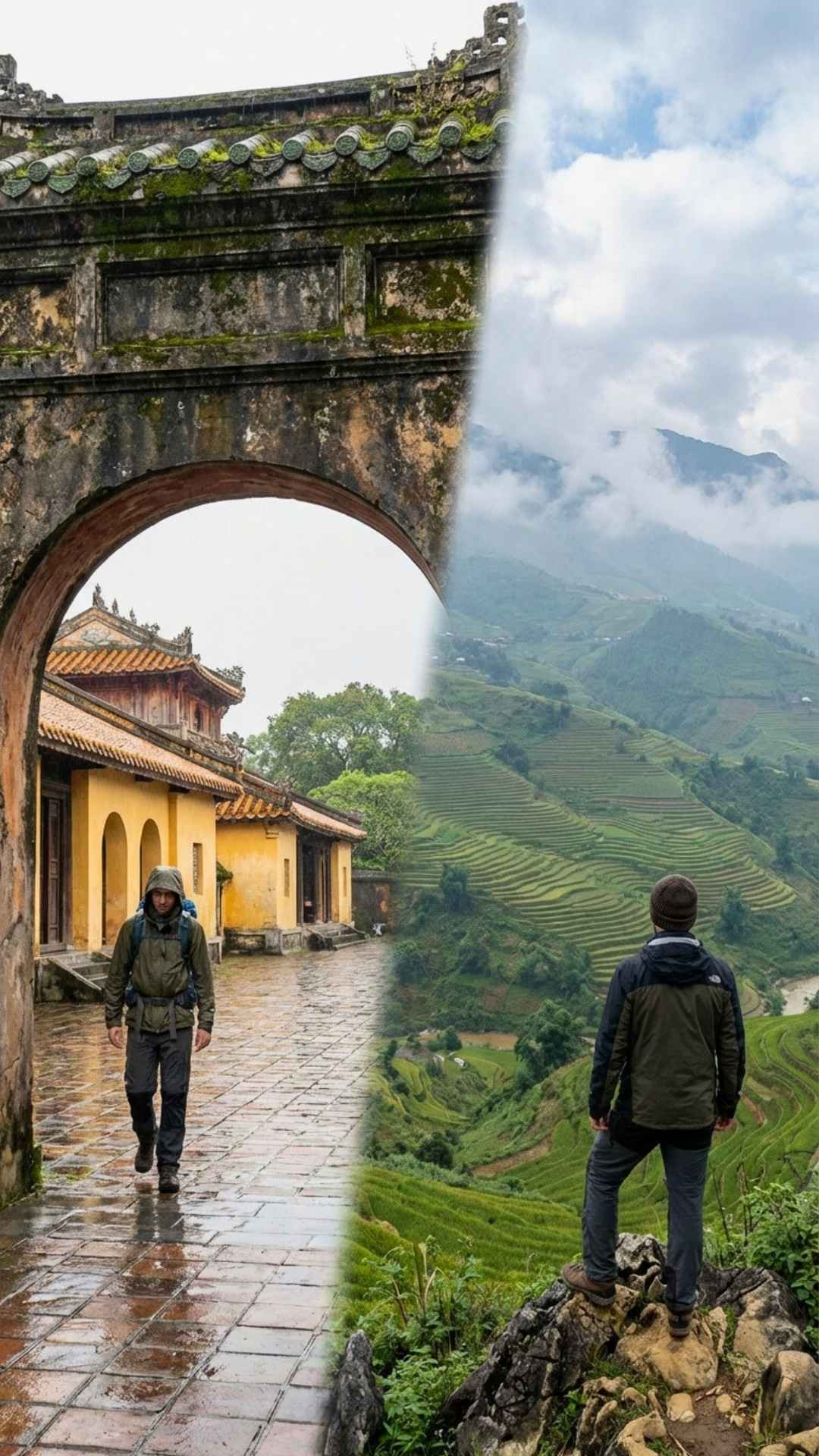
From $22
Hanoi → Sapa
4. Thien Mu Pagoda — Hue’s Most Iconic Image
The seven-story Thien Mu Pagoda tower is the postcard image of Hue, and it earns that status. Built in 1601 (more than 400 years old), it sits on a hill above the Perfume River and is still an active monastery. If you arrive by dragon boat, you’ll step off at a small pier below the pagoda and climb the stone steps — arriving this way is far more atmospheric than by taxi.
Go early morning or late afternoon. Avoid midday when tour buses arrive and the monks are resting. The gardens are beautiful and peaceful — take your time sitting in the shade watching monks go about their routines.
5. Hue Street Food — The Real Reason to Visit
I’ll say it plainly: Hue has the most interesting street food in Vietnam. Not the most famous (that’s Saigon’s banh mi and Hanoi’s pho), but the most diverse, most refined, and most rooted in centuries of royal cooking tradition. The Nguyen emperors demanded dozens of different dishes at every meal — this obsession with variety trickled down to the city’s entire food culture.
The next section covers this in full detail. But here’s the tl;dr: go to a morning market, eat everything, ask what it’s called, repeat.
6. Dong Ba Market — Arrive at 7am
Hue’s central market is authentic and bustling — this is where locals shop, not tourists. It’s a bit overwhelming at first (loud, smelly in places, tightly packed), but once you get your bearings it’s fascinating. The best time to go is early morning when the fresh produce section is buzzing with vendors hauling in the day’s catch and vegetables.
The food stalls on the upper floor and around the market perimeter are where you’ll find some of Hue’s best cheap eats — steaming bowls of bún bò, stacks of bánh bèo rice cakes, and cups of strong Vietnamese coffee. Budget for a proper breakfast here: $2–3 total.
7. Cycling to Countryside Villages — Best Morning Activity
Rent a bicycle from your hotel (usually 50,000–80,000 VND per day) and head out of the city center. Within 20 minutes you’re in a completely different Hue — rice paddies stretching to the mountains, water buffalo, small pagodas along canals, kids going to school on bicycles.
The countryside around Hue is flat and perfectly bike-friendly — the Thanh Toan wooden bridge route is a local favorite
The Thanh Toan Bridge route is the best: cycle east along the canal, stop at the 18th-century wooden covered bridge, visit the small agricultural museum nearby, and return via the village lanes. About 15km round trip, easy for any fitness level. Ask your hotel for a simple hand-drawn map.
8. Thuy Xuan Incense Village — Better Than Instagram Makes It Look
You’ve probably seen the photos: hundreds of colorful incense sticks arranged in flower-like fans against a blue sky. The reality is even better. The Thuy Xuan village near Tu Duc Tomb has been making incense for generations. The colors are genuinely that vivid (bamboo sticks dyed red, pink, purple, yellow), and the artisans are happy to explain the process if you ask.
Morning is best — the light is beautiful and the incense is being arranged for the day’s work. Don’t feel pressured to buy, but a bunch of incense sticks makes a beautiful, light, and genuinely useful souvenir (around 30,000 VND).
9. Ho Thuy Tien — The Abandoned Water Park (Unofficial, But Worth It)
This one’s for the adventurous. In 2004, someone built an ambitious water park about 7km from Hue city center. It partially opened, was never finished, fell into neglect, and has been slowly consumed by jungle ever since. The centerpiece is a crumbling three-story dragon rising out of the center of a man-made lake — eerily beautiful.
Know Before You Go
Technically the site is closed, but local guards allow entry for a small informal fee (around 40,000–50,000 VND per person). Don’t be alarmed — this is standard practice and has been happening for years. The site is structurally unstable in places so watch where you walk, and don’t attempt to climb the dragon structure. Best visited in the late afternoon light.
10. Vong Canh Hill at Sunset — Hue’s Secret Viewpoint
Most tourists photograph the Perfume River from the bridge. Locals go to Vong Canh Hill, about 7km from the center, where the river curves dramatically through a valley framed by green hills. The view at sunset is extraordinary — one of those Vietnam moments you’ll keep coming back to in your memory.
It’s easy to combine with visiting Tu Duc Tomb and the Thuy Xuan incense village — all are within 3–4km of each other. Bring water, a camera, and arrive by 5pm.
11–16. More Hidden Gems
There’s more: the Hon Chen Temple perched on a rocky ledge above the Perfume River — only accessible by boat, rarely visited; the eerie Ho Quyen Tiger Arena where the royal court once staged battles between elephants and tigers (it’s a ruined stone circle now, surrounded by market stalls); the Gia Long Tomb — the most remote royal tomb, set in a forested area with almost no tourists; Phu Cam Cathedral‘s dramatic modernist concrete architecture; and the gentle riverside cycling route to Thanh Toan Bridge.
See the 2-day itinerary below for how to fit these in.
Eating in Hue —
Vietnam’s Culinary Capital
Hue’s food scene is a direct legacy of the Nguyen Dynasty. The imperial court required a minimum of 50 different dishes at every royal meal — variety, beauty, and refinement were everything. That obsession filtered down into the city’s entire food culture, producing a cuisine that’s more complex, more delicate, and more diverse than anywhere else in Vietnam.
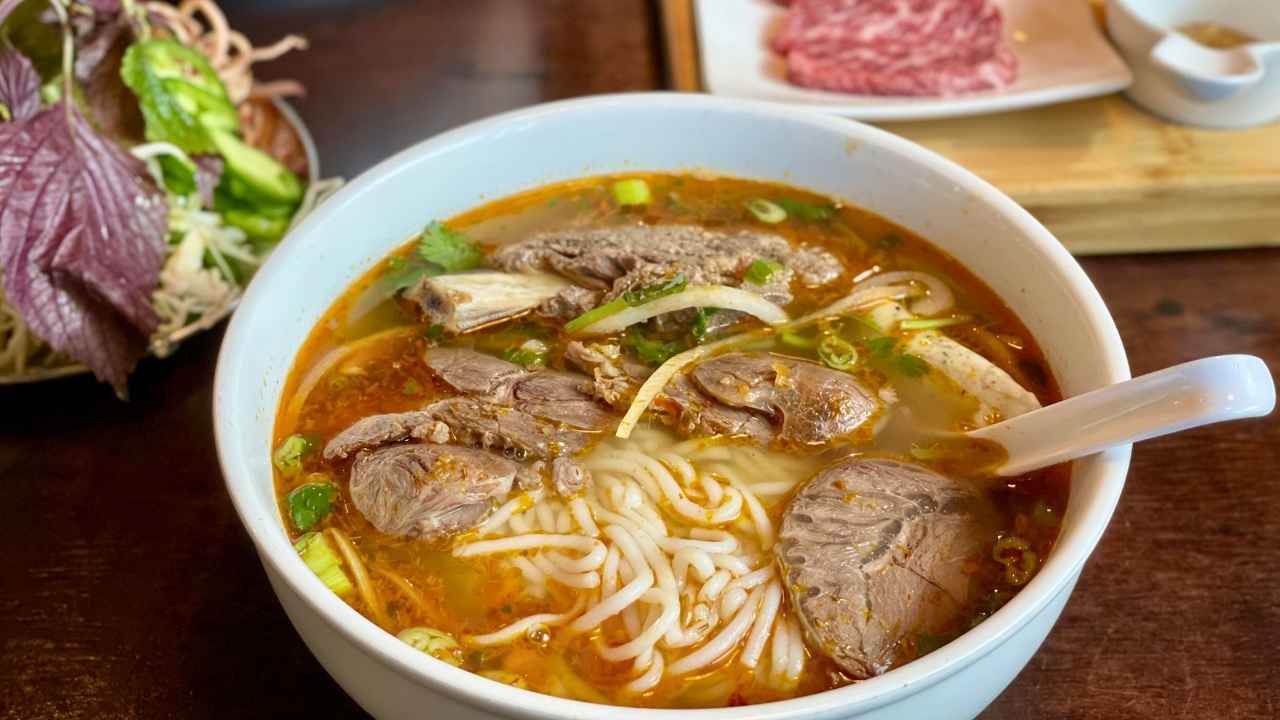
Bún Bò Huế
Spicy Hue Beef Noodle Soup
The ultimate Hue breakfast. Thicker rice noodles in a lemongrass and shrimp paste broth with sliced beef, pork knuckle, and fresh herbs. Spicier and more complex than Saigon pho. Price: 40,000–60,000 VND.
Bánh Bèo
Steamed Rice Water Fern Cakes
Tiny steamed rice cakes served in small ceramic dishes, topped with dried shrimp and crispy pork skin, dipped in nuoc mam sauce. You’ll eat 8–10 in one sitting without blinking. Price: 30,000–50,000 VND for a plate.
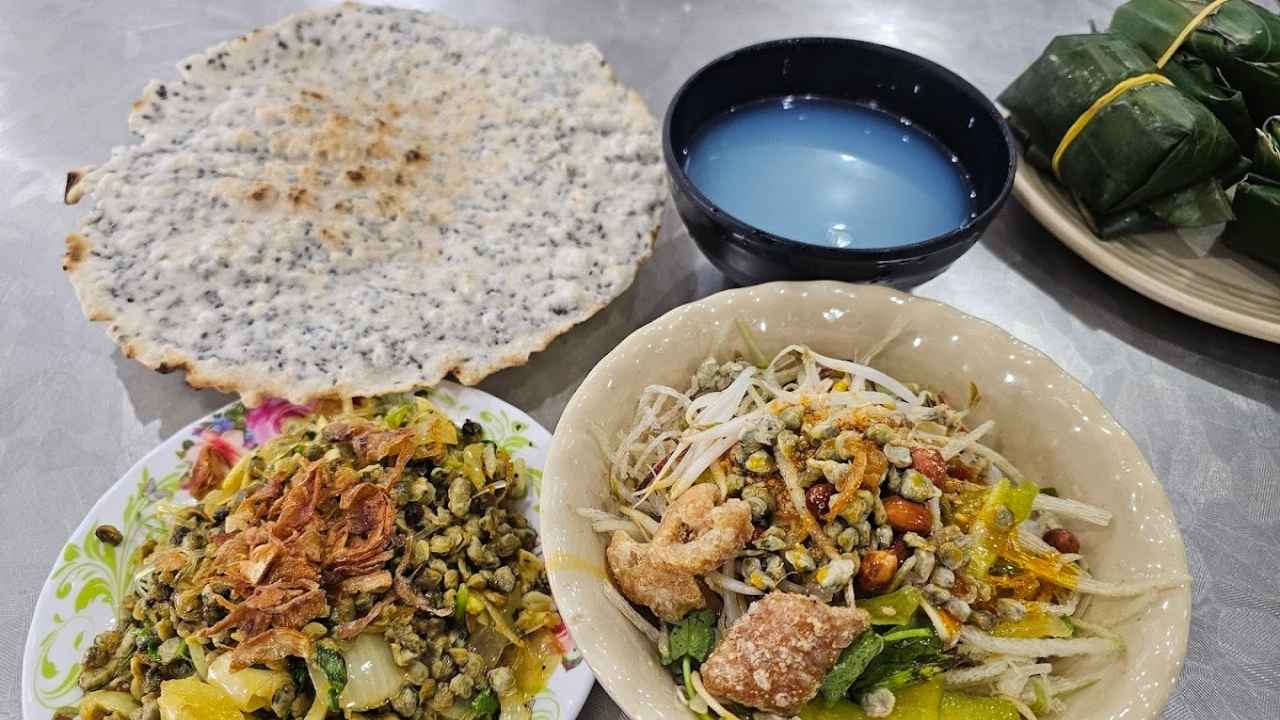
Cơm Hến
Mussel Rice — A Hue Original
Cold rice topped with tiny river mussels, crispy pork skin, peanuts, sesame seeds, and a tableful of raw herbs. Mix everything yourself. It’s cold, complex, tangy, spicy, and completely unique to Hue. A true local’s dish — best found at small family stalls near Con Hen Island.
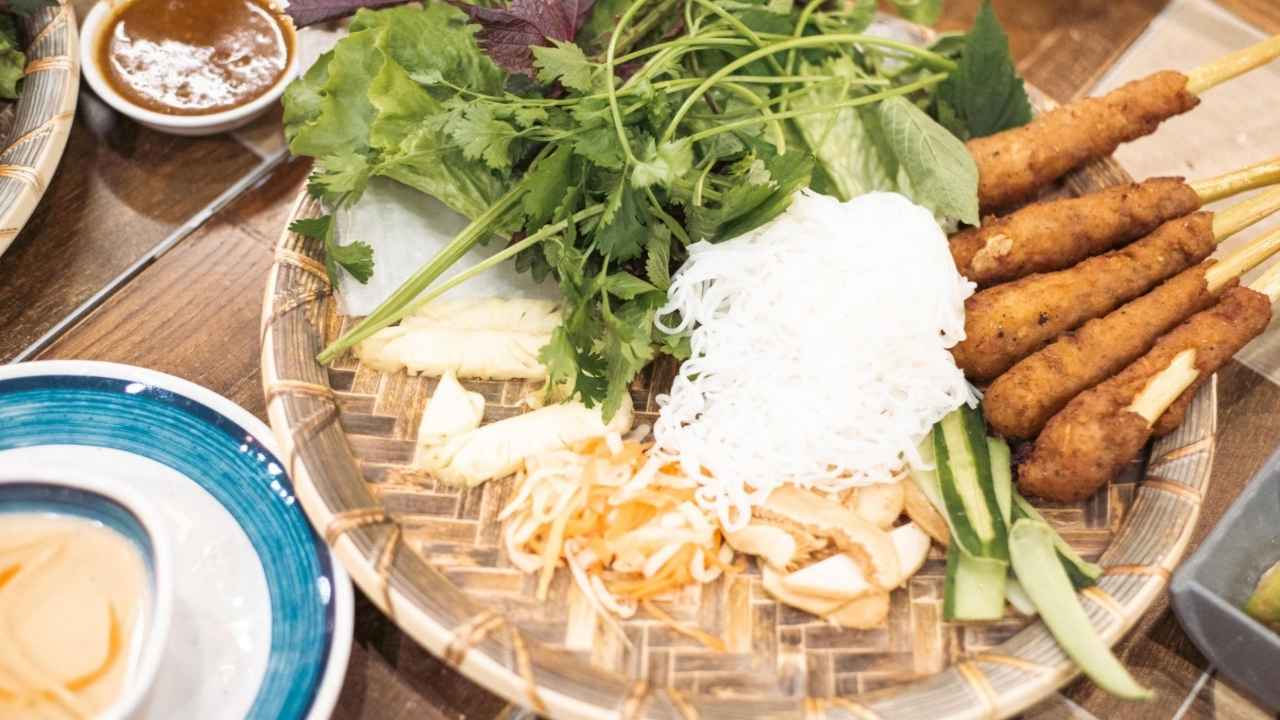
Nem Lụi
Lemongrass Pork Skewers
Seasoned ground pork wrapped around lemongrass stalks and grilled over charcoal. Served with rice paper, fresh vegetables, and a thick peanut-sesame dipping sauce. It’s interactive — you wrap your own rolls. This is one of Hue’s most social street food dishes.
Where to Actually Eat (Local’s Picks)
For Bún Bò Huế
Quán Bà Tuyết on Ngô Gia Tự Street — no English menu, plastic stools, absolutely packed by 7am. This is the real deal. Point at what the person next to you is having. Open 6am–11am only.
For Bánh Bèo & Small Bites
Walk along Nguyễn Bỉnh Khiêm Street — a cluster of family stalls serves bánh bèo, bánh nậm (flat rice dumplings in banana leaf), and bánh lọc (translucent tapioca dumplings with shrimp). Order a mixed plate, eat slowly, order more coffee.
For Royal Cuisine Experience
Tịnh Gia Viên Restaurant near Phu Cat Street serves imperial cuisine in a restored colonial villa. More expensive ($15–25 per person), but if you want to understand what Nguyen Dynasty dining was actually like — the tiny portions, the visual presentation, the dozen different dishes arriving in sequence — it’s worth splurging once.
For Street Food at Night
The Pham Hong Thai and Vo Thi Sau street cluster comes alive after 6pm with grilled meat skewers, local beer stalls, and outdoor plastic furniture. Order a local Huda beer (Hue’s own brand, very drinkable, 10,000–15,000 VND), get some grilled corn and skewers, and watch the city go about its evening.
Coffee Culture
Hue has a strong café culture — not the trendy Instagram variety, but traditional Vietnamese coffee houses that have been operating for decades. Order a cà phê nâu đá (iced milk coffee) and sit for an hour. Some favorites: Cà Phê Bằng Lăng on Lê Lợi, and the row of outdoor cafés along the river promenade at night.
Not sure where to eat or what to order?
Message us on WhatsApp — we reply with honest, local recommendations for wherever you’re staying in Hue. No commission, no paid placements. Just genuine advice.
Day Trips from Hue
Worth Every Kilometer
Option A: The Scenic Road to Da Nang (Full Day)
This is arguably the best road trip in Vietnam. The route from Hue to Da Nang (or Hoi An, another 30km south) passes through some extraordinary scenery, and there’s no reason to rush it. Hire a private car or Easy Rider motorbike guide and make a full day of it.
Stops along the way: Lap An Lagoon (stop for fresh oysters on the water — about $3 for a huge plate), Hai Van Pass (made famous by Top Gear’s Vietnam special — panoramic ocean views), Lang Co Beach (white sand, seafood restaurants, swimming if you have time), and Elephant Springs (Suối Voi) — natural rock pools in the jungle where you can swim.
Easy Rider vs. Private Car
Easy Rider (riding pillion on a motorbike with a guide) costs $35–50 for the full day and is absolutely the most fun way to do this route — you feel every curve of the Hai Van Pass. Private car is more comfortable and better if you have luggage or are traveling with kids ($70–90 for up to 4 people). Both options can be arranged through your hotel or any tour agency in town.
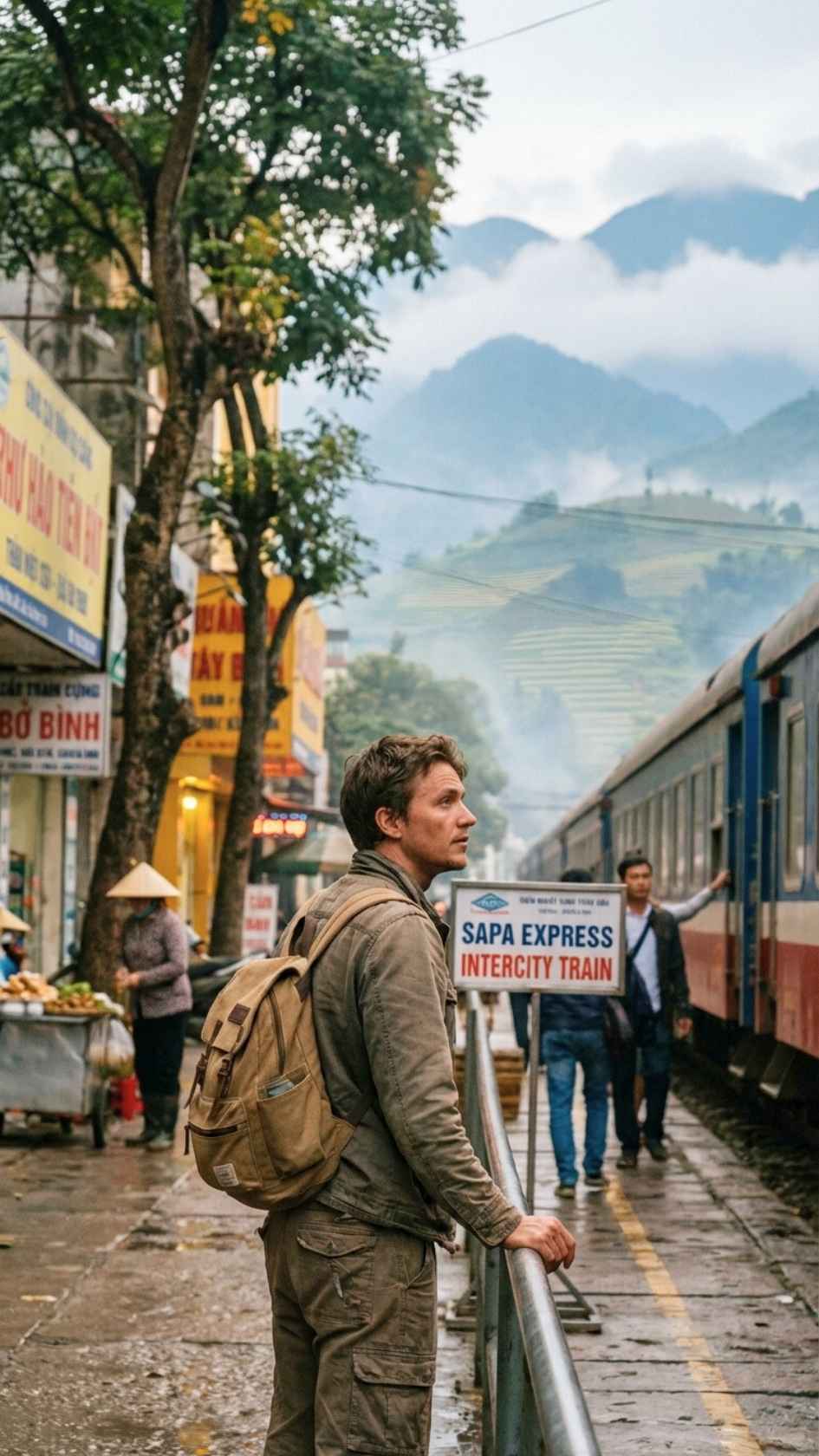
EcoSapa Bus
Planning to See Sapa Too? The Hanoi–Sapa Connection
If your Vietnam trip continues north to Hanoi and Sapa, EcoSapa Bus runs comfortable limousine transfers on the Hanoi–Sapa route with English-speaking staff. Trusted by American, Australian and Canadian travelers. Book via WhatsApp. →
Option B: The DMZ — Vietnam War History (Full Day)
About 2 hours north of Hue lies the former Demilitarized Zone, the 17th Parallel that once divided North and South Vietnam. It’s an area of enormous historical weight, and the sites here are more moving than any museum.
What to visit: The Vinh Moc Tunnels are the highlight — an entire village of 300 people lived underground here for 7 years to avoid American bombing. The tunnels are wide enough to walk through and extend on three levels, going 12–30 meters deep. Some families actually gave birth underground. The Khe Sanh Combat Base (a major US Marine base, site of a famous 77-day siege in 1968) now has an outdoor museum with American aircraft, tanks, and equipment. The Hien Luong Bridge, which divided the country for 21 years, sits at the Ben Hai River — the actual border line.
For American Travelers Especially
The DMZ tour is a deeply meaningful experience for Americans — seeing these sites from a Vietnamese perspective, often with a guide whose family was directly affected by the war, is genuinely perspective-shifting. It’s not a guilt trip — it’s honest, nuanced history told with remarkable openness. Allow a full day; morning departure from Hue at 7–7:30am.
Option C: Bach Ma National Park (Half or Full Day)
Only an hour from Hue but feels like a different world. Bach Ma is a former French hill station turned national park, with cloud-forested mountains, waterfalls, and dramatically cooler temperatures (it can be 10°C cooler than Hue city in summer). The main viewpoint, Hai Vong Dai, looks out over the entire coastline from the summit — the view includes Hue, Da Nang, and the South China Sea simultaneously.
The Do Quyen Waterfall hike (about 3km round trip) is beautiful and accessible for most fitness levels. Good for a half-day trip; if you want to do serious trekking, allow a full day with an early start.
Your 2-Day Hue Itinerary
This is the schedule I’d recommend to a close friend visiting for the first time. It covers the essentials without rushing, and leaves room for wandering — which is often where the best memories happen.
1
Day One
Imperial heart of Hue
6:30am
Breakfast at Dong Ba Market
Start with a bowl of bún bò Huế at the stalls around the market perimeter. Strong Vietnamese coffee. This is how Hue wakes up.
7:30am
Imperial City (Hue Citadel)
Enter at opening time to beat the crowds and catch the morning light on the yellow ochre walls. Rent the audio guide. Allow 2.5–3 hours minimum to do it justice.
11:00am
Khai Dinh Tomb
Grab a Grab to the tomb (~25,000 VND). This is the wild French-Vietnamese Gothic mashup — your jaw will drop at the interior mosaics. Allow 60–90 minutes.
1:00pm
Lunch near Tu Duc area
Small local restaurants along the tomb road serve simple rice plates for 40,000–60,000 VND. Rest for 30 minutes in the shade — midday heat in Hue is real.
2:00pm
Tu Duc Tomb + Thuy Xuan Incense Village
These two are 5 minutes from each other. Do Tu Duc first (melancholy, beautiful, 60 mins), then stop at the incense village for photos and a look at how they make the sticks.
4:30pm
Dragon Boat at Sunset
Head to the riverfront and arrange a dragon boat to Thien Mu Pagoda and back. This is the best possible way to end Day 1 — on the water, watching Hue turn golden.
7:00pm
Dinner + Evening Walk
Dinner on Pham Ngu Lao street, then a walk along the illuminated river promenade. If it’s the weekend, check out Walking Street for live music and outdoor food stalls.
2
Day Two
Choose your adventure
6:30am
Sunrise Cycle + Banh Mi Breakfast
Rent a bicycle and head out into the countryside before the heat sets in. Grab bánh mì from a street cart along the way. Thanh Toan Bridge route recommended.
10:00am
Choose One: DMZ / Hoi An Road / Bach Ma
Pick the day trip that fits your interest — history (DMZ), scenery (Hue to Hoi An via Hai Van Pass), or nature (Bach Ma). All require booking the previous evening.
5:00pm
Vong Canh Hill Sunset
If you’re back from your day trip in time, end the day at Vong Canh Hill for the most beautiful sunset view over the Perfume River valley.
7:30pm
Royal Cuisine Dinner
Splurge on one proper royal cuisine meal tonight — you’re in the former imperial capital. Tịnh Gia Viên or Lạc Thành restaurant. Order the set menu. Dress slightly nicer than usual (casual-smart is fine).
Have More Time? Add These on Day 3
Minh Mang Tomb (the most beautiful for architecture and gardens), the abandoned Ho Thuy Tien water park, Con Hen Island for cơm hến breakfast by the river, and An Dinh Palace (completely off most tourist routes, beautiful French-Vietnamese architecture, usually almost empty).
Practical Tips for
Hue First-Timers
💵
Money
Cash is king at markets and street stalls. ATMs are everywhere in the city center. BIDV, Vietcombank, and ACB are most reliable with foreign cards. Withdrawal fee: around 44,000 VND (~$2). Daily budget: $30–50 USD covers accommodation, food, entry fees, and transport comfortably at budget–mid-range.
🚗
Getting Around
Grab app is the easiest and cheapest. Download before arrival. A Grab car across the city costs 25,000–60,000 VND ($1–2.50). Bicycle rental 50,000–80,000 VND per day. Cyclo rides are fun but negotiate the price first. For day trips, hire through your hotel or a tour agency on Hung Vuong or Nguyen Tri Phuong streets.
🌡️
Heat Management
Hue is HOT from May–August (35–38°C / 95–100°F). Schedule outdoor sightseeing in the morning (7–11am) and late afternoon (4–6pm). Rest between noon and 3pm. Stay hydrated — bottled water everywhere for 10,000 VND. Sunscreen is essential; buy it at any pharmacy.
🌧️
Rainy Season
Oct–November can see heavy rain and occasional flooding. If you visit then, pack a light raincoat and waterproof bag for your camera. Flooding is usually brief (a day or two) and rarely affects central hotels. The misty, rainy atmosphere can actually make Hue’s ancient sites feel even more atmospheric.
👗
What to Wear
Light, breathable clothes for the heat. Carry a lightweight layer for air-conditioned restaurants. For temples and the Imperial City: shoulders covered, knees covered — not strictly enforced but respectful. Women often use a sarong/scarf to wrap around shoulders if needed. Comfortable walking sandals or sneakers.
📱
Apps to Have Ready
Grab (ride-hailing), Google Maps (works well in Hue, download offline map), Google Translate (Vietnamese camera translation is surprisingly good), and WhatsApp (most local guesthouses and tour operators communicate via WhatsApp).
🗣️
Language Tips
English is spoken at most hotels and tourist-area restaurants but much less at markets and local eateries. Learning three Vietnamese phrases will genuinely change your experience: “Cảm ơn” (cam urn) = thank you; “Bao nhiêu tiền?” (bow nyew tyen) = how much?; “Ngon quá!” (nyon kwah) = delicious! Locals will genuinely light up.
⚠️
Scam Awareness
Hue is genuinely low-scam compared to Hanoi or HCMC. Main thing to watch: unofficial cyclo and motorbike drivers at tourist sites quoting 5x the fair price. Always agree on a price before you get in. Grab eliminates this entirely. Also: avoid buying tour packages from random street sellers — book through your hotel.
Best Time to Visit Hue
Hue has more distinct seasons than most Vietnamese cities. The central coast weather pattern means it’s out of sync with both the north and south — which is actually great news if you’re timing a longer Vietnam trip.
| Month | Temp (°C/°F) | Conditions | Verdict |
|---|---|---|---|
| Jan – Feb | 18–23°C / 64–73°F | Cool, some drizzle, lower humidity | Pleasant |
| Mar – Apr | 22–28°C / 72–82°F | Warming up, mostly dry and clear | Excellent ✓ |
| May – Aug | 32–38°C / 90–100°F | Hot and dry — very sunny | Hot but OK |
| Sep | 28–33°C / 82–91°F | Transitional — some rain starting | Manageable |
| Oct – Nov | 22–28°C / 72–82°F | Heavy rain, possible flooding | Challenging |
| Dec | 19–24°C / 66–75°F | Cooling, occasional showers | Improving |
Sweet Spot for Western Travelers
March–April is the sweet spot: comfortable temperatures (not yet brutally hot), low rainfall, and the city is busy but not overwhelmingly so. If you’re combining Hue with Sapa (which is best in September–October and March–April), a March trip lines up perfectly for both destinations.
Hue + Sapa —
The Perfect Combination
Many international travelers combine Hue with a trip to Sapa in the north — the imperial history and street food of Hue balanced against the mountain trekking and ethnic minority villages of Sapa. It’s a genuinely spectacular pairing for a 10–14 day Vietnam trip.
The route: fly from Ho Chi Minh City or Da Nang to Hue → train or fly to Hanoi → bus or train to Sapa → fly home from Hanoi. Or reverse it.
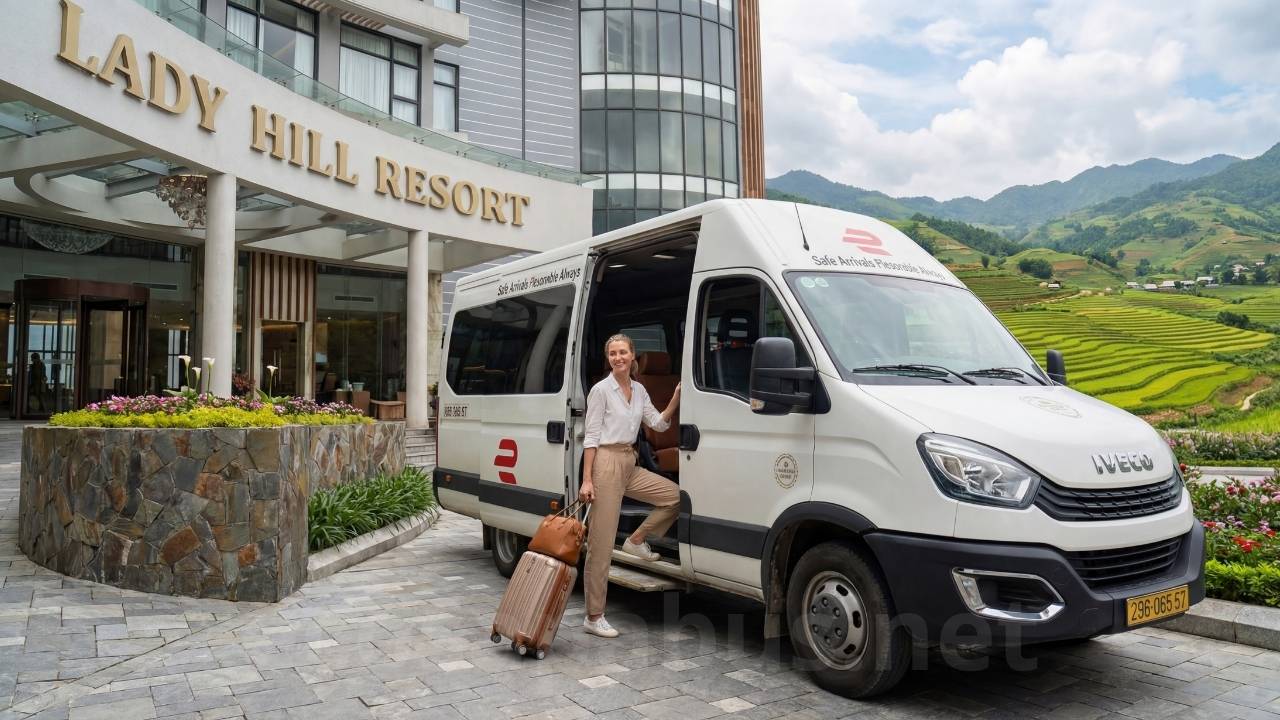
Partner Recommended · EcoSapa Bus
Hanoi to Sapa by Limousine Bus — The Comfortable Way
EcoSapa Bus specializes in comfortable, premium limousine bus transfers between Hanoi and Sapa, with a focus on serving international English-speaking travelers. WhatsApp booking, luggage assistance, hotel drop-off. The smart alternative to sleeper trains. Visit ecosapabus.net →
EcoSapa Bus · Sapa to Hanoi
Return Journey: Sapa to Hanoi Airport — Pre-Book Your Seat
Don’t leave your Hanoi–Sapa transfer to chance. Book your return journey in advance with EcoSapa Bus for the same comfortable limousine service back to Hanoi — including connections timed with your flight schedule. WhatsApp: available 24/7. →
Ready to Visit?
Start Planning Your
Hue Adventure Today
Questions about Hue? Planning the Hanoi–Sapa leg of your trip?
We’ve helped hundreds of American, Australian, and Canadian travelers plan Vietnam — and we reply fast on WhatsApp.
📞 Call or WhatsApp: +84 84 228 6886 · Available in English · No pushy sales, just honest help.
Visit EcoSapa Bus →
💬 WhatsApp Us
↑ Back to Top
⭐⭐⭐⭐⭐
5-Star WhatsApp Reviews
🛡️
Best Price Guarantee
🌏
English-Speaking Staff
✈️
Airport Transfers Available