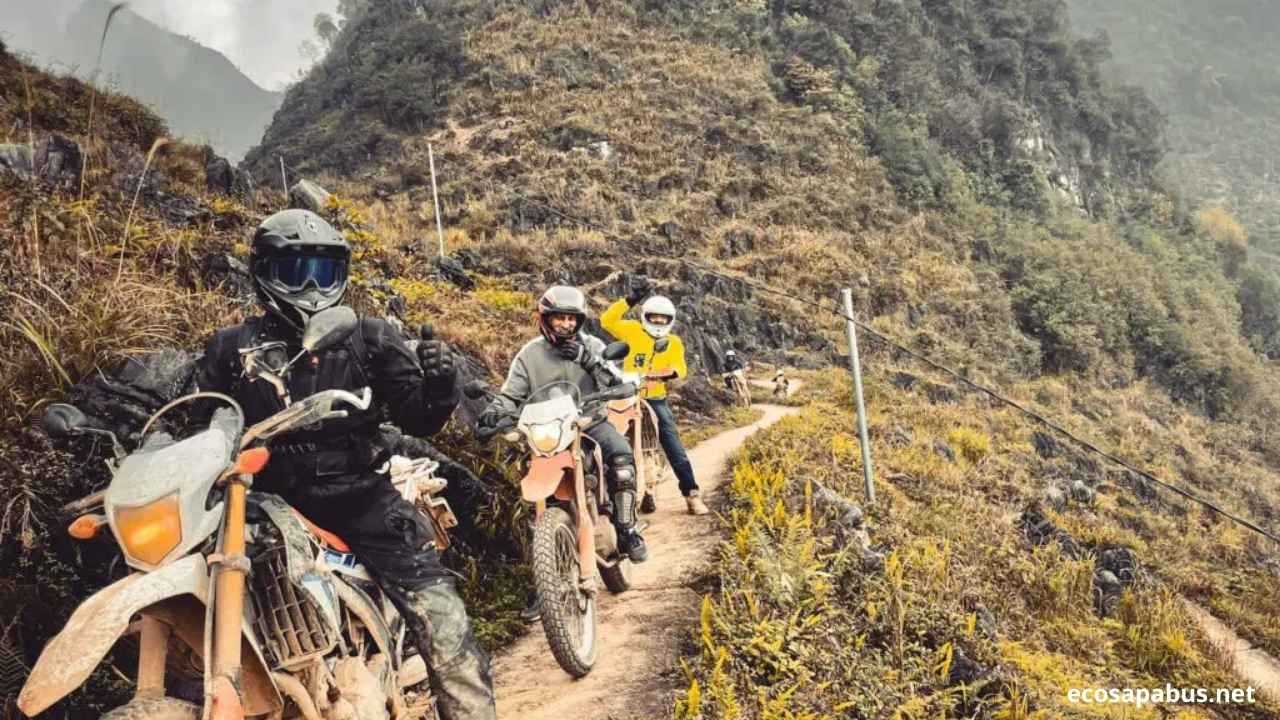
Why Ha Giang Is Different From Anywhere Else in Vietnam
Ha Giang is Vietnam's northernmost province — a region that borders China for 277km and was closed to foreigners entirely until the early 2000s. It is home to 19 ethnic minority groups, the world-recognised Dong Van Karst Plateau UNESCO Global Geopark ↗, and the Ha Giang Loop — a 350km mountain circuit that travel publications across the world consistently call one of the most spectacular motorcycle routes on Earth.
What makes Ha Giang genuinely different is scale. The limestone karst formations here rise 400–600 metres straight out of the valley floor. The road hairpins around the edge of these walls with drops that have no guardrails. On a clear morning, the Nho Que River below Ma Pi Leng Pass runs a surreal jade-green between thousand-metre cliffs. It looks like a photograph that has been over-edited. It hasn't.
The H'mong, Dao, Nung, Lo Lo, and Giay communities here live largely as they have for centuries — because until recently, there was no road to bring the outside world in. That is rapidly changing. Go now, while the Sunday markets still sell livestock instead of souvenir magnets.
Province: Ha Giang · Area: 7,945 km² · Population: ~870,000 · Distance from Hanoi: 320km · Drive: 6–7 hours · Loop distance: ~350km · Ethnic groups: 19 · UNESCO Geopark: Dong Van Karst Plateau · Border: China (Yunnan Province)
🤔 Ha Giang or Sapa — Which Should You Choose?
Still unsure? Ask us on WhatsApp — we'll match you to the right destination based on your dates and experience. Free advice, instant reply.
How to Get from Hanoi to Ha Giang
Ha Giang city is the starting point for the Loop. Getting there from Hanoi takes 6–7 hours — all road, no train. The route runs north through Tuyen Quang province and climbs steadily into the highlands.
Option 1: Sleeper Bus from My Dinh (Recommended)
Sleeper buses depart from My Dinh Bus Station, Hanoi every evening from approximately 21:00–22:30. The bus arrives Ha Giang city at 04:00–05:00 — early enough to watch the morning mist over the karst and start Day 1 of the Loop by 07:00. Cost: 200,000–280,000 VND. Book at the station or through your Hanoi guesthouse. Recommended operators: Hung Thanh, Thanh Buoi — both run relatively modern sleeper coaches with A/C.
Option 2: Private Limousine Van — Most Comfortable
A 9-seat or 16-seat luxury van departs Hanoi's inner districts or hotel at your preferred time. Journey: 6–7 hours with one rest stop. Cost: 3,500,000–5,000,000 VND for the whole vehicle — excellent value split between 4–6 people. Door-to-door delivery to your guesthouse in Ha Giang city. This is the option we at EcoSapa Bus arrange — contact us on WhatsApp to book.
Book Hanoi → Ha Giang Private Transfer
Depart your hotel at any time · Door-to-door · 1,200+ travellers served · Typical reply: under 2 hours
Option 3: Motorbike from Hanoi — Not Recommended
Some long-term travellers ride the full distance from Hanoi to Ha Giang. This is 320km of mixed road quality and takes a full day. Unless you have extensive Vietnam motorbike experience and are specifically doing a longer touring trip, it adds risk and exhaustion before the Loop even begins. Arrive by bus or car, well-rested.
The Border Zone Permit — Essential Information
Ha Giang city itself is open to all tourists. However, Dong Van, Meo Vac, and Yen Minh districts — the core of the Loop — are in a border control zone and require a permit. This is not difficult to obtain:
Make sure your Vietnam e-visa or visa-on-arrival is valid before travelling. Apply through the official Vietnam e-visa portal ↗. Ha Giang border zone permits are separate and handled locally — your guesthouse sorts them.
- Your guesthouse in Ha Giang city handles the permit on your behalf — bring your passport
- Processing time: 1–3 hours during office hours (07:30–17:00 weekdays)
- Cost: 20,000 VND (genuinely, that is the official fee)
- If a guesthouse charges more than 50,000 VND for the permit, they are overcharging
- You will be required to show this permit at checkpoints on the road — carry it physically
Without a permit, you will be turned back at the checkpoint before Yen Minh. Some travellers attempt to ride through unmarked roads — this is illegal and has resulted in significant fines (2,000,000–5,000,000 VND) and confiscation of the motorbike. Always get the permit before you leave Ha Giang city.
The Ha Giang Loop — Route Explained
The Ha Giang Loop is a 350km circuit starting and ending in Ha Giang city. The classic route runs anti-clockwise (Ha Giang → Yen Minh → Dong Van → Meo Vac → Bao Lac → Ha Giang) — this way you tackle Ma Pi Leng Pass with the dramatic valley drop on your left side, which gives better views and better photographs.
Day 1: Ha Giang → Yen Minh (80km, 3–4h) · Day 2: Yen Minh → Dong Van (70km, 3h) + Lung Cu side trip · Day 3: Dong Van → Ma Pi Leng → Meo Vac (60km, 3–4h) · Day 4: Meo Vac → Ha Giang (140km, 5h via Bac Me valley)
Motorbike vs Car: Which is Right For You?
This is the single most debated question about the Ha Giang Loop and the answer depends entirely on your experience level and what kind of experience you want.
- Full freedom to stop anywhere, any time
- Physically feel the altitude and the road
- Can access small tracks that cars cannot
- Self-ride: 150,000–200,000 VND/day rental
- Easy Rider (guided): 600,000–900,000 VND/day all-in
- Bond with other travellers at guesthouses
- The roads are designed for bikes, not cars
- Requires: 2+ years regular experience minimum
- Ideal for families, couples, older travellers
- No riding experience required whatsoever
- Protected from rain, cold, mountain sun
- Driver handles all road navigation
- Cost: 2,500,000–3,500,000 VND/day (split 4–5 people = reasonable)
- Can still stop at viewpoints and walk to most sites
- Some side tracks and village paths inaccessible
- Cannot pass some sections in wet season
Easy Rider Tours — The Best of Both
An Easy Rider is a local Vietnamese man (usually H'mong or Nung background) who drives you as a passenger on his motorbike, guides you to villages, translates between communities, and knows every unmarked viewpoint and shortcut. You sit on the back — no riding skills needed — and experience the Loop from the saddle rather than behind a windshield. This is our top recommendation for first-time visitors to Ha Giang who want the motorbike experience without the risk of self-riding mountain switchbacks.
Key Landmarks on the Ha Giang Loop
1. Dong Van Karst Plateau — UNESCO Global Geopark
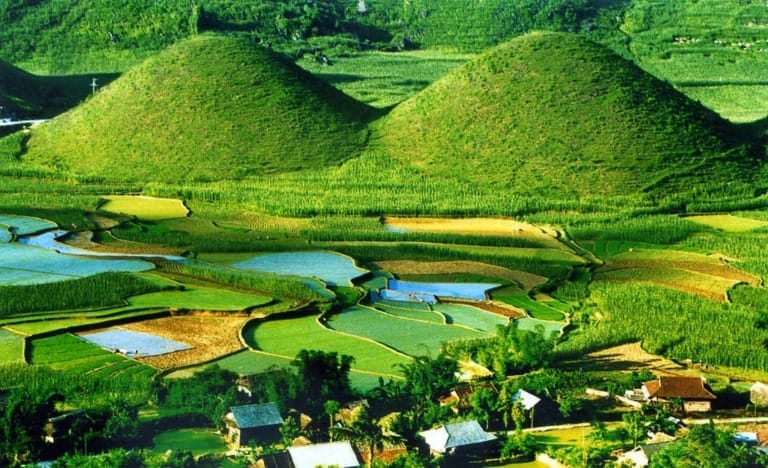
The Dong Van Karst Plateau — 2,356 km² of UNESCO-protected geological formations up to 600 million years old
The Dong Van Karst Plateau UNESCO Global Geopark covers 2,356 km² and contains geological formations up to 600 million years old — among the oldest exposed rock faces in Southeast Asia. The plateau sits at 1,000–1,600m altitude and encompasses the districts of Quan Ba, Yen Minh, Dong Van, and Meo Vac. What the UNESCO designation captures is not just the geology — it is the living human landscape layered on top of it: 19 ethnic groups who have farmed, traded, and built their stone houses directly into the karst for generations.
2. Dong Van Ancient Stone Town (Phố Cổ Đồng Văn)
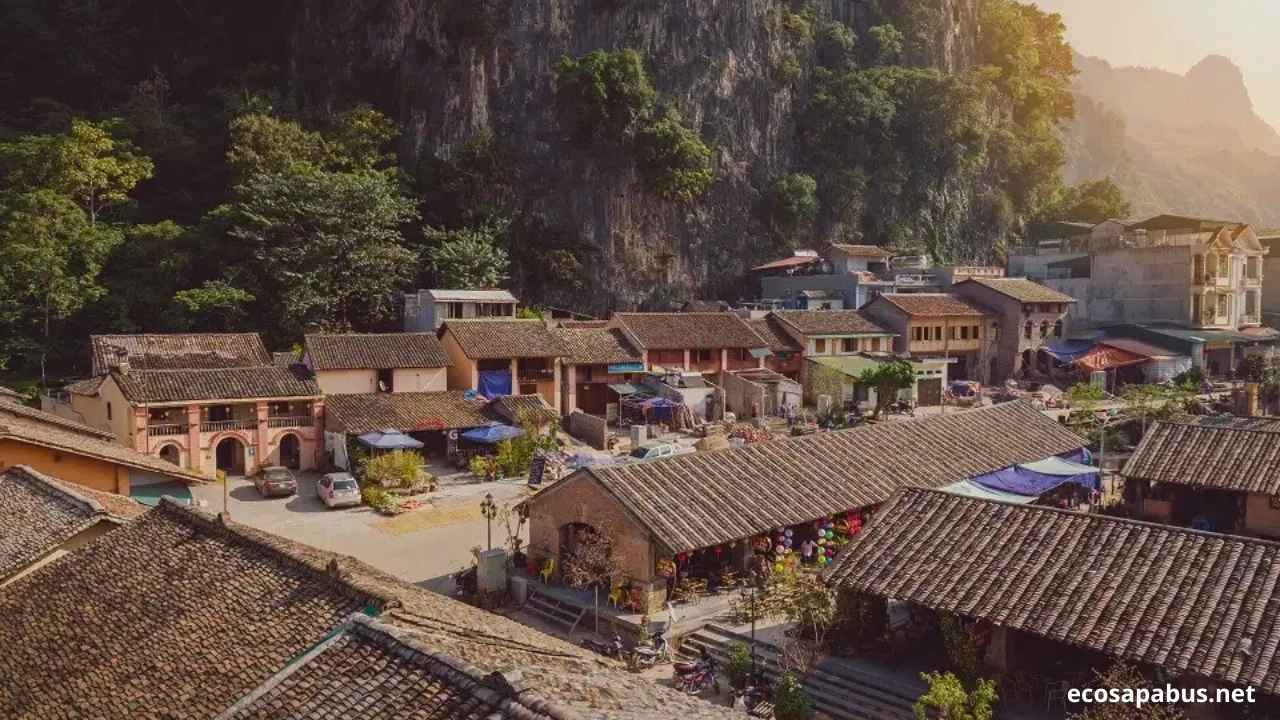
Dong Van's 200-year-old stone-house old quarter — one of the most atmospheric towns in northern Vietnam
Dong Van is a 200-year-old trading post that grew at the junction of four mountain valleys, 22km from the Chinese border. The old quarter — Pho Co Dong Van — is a cluster of Chinese-influenced stone and wood buildings built by H'mong merchants in the early 1900s. The market square, the Vuong Palace (Dinh Vua Meo, the H'mong King's residence, built 1914–1921), and the narrow lanes between stone walls feel genuinely old. The town is now partially touristified but remains one of the most atmospheric places in Northern Vietnam, especially in the early morning before tour groups arrive.
Vuong Palace (Dinh Vua Meo): A remarkable structure built by the French colonial administration for the H'mong opium lord Vuong Chi Thanh — a fusion of Vietnamese, H'mong, and Chinese architectural styles with fortified stone walls, internal courtyards, and an extraordinary back-story of colonial-era opium politics. Entry: 20,000 VND. Do not miss it.
3. Ma Pi Leng Pass (Đèo Mã Pí Lèng)
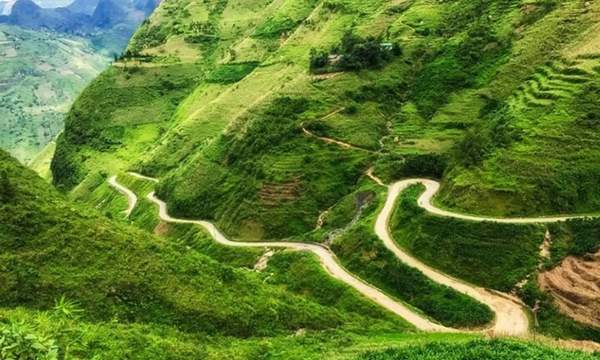
Ma Pi Leng Pass — the 20km road hand-carved into the cliff face, with the Nho Que River 1,000m below
Ma Pi Leng Pass is the defining experience of the Ha Giang Loop and one of the four great mountain passes of Vietnam (alongside O Quy Ho, Khanh Le, and Hai Van). The pass runs for approximately 20km between Dong Van and Meo Vac, reaching its highest point at 1,400m. The road was hand-carved into the cliff face by thousands of young volunteers from 16 ethnic groups over six years (1959–1965) — it is locally called the "Road of Happiness" (Con Duong Hanh Phuc). Below the road on the western side, the Nho Que River runs through a gorge 800–1,000m below, its water an extraordinary turquoise-green from the limestone minerals.
The most famous viewpoint — the Panorama Cafe on the pass — is now heavily commercialised. Walk 200m past it on the trail for the same view without the selfie stick crowds.
4. Lung Cu Flag Tower (Cột Cờ Lũng Cú)

Lung Cu — Vietnam's northernmost point, 25km from Dong Van. The flag tower stands 33m high on the China border
Lung Cu is Vietnam's northernmost point — 25km north of Dong Van town, right on the China border. A 33-metre flagpole flies the Vietnamese flag over a dramatic landscape where you can look directly into Yunnan Province. The tower requires climbing 389 steps. The H'mong village below is one of the most authentically traditional on the entire Loop — the houses are built from stone with wooden roofs, and the H'mong people here still wear traditional dress daily (not for tourists). Allow 2–3 hours for the side trip from Dong Van.
5. Meo Vac Sunday Market (Chợ Phiên Mèo Vạc)
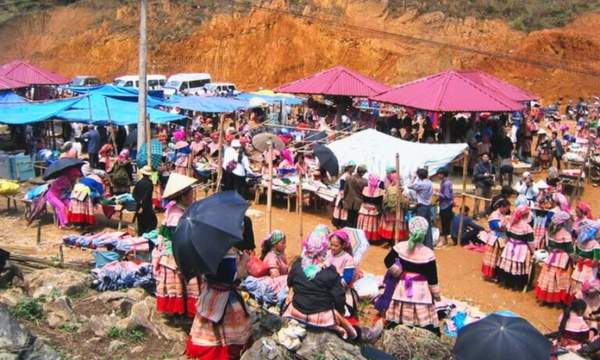
Meo Vac Sunday market — Flower H'mong, Lo Lo, Nung and Giay communities meet at dawn every week
Every Sunday morning, Meo Vac market fills with Flower H'mong, Black H'mong, Giay, Lo Lo, Pa Then, and Nung people who descend from surrounding mountains and valleys. Livestock section (buffalo, horses, pigs, goats), medicinal herb section, handmade textiles and silver jewellery, local food stalls serving thang co and corn wine. This is an entirely functional community market — not a cultural show. Start at 07:00; the livestock section empties by 09:00. Photography: always ask permission, especially in the livestock area.
6. Nho Que River (Sông Nho Quế)
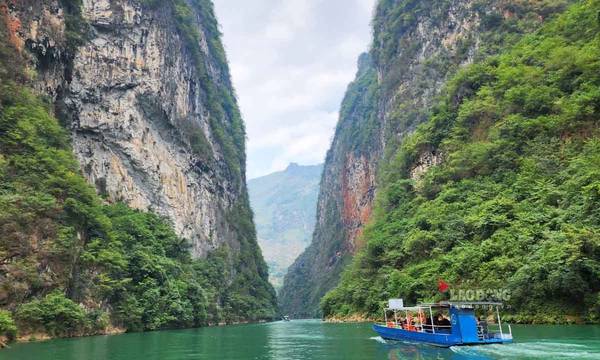
The Nho Que River — turquoise green from dissolved limestone minerals, visible 1,000m below Ma Pi Leng Pass
The Nho Que River flows through the Dong Van Karst Plateau in a gorge that is in places over 1,000m deep — narrower than the Grand Canyon but arguably more dramatic because the cliffs above are sharp karst rather than rounded canyon walls. The river is best seen from Ma Pi Leng viewpoints or from boat tours departing from the Meo Vac side (1–2 hour boat trip: 150,000–250,000 VND per boat). The jade-green colour is most intense in October–November and March–April.
7. Quan Ba Heaven's Gate & Twin Fairies Mountains (Núi Đôi)
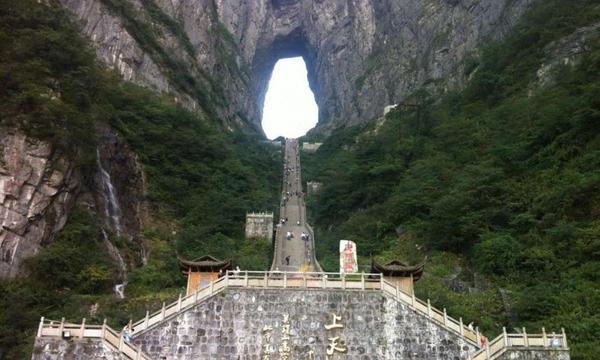
Quan Ba Pass (Heaven's Gate) at 1,500m — the Twin Fairies (Núi Đôi) limestone hills rise below in the valley
Quan Ba Pass (Cổng Trời — Heaven's Gate) at 1,500m is the first major viewpoint from Ha Giang city, 55km into the Loop. Below the pass, two perfectly rounded limestone hills rise from the valley floor — locally called Nui Doi (Twin Fairies), based on a H'mong legend about a fairy woman whose breasts became the mountains when she was separated from her lover. The legend is told by every H'mong grandmother in the valley. The visual is extraordinary regardless of your feelings about folklore.
Ha Giang Loop — Day-by-Day Itinerary
Choose based on how many days you have. 4 days is ideal — gives you time to breathe at every viewpoint. 2 days is a rush but captures the essential highlights if your schedule is tight.
Only Have 2 Days? The Essential Ha Giang Loop
2 days is tight but worth it. You'll cover the three unmissable highlights — Quan Ba Heaven's Gate, Ma Pi Leng Pass, and Dong Van Stone Town. Accept that you're doing highlights, not deep exploration. By private car or Easy Rider with an early start each day.
You will miss: Lung Cu flag tower, Sunday markets, H'mong village homestays, Pho Bang remote market. If you can add even one extra day — stay a third night in Meo Vac — the experience improves dramatically. Ask us what's possible with your exact dates →
The Full Ha Giang Loop — 4-Day Itinerary (Anti-Clockwise)
Book the Complete 4-Day Ha Giang Loop Tour
Easy Rider or private car · Permit included · Guesthouses arranged · Free planning
Understanding Ha Giang's Local Culture
Ha Giang is home to 19 officially recognised ethnic minority groups — more than any other province in Vietnam. The Kinh (ethnic Vietnamese majority) are actually a minority here. The dominant group is the H'mong, subdivided into Black H'mong, Flower H'mong (Hmong Hoa), White H'mong, and Green H'mong — each with distinct clothing, dialect, and customs.
Cultural Etiquette — Respect in the Mountains
- Never photograph without permission — in mountain villages, a person's image is spiritually significant to many groups. Point to your camera and wait for a nod
- Spirit posts and altars at the entrance of H'mong villages mark the spiritual boundary — do not cross without being invited, do not touch them
- Remove footwear before entering any home — the threshold is sacred in most ethnic minority cultures here
- Corn wine (ruou ngo) will be offered everywhere — accepting gracefully earns respect. Decline by placing your hand over the cup and smiling
- Dress modestly — shorts and sleeveless tops are considered disrespectful in village contexts, particularly at ceremonies or when entering homes
- Sunday markets are real markets, not tourist shows — do not disrupt transactions or crowd the livestock section with cameras
- Learn two words: "Tua li" (H'mong: "Thank you") and "Cha dia" (H'mong: "Hello") — the reaction from locals to a foreigner attempting H'mong is extraordinary
The Ha Giang Opium History
Understanding the Vuong Palace and Dong Van's history requires knowing that Ha Giang was, until the French arrived, the heart of the Indochina opium trade. The H'mong grew opium poppies as their primary cash crop for centuries — not for addiction but as the only product that could be transported and traded over these mountains. The French colonial administration formalised this into a state opium monopoly. The Vuong family — whose palace you visit in Dong Van — were the appointed H'mong overlords of this trade. When the French left and the communists arrived, the poppies were eradicated and replaced with corn. The economic transition shattered mountain communities. Understanding this history makes the Vuong Palace, the stone town, and the modern poverty of the villages far more legible.
Best Time to Visit Ha Giang
📍 Ha Giang Monthly Weather — Temperatures at 1,000–1,400m
⭐ Highlighted = best riding months · 🌼 October = buckwheat flower season — most photogenic time of year
In late October, the H'mong's buckwheat fields bloom a deep pink across the Dong Van plateau. This is a local food crop (not grown for tourism) but the visual effect — pink fields against grey limestone karst — is extraordinary. Peak bloom: typically October 15–November 5, but varies by year. Check recent travel reports before booking around this window.
Money, Currency & What Things Cost in Ha Giang
Currency Exchange
Vietnam uses the Vietnamese Dong (VND). Exchange rates as of 2026:
$1 USD ≈ 25,000 VND · £1 GBP ≈ 31,500 VND · €1 EUR ≈ 27,000 VND · $1 AUD ≈ 16,000 VND · $1 SGD ≈ 19,000 VND · $1 CAD ≈ 18,500 VND
What Things Cost in Ha Giang
ATMs in Ha Giang
Ha Giang city has several ATMs — Agribank, Vietcombank, and BIDV all have branches. Critical warning: there are NO reliable ATMs between Ha Giang city and the return to Ha Giang city. Yen Minh has one Agribank ATM that sometimes works. Dong Van has one ATM that is frequently out of cash. Meo Vac has no reliable ATM for foreign cards.
- Withdraw enough for your entire loop — guesthouses, food, fuel, activities — before leaving Ha Giang city
- Budget approximately 500,000–700,000 VND per person per day on the road (excluding Easy Rider fee)
- Take slightly more than you think you need — there is nowhere to get more money on the plateau
- Fuel stations: available in Quan Ba, Yen Minh, Dong Van, and Meo Vac — always fill up when you see one
How to Avoid Being Cheated in Ha Giang
Ha Giang is not a heavily scam-prone destination compared to Hanoi or Sapa, but there are specific situations where tourists reliably get overcharged. Know these before you go.
- Motorbike rental damage scam: The most common problem. You return the bike, and the rental shop claims minor pre-existing scratches are your fault. Photograph every centimetre of the motorbike before you leave the shop — front, back, both sides, undersides. Send the photos to yourself with a timestamp.
- Overcharging on the permit: The official border zone permit costs exactly 20,000 VND. Some guesthouses or agents charge 100,000–200,000 VND claiming it's a "processing fee." This is pure markup. The permit office is on Nguyen Trai Street in Ha Giang city — you can go directly.
- Fake Easy Riders: Approach cautiously with any stranger at Ha Giang bus station offering to be your guide. Ask: How many loops have you done? Can you show me reviews? Licensed Easy Riders will have these. A genuine Easy Rider never approaches you aggressively at a bus station — they have regulars and operate through guesthouses.
- Fuel overcharging: At remote fuel stations on the plateau, the pump price may be 10,000–15,000 VND higher per litre than in Ha Giang city. This is partly justified (transport costs to remote areas) but watch that the pump resets to zero before filling.
- Market souvenir prices: The H'mong silver jewellery and embroidery sold at Meo Vac and Dong Van markets is largely genuine. But ask the price before showing interest — once you hold an item up, the price doubles. Always compare prices across 3–4 stalls before buying.
- Photography fees: In the most touristified villages near Dong Van, H'mong women may ask 20,000–50,000 VND for photographs. If you haven't been told this before taking the photo, you are not obligated to pay. However, it's common courtesy to either pay a small amount or simply ask before photographing.
Emergency Contacts on the Loop
Phone signal is patchy on the plateau (best on Viettel network). Emergency numbers: Police 113 · Ambulance 115. The nearest hospital with surgical capacity is Ha Giang Provincial Hospital in Ha Giang city. For motorbike breakdowns: every small town on the Loop has a mechanic (look for the small shack with tyres outside) — most repairs cost 20,000–80,000 VND.
Where to Stay on the Ha Giang Loop
Accommodation on the Loop falls into two very distinct categories — the few newer boutique hotels, and the basic local guesthouses that define the Ha Giang experience for most travellers.
Luxury Option — Boutique with Views
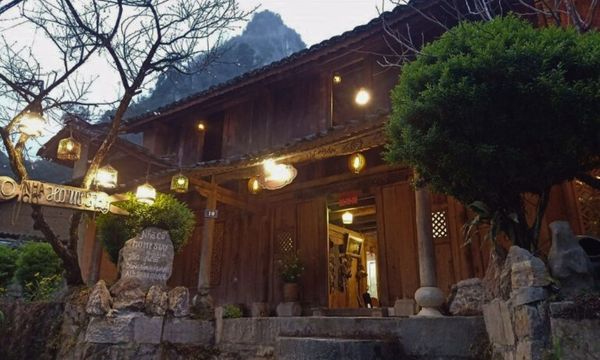
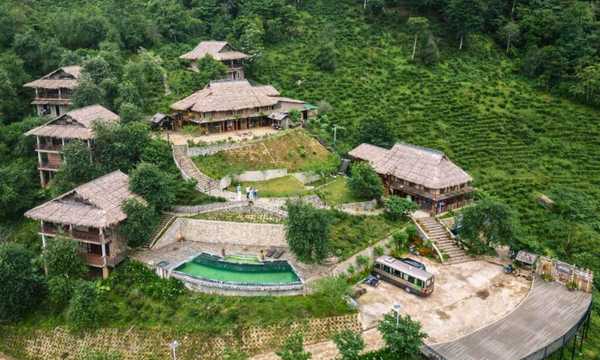
Local Guesthouses — The Real Experience
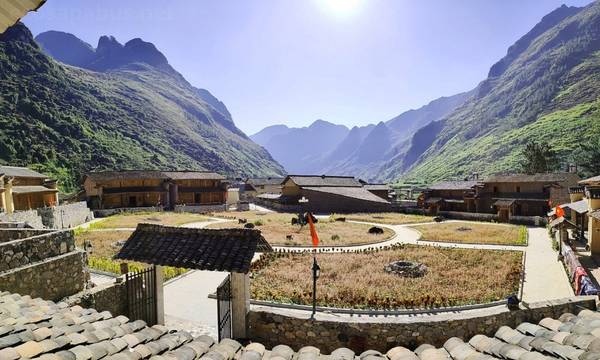
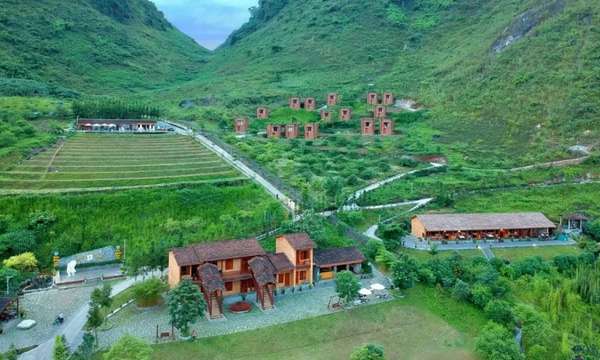
During October (buckwheat season) and on weekends coinciding with Sunday markets, accommodation in Dong Van and Meo Vac can fully book up. Either book 2–3 weeks in advance for October, or let your Easy Rider guide handle accommodation — they have relationships with family guesthouses and can always find a room even when apps show nothing available.
Is the Ha Giang Loop Dangerous? (Honest Answer)
The Ha Giang Loop is the most dangerous tourist route in Vietnam for self-driving motorbike riders — and that is an honest, evidence-based statement, not an exaggeration designed to upsell you a guided tour. Several foreign tourists die or are seriously injured on this road every year. Understanding exactly why lets you make an informed decision rather than an emotionally reactive one.
The Actual Risks — Ranked by Frequency
| Risk | Who It Affects | How to Manage It |
|---|---|---|
| Wet roads + gravel corners | All self-riders, especially in rain | Slow down before every bend, never brake mid-corner |
| Inexperienced riders overconfident | Travellers who rented bikes in Hanoi, not mountain roads | Hire Easy Rider if <2 years regular riding experience |
| Altitude + fatigue | Day 1 and Day 3 (longest distances) | Don't ride past 17:00, take breaks every 90 minutes |
| No guardrails on cliff sections | Specific sections of Ma Pi Leng | Ride the centre-outside of the lane, never the edge |
| Landslides June–August | Everyone in monsoon season | Don't go June–August — this is a firm advice, not a suggestion |
| Oncoming trucks on blind bends | More on the Yen Minh–Dong Van section | Hug your lane, use your horn on blind corners (normal in Vietnam) |
The Good News: Risk Is Largely Manageable
The vast majority of Ha Giang Loop accidents involve self-riding travellers with limited motorbike experience, riding in adverse weather, or riding too fast. A rider with genuine mountain experience who takes the route at a sensible pace in good weather (Sep–Nov or Mar–May) faces low actual risk. The road is wide enough for two vehicles except on a few sections. The drops, while dramatic, are visible — not hidden. You can see the danger and respond to it, unlike an urban traffic accident.
Option 1: Easy Rider guided tour — you ride pillion, local driver handles all road decisions, same experience minus the risk. Option 2: Private car — all viewpoints accessible, village visits possible, safe for all ages. Option 3: Self-ride if you have 2+ years regular motorbike experience, ride in good weather, stick to 4 days minimum, and never ride after dark or in rain.
Not Sure Which Option Is Right For You?
Tell us your riding experience and we'll give you an honest recommendation — Easy Rider, private car, or self-ride.
Ha Giang Loop Total Budget in USD — Complete Breakdown
One of the most Googled questions about Ha Giang: "How much does the Ha Giang Loop cost?" Here is the full breakdown by trip style — budget backpacker, mid-range, and comfort.
Getting There (Hanoi → Ha Giang → Hanoi)
| Transport Option | Cost per person (USD) | Notes |
|---|---|---|
| Sleeper bus (each way) | $8–12 | Hung Thanh / Thanh Buoi from My Dinh |
| Private limousine van (split 4 people) | $35–50/person each way | Door-to-door, most comfortable |
| Motorbike from Hanoi (self-ride full distance) | $6–8/day rental | Only for experienced long-distance riders |
4-Day Loop On-the-Road Costs
| Item | Budget | Mid-Range | Comfort |
|---|---|---|---|
| Accommodation (per night) | $5–8 | $12–20 | $35–60 |
| Food (3 meals/day) | $5–8 | $10–15 | $15–25 |
| Motorbike rental (self-ride) | $6–8/day | $8–10/day | N/A |
| Easy Rider guided (all-in) | N/A | $24–30/day | $30–36/day |
| Private car tour | N/A | N/A | $100–140/day (whole car) |
| Fuel (self-ride) | $3–4 total loop | $3–4 | N/A |
| Activities (boat, entry fees) | $5–8 | $10–15 | $15–25 |
| Permit | $0.80 | $0.80 | $0.80 |
Total 4-Day Ha Giang Loop Cost (USD per person)
Corn wine and snacks at village stops (~$1–2/day) · Market souvenirs (H'mong silver, textiles: $5–30) · Photography tips in villages ($0.50–1 per interaction where accepted) · Nho Que River boat tour ($6–10/boat shareable) · Vuong Palace entry $0.80 · Lung Cu entry $0.80 · Travel insurance that covers motorbike riding (~$3–5/day from World Nomads or SafetyWing)
Ha Giang Loop for Solo Female Travellers
Ha Giang is consistently rated one of the safest destinations in Vietnam for solo women. The mountain communities here are conservative in the most protective sense — village social norms strongly discourage any harassment of visitors, and incidents targeting foreign women are extremely rare. What follows is an honest account from the experience of many solo female travellers who have done the Loop, not a generic reassurance.
What Actually Feels Safe
- Villages and guesthouses — H'mong and Nung communities treat solo female visitors with a form of protective hospitality. You will be offered food, asked about your family, and looked after at guesthouses. The communities are very closed to their own members and very open to outsiders passing through.
- Travelling as Easy Rider pillion — your guide acts as an implicit social buffer. In every village you enter, you arrive with a local man who vouches for you. This completely changes the social dynamic compared to walking in alone.
- The guesthouses in Dong Van and Meo Vac — basic but completely safe. The family atmosphere of these places means there are always other travellers and a family presence watching the door.
- The road itself in daylight — fine. Ha Giang's roads are rural, not urban. The "danger" is from traffic and terrain, not from people.
What to Be Aware Of
- Corn wine culture is extremely social and persistent — at village stops, you will be repeatedly offered ruou ngo (corn wine). You can decline politely with a hand gesture. No one will take offence, but you may be offered 5–10 times. This is hospitality, not pressure, but it can feel overwhelming on a first visit.
- Guesthouse room security — carry your own small padlock. Most guesthouses in Dong Van and Meo Vac have padlockable doors, but the locks provided are basic. A $3 padlock from Hanoi hardware store solves this completely.
- Night in Ha Giang city — the city itself is safe but uninspiring. If you arrive by sleeper bus at 04:00–05:00, the best option is to book the first night at a guesthouse that does early check-in (most do for an extra $3–5) rather than waiting on the street.
- Solo motorbike riding — the advice is the same for everyone: the roads require genuine experience. For solo female riders with proper motorbike skills, the Loop is absolutely fine in good weather. There is no additional gender-specific risk on the road itself.
Practical Tips for Solo Women
- Book the Easy Rider through a guesthouse in Ha Giang city rather than accepting the first man who approaches you at the bus station — established guesthouses vet their guides
- Connect with other travellers at the Ha Giang City guesthouses before you start — it's common to form informal groups who ride on the same days without being a formal "group tour"
- The Ha Giang Loop Facebook group has a strong community of solo female travellers sharing current safety and road conditions
- Tell your accommodation each night your planned route for the following day and your expected arrival time at the next stop
Planning Ha Giang as a Solo Woman?
We'll match you with a vetted Easy Rider guide and safe guesthouses — free planning, no booking fee.
What to Pack for Ha Giang Loop
Essential — Cannot Ride Without These
- Full-face helmet — if self-riding, bring your own or rent a quality one from a reputable shop in Ha Giang city. Never accept a cracked or loose-fitting helmet
- Waterproof jacket — mountain rain arrives without warning year-round. A good rain layer is non-negotiable
- Warm layer for evenings — even in September/October, the plateau at 1,400m drops to 10–15°C after dark. Bring a fleece or down jacket
- Gloves — both for cold and to protect your hands on a fall
- Riding boots or solid ankle shoes — no sandals, no flip-flops on a motorbike ever
- Sunscreen (SPF 50+) — at 1,400m, UV intensity is significantly higher. The limestone reflects UV back upward
- Dust/wind buff or scarf — the roads kick up limestone dust. A buff worn over mouth and nose is essential on dry days
Documents
- Passport (original) — required for the border zone permit. Photocopy not accepted
- International driving permit — technically required for motorbike rental. Rarely checked but good to have
- Travel insurance document — check your policy covers motorbike riding (many do not — must add a rider). Recommended providers: World Nomads ↗ or SafetyWing ↗ — both cover motorbike riding when declared
- Offline maps downloaded — Google Maps offline for the entire Ha Giang province before leaving the city
Clothing by Season
| Season | Day on the Road | Evenings at Altitude |
|---|---|---|
| Oct–Nov (peak) | T-shirt + light layer + rain jacket | Fleece + down jacket + hat |
| Mar–May (spring) | Light shirt + sun protection | Fleece or warm jumper |
| Dec–Feb (winter) | Thermal base + fleece + windproof jacket | Down jacket + gloves + hat essential |
| Jun–Aug (monsoon) | Quick-dry shirt + waterproofs always on | Wet gear + midlayer |
More North Vietnam Guides
What Our Travellers Say About Ha Giang
Over 1,200 travellers from Australia, the US, UK, Canada, and Singapore have planned their Ha Giang Loop with EcoSapa Bus since 2019. Here's what they said after coming back.
"Ma Pi Leng Pass was the single most dramatic thing I've seen in 14 years of travel. EcoSapa sorted the Easy Rider, permit, guesthouses — one WhatsApp message and everything was arranged. Zero stress, maximum experience."
"I was nervous about the Loop as a solo female traveller. EcoSapa matched me with a brilliant Easy Rider guide — 12 years on the Loop, spoke good English, incredibly knowledgeable about H'mong culture. Felt completely safe the whole time."
"We did the Loop by private car with our two kids (7 and 10). The driver was patient, the pace was flexible, and we stopped at every village the kids wanted. Dong Van blew everyone away. Highly recommend EcoSapa for family trips."
"Arrived in Ha Giang at 4am on a sleeper bus with no plan. Messaged EcoSapa at 5am. By 8am they had arranged my Easy Rider, permit, and first night accommodation. The response time was unbelievable. Trip was extraordinary."
Join 1,200+ Travellers Who Did the Loop with EcoSapa
Tell us your dates, group size, and experience level — we'll send a full personalised itinerary. No booking fee, ever.
Why Book With EcoSapa Bus — Not an App?
GetYourGuide, Klook, and Viator all list Ha Giang tours. Here's the honest difference when you book direct with us on WhatsApp.
| What you get | EcoSapa Bus (WhatsApp) | Booking Apps |
|---|---|---|
| Platform fee | None — direct price | +20–25% markup |
| Response time | Under 2 hours | 24–48 hours |
| Custom itinerary | Yes — free, personalised | Fixed packages only |
| On-road support | WhatsApp, direct | No (closed ticket) |
| Flexible changes | Yes — any time | Cancellation fees apply |
| Local knowledge | Hanoi-based team | Offshore operations |
Get Your Free Ha Giang Itinerary Now
Tell us: dates · group size · riding experience · budget · We reply within 2 hours with a full plan
Ha Giang Loop — Frequently Asked Questions
Is Ha Giang safe for solo travellers?
Yes — Ha Giang has very low violent crime. The risks are road-related: mountain switchbacks, loose gravel, landslides in wet season, and cold nights that create unexpected fog. Solo riders should always tell someone their day's route. Solo women report feeling very safe in the villages — the local communities are conservative and protective toward visitors.
Do I need to speak Vietnamese to do the Loop?
Not if you hire an Easy Rider guide — they handle all communication and translation. If self-riding, basic Vietnamese helps enormously (especially for asking directions — Google Maps has gaps in remote sections). In guesthouses and restaurants in Dong Van and Meo Vac, staff often have very limited English. Learning food words: com (rice), pho (noodle soup), ga (chicken), lon (pork) — gets you far.
What fuel does the motorbike use?
Almost all rental motorbikes use RON 95 petrol (xang 95). A 110cc semi-automatic motorbike uses about 2–2.5 litres per 100km. The loop is ~350km, so budget 8–10 litres total. Fuel costs approximately 25,000–28,000 VND per litre on the plateau.
Can I do Ha Giang with a family or young children?
Yes — by private car. The Loop by private car with an experienced local driver is perfectly safe and appropriate for families. Children under 8 may find the long driving days tiring, but the viewpoints and village visits are fascinating for most ages. The guesthouses in Dong Van and Meo Vac have family rooms. Avoid the Loop by motorbike with young children.
What happens if my motorbike breaks down on the Loop?
Every town on the Loop has a mechanic (nha sua xe) — identified by tyres and tool displays outside a small workshop. For simple repairs (puncture, chain, carburettor) they charge 20,000–80,000 VND. For serious mechanical failures, call the rental shop in Ha Giang city — they are legally obligated to provide a replacement bike.
How much does a Ha Giang Loop tour cost with EcoSapa?
Prices depend on group size, days, and tour type. A 4-day Easy Rider guided loop starts from approximately $200–280 per person all-in (transport from Hanoi, Easy Rider guide, accommodation, meals). A 4-day private car tour for a group of 4 starts from $350–500 per person. WhatsApp us for an exact quote based on your dates →
Can I book last minute — arriving Ha Giang by sleeper bus tonight?
Yes — this is actually common. WhatsApp us when you board the sleeper bus in Hanoi (around 21:00–22:00) and we can arrange your Easy Rider guide, permit, and first night accommodation to be ready when you arrive at 04:00–05:00. We've done this dozens of times. The only risk is that the best Easy Riders book up during October buckwheat season — earlier notice is better then.
Is Ha Giang worth it compared to Sapa?
They are fundamentally different experiences. Sapa is more accessible, has better trekking infrastructure, and suits 2-day trips. Ha Giang is rawer, more dramatic, almost no mass tourism, and requires 4 days minimum. Most travellers who have done both say Ha Giang is the more memorable — but only if you have the time and the right transport arranged. If you only have 2 days from Hanoi, choose Sapa. If you have 4–5 days and want something that will genuinely stay with you, Ha Giang wins.