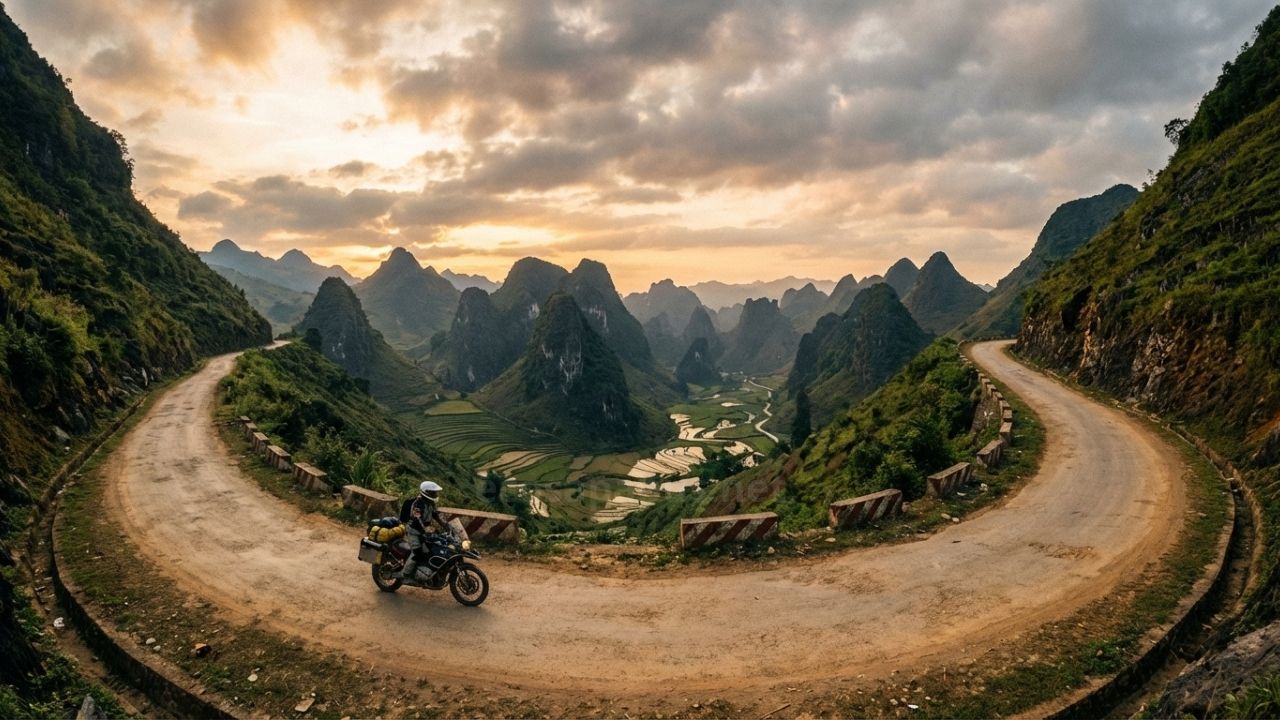
Welcome to the final frontier of Vietnam. The Ha Giang Loop is not a relaxing beach vacation; it is a raw, thrilling, and physically demanding adventure. While the internet is full of pretty, drone-shot pictures of the Ma Pi Leng Pass, very few guides tell you how to actually survive the journey, what to pack, and how to deal with the local police.
Written by local riders who have done the loop countless times, this is your ultimate "Survival & Travel Guide". We cover the unglamorous but crucial details: where to find an ATM, exact cash denominations to bring, extreme safety rules, and the bizarre but delicious local food you must try. Oh, and of course, the absolute best 15 destinations along the route.
- Money Matters: ATMs & Cash Rules
- Packing List: The "Onion" Technique
- Extreme Safety Rules & Police Checks
- The Ha Giang Permit for Foreigners
- Drive the Legendary Ma Pi Leng Pass
- Boat Trip on the Nho Que River
- Explore the Hmong King Palace
- Photograph the Tham Ma Pass
- Dong Van Karst Plateau Geopark
- Climb the Lung Cu Flag Tower
- View the Quan Ba Twin Mountains
- Book an "Easy Rider" Tour
- Get Lost in a Sunday Ethnic Market
- Sleep in a Traditional Clay Homestay
- Admire the Buckwheat Flower Fields
- Visit Lung Cam Cultural Village
- Drink "Rượu Ngô" (Corn Wine)
- Eat "Thắng Cố" (Horse Meat Stew)
- Try the Poisonous "Au Tau" Porridge
Part 1: The Survival Guide
1. Money Matters: ATMs & Cash Rules
Do not expect to use Apple Pay, Visa, or Mastercard once you leave Ha Giang City. The Loop operates 100% on cash. If you run out of money in a remote village, you have a serious problem.
💵 The "Cash is King" Rule
Where to withdraw: You MUST withdraw enough cash for your entire 3 or 4-day trip while you are still in Ha Giang City or Hanoi. There is one reliable Agribank ATM in Dong Van town, but it often runs out of cash on weekends. ATMs in Meo Vac and Yen Minh are highly unreliable for foreign cards.
How much to bring: Budget around 500,000 to 800,000 VND ($20 - $35) per day for fuel, homestays, and food.
Crucial Tip on Denominations: Do not just bring 500,000 VND notes. When you buy a bottle of water (10,000 VND) from an old Hmong woman on the side of a mountain, she will NOT have change for a 500k note. Ask your hotel in Hanoi to break your money into 50k, 100k, and 200k notes.
Torn Notes: Vietnamese locals will reject torn or heavily creased polymer notes. Keep your money crisp and flat in a wallet.
2. Packing List: The "Onion" Technique
Leave your massive 20kg suitcase at your hostel in Hanoi or Ha Giang City. You only need a small 10L - 15L waterproof daypack securely strapped to the back of the bike.
- The "Onion" Technique (Layers): The weather in the mountains is bipolar. It can be blistering hot at the bottom of the valley and freezing cold with thick fog at the top of the pass. Bring a t-shirt, a warm fleece sweater, and a windbreaker. Peel them off or put them on as the elevation changes.
- Rain Gear: The $1 plastic ponchos will shred in the wind in 5 minutes. Buy a thick, high-quality raincoat and pants set (bộ áo mưa) in Ha Giang city before departing.
- Medical Kit: Pharmacies are rare in the villages. Bring Imodium/Charcoal tablets (for an upset stomach), bandages, antiseptic cream, and painkillers.
- Footwear: You will be walking on incredibly sharp limestone rocks at various viewpoints. Sneakers or light hiking boots are mandatory. Flip-flops are a terrible idea.
3. Extreme Safety Rules & Police Checks
Let's be brutally honest: The Ha Giang Loop claims the lives of tourists every year. The roads have no guardrails, hairpin turns are entirely blind, and massive construction trucks use both lanes.
🚨 Police Checkpoints & The IDP
The Ha Giang police actively pull over foreigners. To drive legally, you must have a valid International Driving Permit (IDP) with a motorcycle endorsement from your home country. A regular car IDP is invalid. If you are caught driving illegally, your bike will be impounded for a month, you will be fined heavily, and your trip is over.
- Rule 1: Honk at every blind corner. This is not rude in Vietnam; it's how you say "I am here, please don't hit me."
- Rule 2: Engine Braking. When going down a steep 10% gradient pass for 10 kilometers, do not just hold the brakes. Your brake pads will melt and fail. You must use a semi-manual bike and drop into 1st or 2nd gear to let the engine slow you down. If you don't know what this means, do not self-drive.
- Rule 3: Never ride after dark. There are no streetlights, buffaloes sleep in the middle of the road, and drunk drivers are unfortunately common after dinnertime.
4. The Ha Giang Permit for Foreigners
Because Ha Giang shares a sensitive border with China, all foreigners are required by law to have a Ha Giang Permit to travel through the border districts (Dong Van, Meo Vac, Quan Ba). The permit costs 230,000 VND (~$10 USD). If you book a tour, the agency handles this. If going solo, you can buy it at the Ha Giang Immigration Office or ask your hostel in Ha Giang city to issue it for you.
The Smartest Choice: Hire an Easy Rider
If you don't have an IDP or years of manual bike experience, book an "Easy Rider". You sit safely on the back of a bike driven by a local expert. Zero police stress, zero navigation issues, 100% scenery.
The 15 Best Things to Do
Drive the Legendary Ma Pi Leng Pass
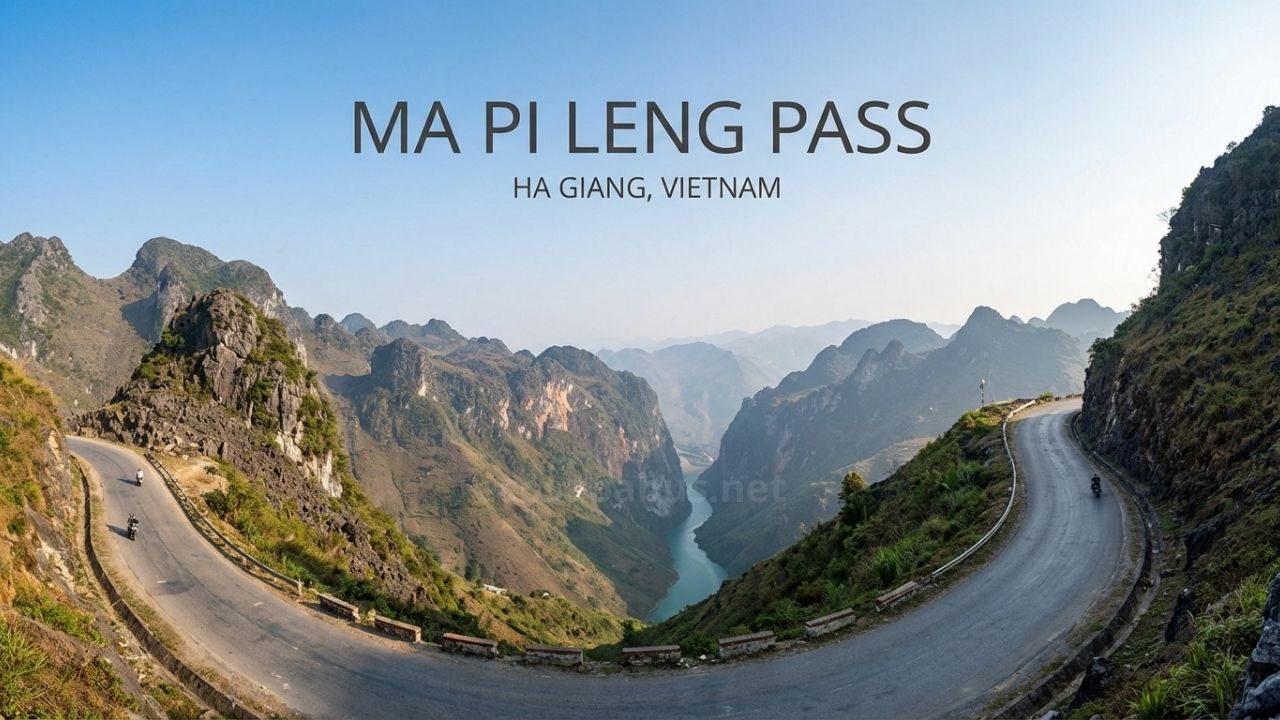
Stretching for 20 kilometers on the "Happiness Road" between Dong Van and Meo Vac, the Ma Pi Leng Pass is the undisputed king of Vietnamese passes. It was built in the 1960s by thousands of youth volunteers who literally hung from ropes to carve the road into vertical limestone cliffs.
As you ride this winding pass, you will look down a dizzying 800-meter vertical drop into the Tu San Canyon. The sheer scale makes you feel incredibly small. Stop at the Ma Pi Leng Panorama Viewpoint, order a hot coffee, and step out onto the protruding balcony. The view of the emerald river threading through the canyon below will be burned into your memory forever.
Take a Boat on the Nho Que River
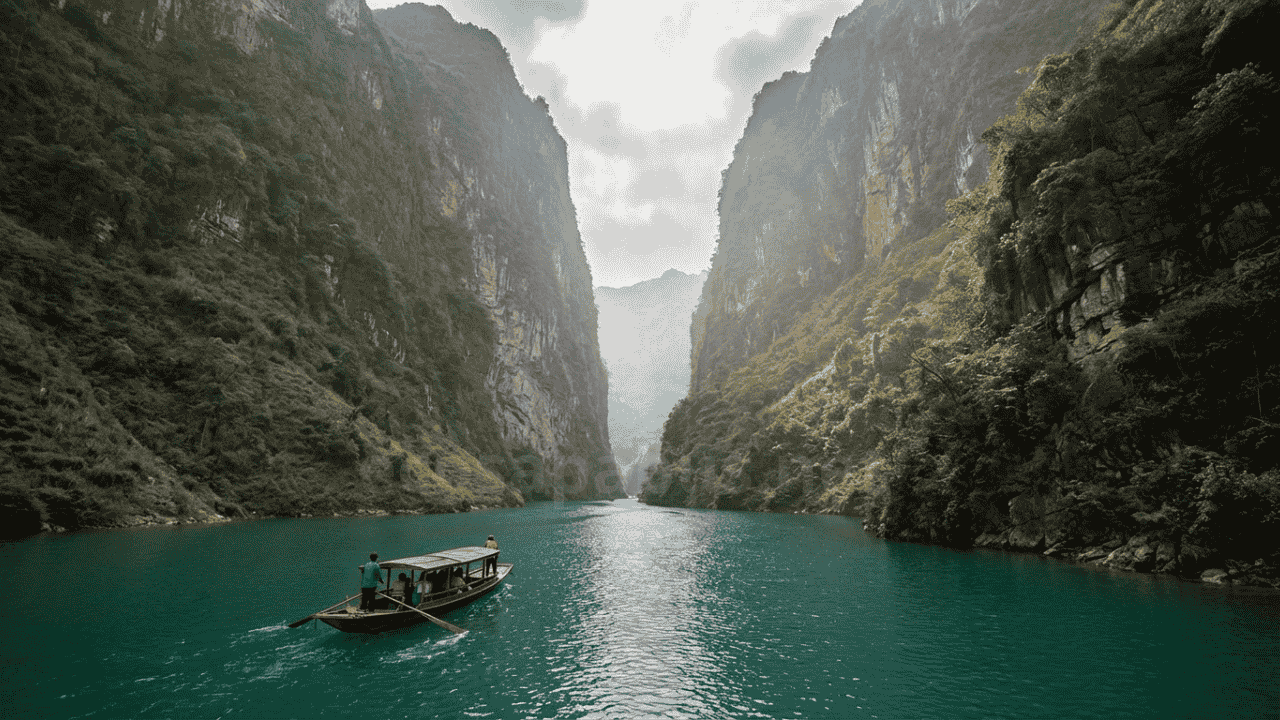
Looking at the river from the top of the pass is one thing, but experiencing it from the water level is entirely different. The Nho Que River is famous for its milky emerald-green water that flows right through the Tu San Canyon — officially the deepest canyon in Southeast Asia.
To get there, you'll ride down an incredibly steep zig-zag path to the boat pier (many tourists hire a local "xe ôm" to drive them down this specific terrifying stretch for 50,000 VND). Once aboard the wooden boat (Ticket: 120,000 VND), the 45-minute cruise takes you right between the towering vertical cliffs. The silence at the bottom of the gorge is profound.
07. Explore the Hmong King Palace (Dinh Vua Meo)
Located in the Sa Phin valley, this fascinating, nearly 100-year-old mansion belonged to Vuong Chinh Duc, the "King of the Hmong". He built his massive wealth and power by controlling the cross-border opium trade in the early 20th century. The palace architecture is a highly photogenic mix of traditional Chinese, indigenous Hmong, and French influences, featuring beautiful stone carvings and yin-yang tiled roofs. Entry is a mere 20,000 VND.
08. Photograph the Tham Ma Pass
This is the iconic, snake-like stretch of road that looks like a ribbon dropped onto the mountainside. The name "Tham Ma" translates to "Testing Horses". Historically, locals would make their horses carry heavy loads up this steep incline; the horses that made it to the top were kept for farming, while the weak ones were sold at the market. Today, it’s the most famous drone and photography spot on the Loop. You’ll often find local children here carrying baskets of bright yellow mustard flowers.
09. Marvel at the Dong Van Karst Plateau
Recognized as a UNESCO Global Geopark. As you ride through this region, the green forests disappear, completely replaced by a "sea of black rocks". These jagged limestone formations date back millions of years. It feels like riding on the surface of another planet. What's truly astonishing is seeing how local Hmong people carry soil in baskets up the mountains just to plant a single stalk of corn in the cracks between the rocks.
10. Climb the Lung Cu Flag Tower
Take a 1-hour detour from the main loop to reach the absolute northernmost point of Vietnam. The Lung Cu Flag Tower sits atop Dragon Mountain. Climb the 389 stone steps to the massive 54-square-meter flag (representing the 54 ethnic groups of Vietnam), and you will be rewarded with a sweeping view. You can literally look down into the rural villages and border fences of China.
11. View the Quan Ba Twin Mountains
Shortly after leaving Ha Giang city and climbing your first major pass, you'll reach Heaven's Gate (Cổng Trời). Look down into the valley, and next to the town of Tam Son, you will see two perfectly symmetrical, round green hills rising out of the flat agricultural fields. Local legend says these are the "Fairy Bosom", left behind by a celestial fairy to nurse her earthly child. It's the perfect spot to stop and stretch your legs on Day 1.
💡 Pro Tip: Booking Your Ride
If reading about these passes makes you nervous, remember that you don't have to drive yourself. Booking an Easy Rider Tour is the most popular choice for Western backpackers. You get a dedicated driver, a well-maintained bike, fuel, homestays, and food all bundled into one price (usually $150 - $200 for a 3-day all-inclusive trip).
12. Get Lost in a Sunday Ethnic Market
If your itinerary puts you in Dong Van or Meo Vac on a Sunday morning, you must wake up at 6:00 AM. The weekly market is the social heartbeat of the region. Thousands of ethnic minorities (Hmong, Tay, Nung, Dao) hike down from the mountains in their vibrant, intricately embroidered traditional clothing. They come to trade buffalo, squealing pigs, agricultural tools, and homemade wine. It is chaotic, loud, colorful, and utterly authentic.
13. Sleep in a Traditional Clay Homestay
Do not expect luxury 5-star resorts here. The magic of Ha Giang is staying in places like Nam Dam Dao Village (in Quan Ba) or Lo Lo Chai village (near the Lung Cu flagpole). You will sleep in traditional rammed-earth houses with thick clay walls or wooden stilt houses. You will eat massive "family-style" dinners cooked by your host over a wood fire. Expect basic amenities (sometimes squat toilets and hard mattresses), but overwhelming hospitality.
14. Admire the Buckwheat Flower Fields
If you visit in late October or November, the harsh rocky hillsides magically transform. They are covered in delicate pink, white, and purple Buckwheat flowers (Tam Giác Mạch). It is a spectacular sight and the subject of a massive local festival. The best fields are usually found in the Sung La valley.
15. Survive the Local Food & Drink Challenge
Forget standard Pho and Banh Mi. The food in the rocky highlands is born from harsh conditions and is entirely unique. This is where you truly earn your "Local Expert" badge:
- Drink "Rượu Ngô" (Corn Wine): At every homestay dinner, a plastic water bottle filled with clear liquid will appear. This is homemade Corn Wine (often 35-40% alcohol). Your host will pour you a shot. You must clink glasses with everyone at the table and shout "Một, Hai, Ba, Dô!" (1, 2, 3 Cheers!). It's a sign of immense respect. Refusing is considered rude, but sipping slowly is acceptable.
- Eat "Thắng Cố" (Horse Meat Stew): The most infamous dish of the Hmong people, found simmering in massive iron pans at Sunday markets. It’s a dark stew made from horse meat, bones, and uncleaned internal organs. It has a very distinct, funky smell. Locals eat it with a side of salt and fresh chili. Try it if you dare!
- Try "Cháo Ấu Tẩu" (Poisonous Porridge): You must try this in Ha Giang City before starting the loop. It's made from the Au Tau root, which is actually lethally poisonous if eaten raw! Locals boil it carefully for 12 hours to remove the toxins. It has a bitter taste and is only served at night. It is considered a powerful medicine to cure joint pain and help you sleep deeply.
How to get from Hanoi to Ha Giang
The journey from Hanoi covers roughly 300 kilometers. Since there are no trains or airports, the absolute best way to travel is by VIP Cabin Sleeper Bus. These luxurious buses have private, curtained pods that allow you to lie completely flat, charge your phone via USB, and sleep through the night. You leave Hanoi around 9:00 PM and wake up fresh in Ha Giang city at 4:00 AM, ready to rent your bike or meet your Easy Rider.
Book Your Hanoi to Ha Giang Bus
Secure your VIP Cabin Sleeper ticket today. Travel comfortably and arrive safely.
Where to Go After the Ha Giang Loop?
After 4 days of gripping the back of a motorbike and absorbing sensory overload, your body will crave a change of pace. Ha Giang connects perfectly to the other crown jewels of Northern Vietnam.
Sapa: Trekking & Herbal Baths
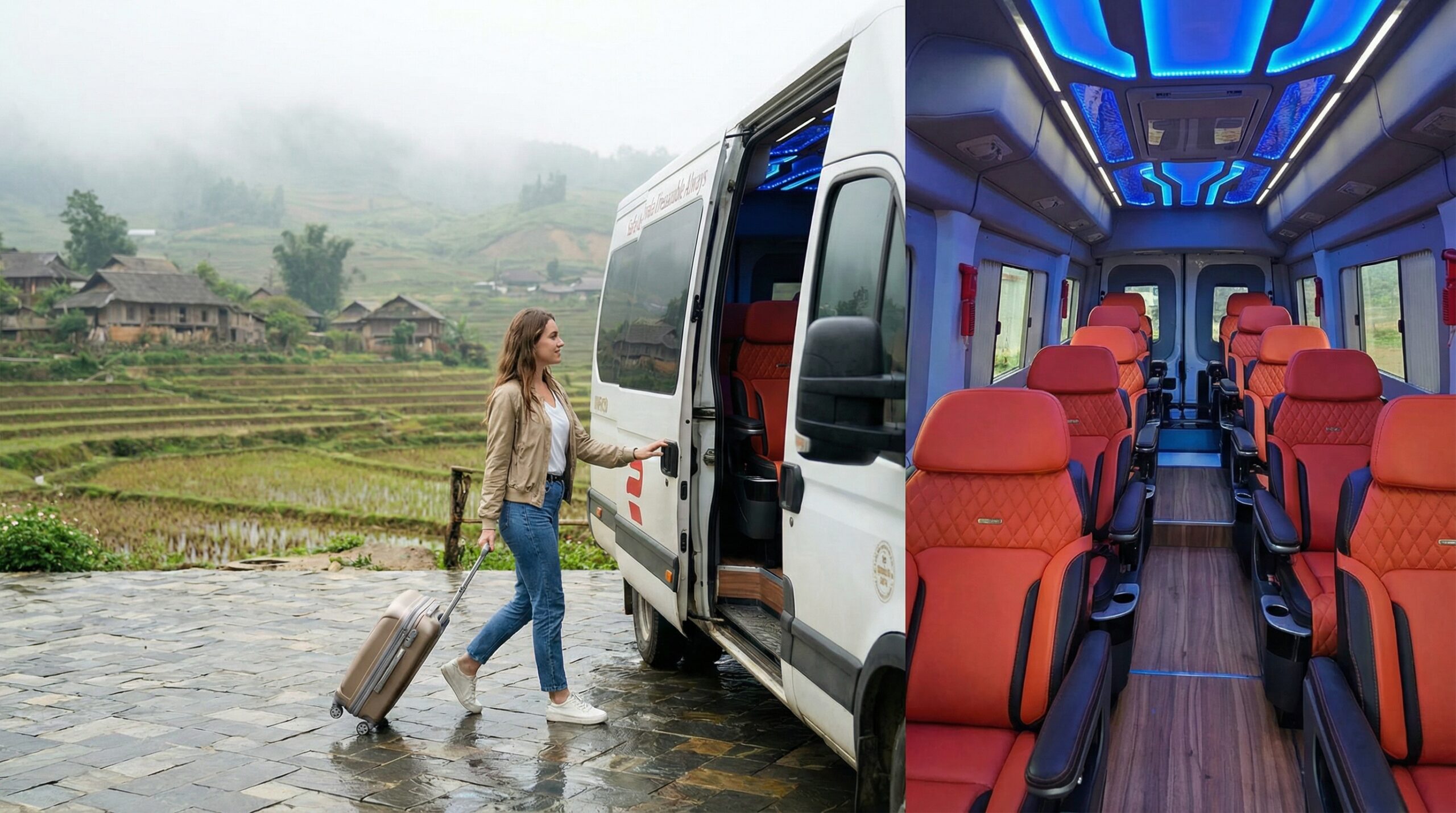
Trade the jagged rocks for soft, flowing green rice terraces in Sapa. You can catch a direct bus from Ha Giang to Sapa (approx. 6 hours). After the rugged loop, there is nothing better than booking a Muong Hoa Valley Trek and soaking your muscles in a traditional Red Dao herbal bath.

Halong Bay Luxury Cruises
If you are tired of the mountains, head back to the coast. Treat yourself to absolute luxury by booking an overnight cruise on Halong Bay. If you have the budget, the Halong Seaplane Tour offers aerial views that rival the Ma Pi Leng pass.
